The Lord of the Rings (1978)
★★★ — The Lord of the Rings (1978)

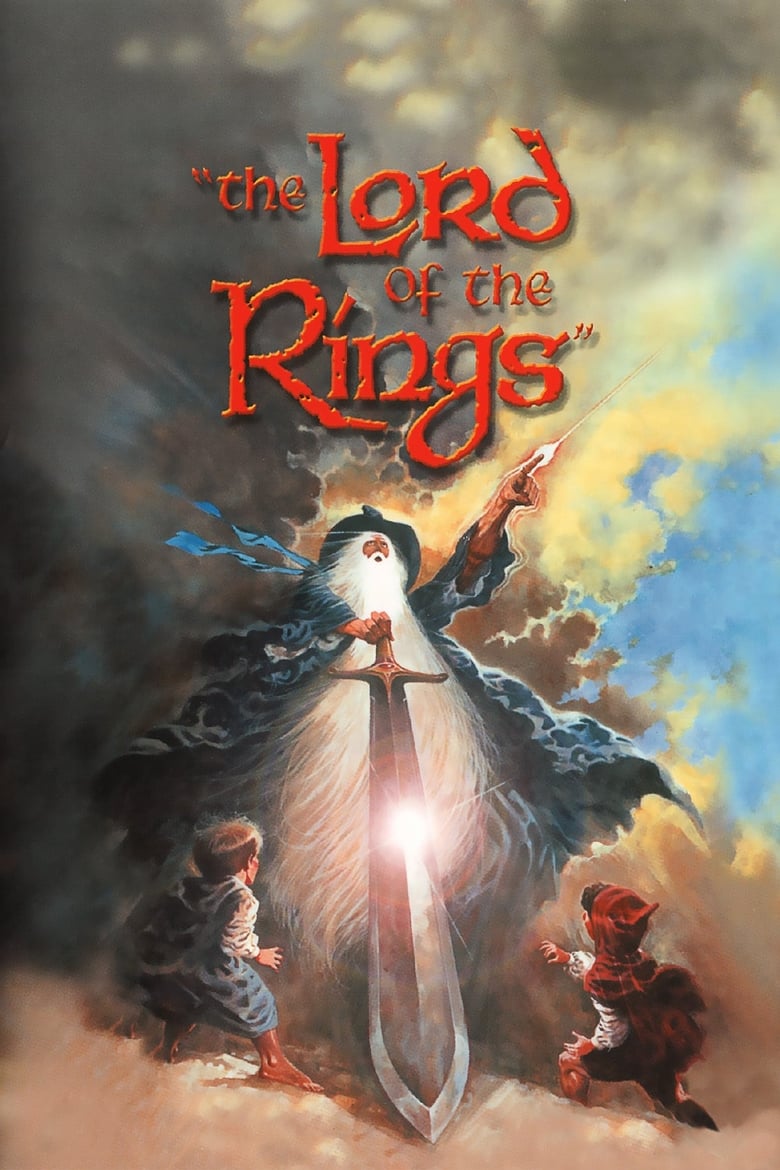
There's a moment watching Ralph Bakshi's The Lord of the Rings where you catch yourself thinking: this is genuinely extraordinary. The shadows creep across Mordor, the Ringwraiths loom with real menace, and the whole thing has this fevered, oppressive weight that feels completely unlike anything else from its era. And then, just as quickly, something lurches, a rotoscoped figure moves in that uncanny, stiff way that takes you right out of it, and you're back to wondering what on earth you're watching.
That tension, between the brilliant and the bewildering, is basically the whole experience of this film. It's a fever dream. A half-realised vision painted in dark fantasy tones and the strangest animation technique you'll find in mainstream cinema from this period. Rotoscoping, for the uninitiated, means tracing over live-action footage to produce animated movement. The idea is to ground the characters in something physically believable, and sometimes it absolutely works. The shadowy landscapes, the massing of Orcs, certain battle sequences, they carry a gritty, adult weight that no family-friendly animation could have pulled off. You feel the danger in Middle-earth here, genuinely.
But the technique also produces this uncanny stiffness, this dreamlike wrongness in the human characters especially, that keeps you at arm's length. It's not quite animation, not quite live action, not quite anything. I kept thinking of Fantastic Planet, another animated oddity from roughly the same era that uses its visual strangeness purposefully, to unsettle, to alienate. Bakshi's film has that same cult energy, but where Fantastic Planet commits entirely to its weirdness, this one seems unsure whether it wants to be strange or straightforward.
The adaptation covers roughly the first two thirds of The Fellowship of the Ring and edges into The Two Towers, and the pacing is uneven at best. There's a lot of narration papering over gaps that the runtime simply can't fill. You can feel the strain of trying to compress Tolkien's sprawling world into something manageable, and it doesn't always hold. Whole sections feel rushed, then oddly languid, and the tonal consistency that makes the books feel like one long continuous world is pretty much absent here.
And then it just stops. No real ending. A "to be continued" promise that, famously, never materialised into a proper follow-up. That incompleteness isn't just a disappointment, it genuinely damages what came before. You invest in this strange, flawed world for two hours and it simply doesn't pay off. It's like reading two thirds of a novel and finding the last hundred pages missing. The ambition was there for something genuinely groundbreaking. The follow-through wasn't.
What saves it, and why three stars feels right, is atmosphere and nerve. The haunting musical score gives it a real sense of dread. There are images here that stick, the Nazgul against a blood-red sky, the early horror of Frodo's journey out of the Shire, that feel earned and properly dark. Bakshi was trying to make a serious, adult fantasy epic at a time when that wasn't really done, and you have to respect the audacity of that, even when the execution falters.
It's more curiosity than classic, if I'm being straight with you. As an adaptation it captures the darkness of Middle-earth without always capturing its soul. The warmth, the friendship, the quiet heroism that makes Tolkien's world feel worth saving, that's largely absent. You see the shadow but not the light it's cast against.
Three stars. Imperfect, unfinished, undeniably bold. A fascinating fragment of animation history that deserves your attention, even if it never quite gets you to Rivendell.
Rating: ★★★ | Year: 1978 | Watched: 2025-09-19
Where to watch
Watch in the UK
Stream: Amazon Prime Video · Amazon Prime Video with Ads · Artiflix
Rent: Amazon Video
Buy: Apple TV Store · Google Play Movies · Sky Store · YouTube
Physical: Amazon UK · Zavvi
Watch in the US
Stream: Artiflix
Rent: Amazon Video · Apple TV Store · Google Play Movies · YouTube
Buy: Amazon Video · Apple TV Store · Google Play Movies · YouTube
Physical: Amazon US
Affiliate disclosure: Movies With Macca may earn a small commission on purchases or subscriptions started via these links. It costs you nothing extra.
Related on Movies With Macca
More from United Kingdom: Lessons of Darkness (1992) · Shinjuku Boys (1995) · The Curse of Frankenstein (1957) · Blue (1993)
More from the 1970s: Fantastic Planet (1973) · Here and Elsewhere (1976) · Italianamerican (1974) · Punishment Park (1971)
More adventure: Alice in Wonderland (1951) · The Eagle (1925) · Louisiana Story (1948) · The General (1926)
More animation: Fantastic Planet (1973) · Alice in Wonderland (1951) · Mononoke the Movie: The Phantom in the Rain (2024) · Mononoke the Movie: Chapter II - The Ashes of Rage (2025)