Romeo and Juliet (1968)
★★★ — Romeo and Juliet (1968)

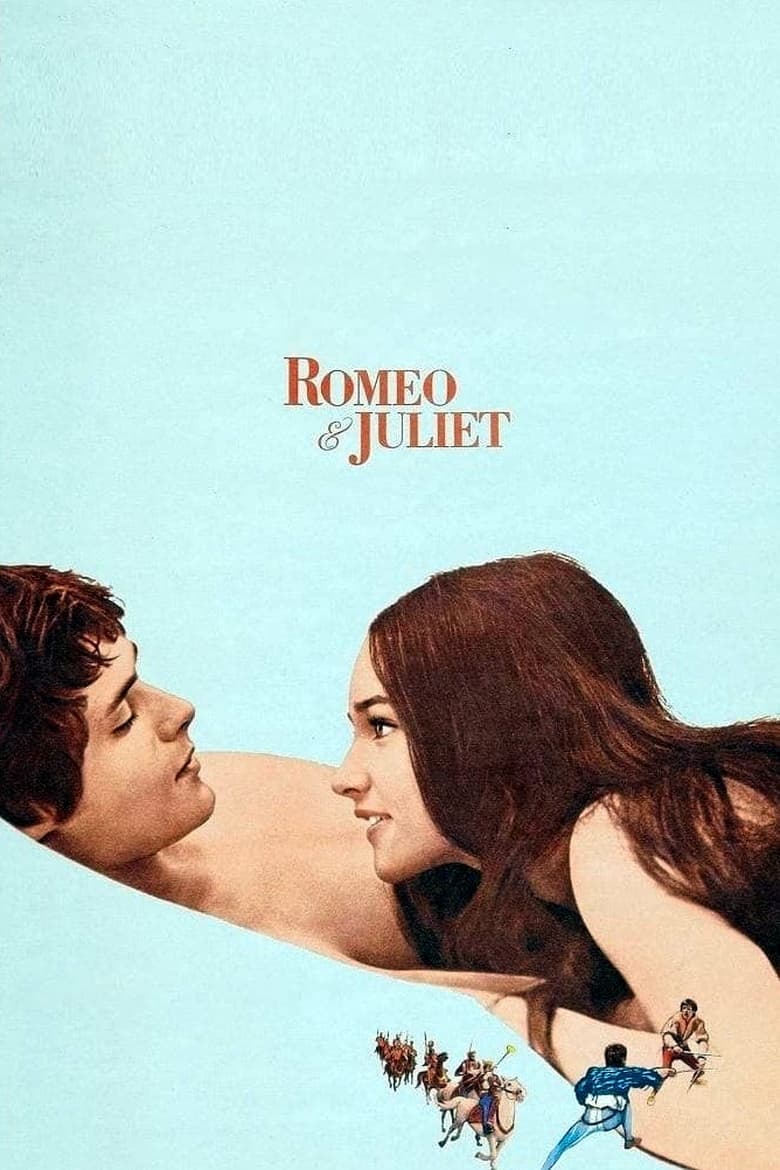
There's a particular kind of memory that sticks to certain films, not just what's on screen, but where you were when you first saw them. I watched Franco Zeffirelli's Romeo and Juliet as a GCSE student, part of the whole Shakespeare grind: the essays, the highlighted annotations, the quotes drilled into your head until they lost all meaning. You know the kind. And yet, somehow, this film did the opposite of what I expected. It made the words breathe.
That's no small thing. Most set texts handed to you at fifteen feel like homework wearing a costume. This didn't. Zeffirelli's version is lush and passionate and beautifully mounted, shot on location in Italy with sun-drenched courtyards, authentic period costumes, and a physicality that feels genuinely grounded. It doesn't feel like actors reciting lines on a stage. It feels like real young people caught up in something bigger and more violent than they can handle, which is exactly what the play is about.
A big part of why it works is the casting. Leonard Whiting and Olivia Hussey were teenagers when they played the roles, and you feel it. Their performances aren't the most technically refined things you'll ever see, but they have a raw, wide-eyed sincerity that sells the romance completely. The giddy excitement of first love, the desperation of being wrenched apart by centuries of inherited hatred. The balcony scene is tender and genuinely iconic, not in the overused, stripped-of-meaning sense, but in the sense that it actually earns its reputation. And Nino Rota's score hangs over the whole thing like a beautiful bruise, swelling at exactly the right moments, the kind of music that lodges itself in your chest. If you've ever responded to the aching summer warmth of Call Me by Your Name (2017), some of that feeling traces back here.
Now, it's not without its problems. Some of the supporting performances tip over into a more theatrical register that clashes with the naturalism Zeffirelli is clearly going for elsewhere. And the pacing does sag a bit in the middle stretch, where the tragic machinery is grinding into place but the film hasn't quite found the urgency it needs. There are moments where you're watching a very handsome, very well-intentioned adaptation rather than being completely swept away by one.
But here's the thing: it's honest. It respects the material without being enslaved to it. It trusts the story to do what the story does, and it gives you just enough visual and emotional grounding to meet it halfway. Reading the play alone, I'd struggled to feel the stakes. Watching this, I got it. The feud isn't an abstraction. The love isn't a symbol. They're real, and the collision of them is genuinely tragic.
I did, for what it's worth, get that A* in my GCSE. I'm not saying Zeffirelli deserves the credit, but I'm not not saying it either.
Three stars. Not flashy, not radical, not trying to reinvent anything. Just a sincere, heartfelt piece of filmmaking that does exactly what it sets out to do, and proved to a fifteen-year-old that Shakespeare didn't have to be a chore.
Rating: ★★★ | Year: 1968 | Watched: 2025-08-21
Where to watch
Watch in the UK
Stream: Paramount Plus · Paramount+ Amazon Channel · Paramount Plus Premium · Paramount Plus Basic with Ads
Rent: Apple TV Store · Amazon Video · Google Play Movies · YouTube
Buy: Apple TV Store · Amazon Video · Google Play Movies · Sky Store
Physical: Amazon UK · Zavvi
Watch in the US
Rent: Amazon Video · Apple TV Store · Google Play Movies · YouTube
Buy: Amazon Video · Apple TV Store · Google Play Movies · YouTube
Physical: Amazon US
Affiliate disclosure: Movies With Macca may earn a small commission on purchases or subscriptions started via these links. It costs you nothing extra.
Related on Movies With Macca
More from Italy: Nightmare City (1980) · Cemetery Man (1994) · One Way or Another (1975) · Chicken for Linda! (2023)
More from the 1960s: Viy (1967) · Persona (1966) · Carnival of Souls (1962) · Daisies (1966)
More drama: Viy (1967) · Wonder (2017) · A Better Tomorrow (1986) · Beautiful Boy (2018)
More romance: The Eagle (1925) · The Last Picture Show (1971) · The General (1926) · The Docks of New York (1928)