Return of an Adventurer (1966)
★★★ — Return of an Adventurer (1966)

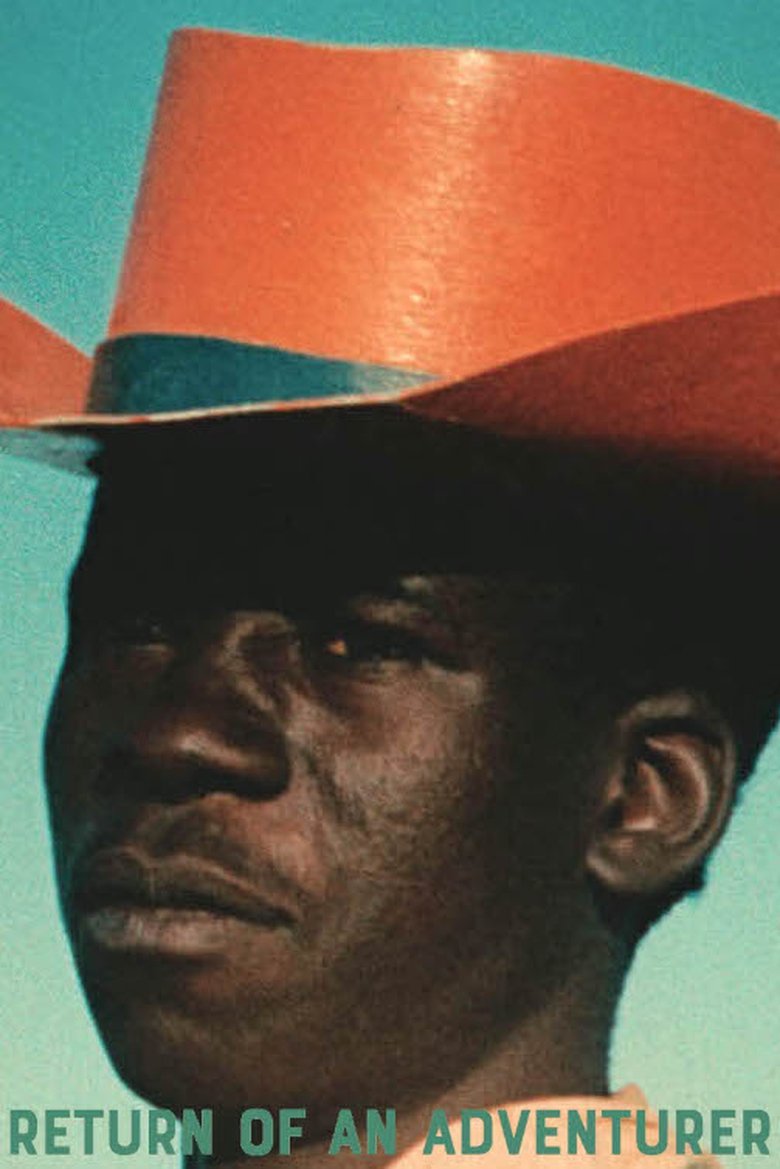
There is genuinely nothing else like Return of an Adventurer. I mean that. I've sat through countless films on my A-Z World Movie Tour, picking out one title per country to broaden my horizons, and Niger has thrown up something I could never have anticipated: a deadpan, quietly brilliant piece of work that takes the mythology of the American West and drops it, with a straight face, into a Sahelian village.
The setup is disarmingly simple. A young man comes back home after time spent in the United States, and he hasn't returned empty-handed. He's brought cowboy hats. Stacks of them. Boots. Six-shooters. The full kit. His friends and neighbours receive these gifts with delight, and before long the village youth are reenacting shootouts in the dust, assuming sheriff badges, staging saloon standoffs between mud-brick walls. The elders look on, baffled and increasingly exasperated. Family dinners are interrupted by mock gunfights. Children play at being cowboys with complete seriousness, mimicking a fantasy of America they've absorbed from somewhere, films probably, without really understanding what any of it means.
What director Moustapha Alassane does so well is resist the urge to lecture. There's no heavy-handed narration pointing at the symbolism, no character who steps forward to explain the moral. He simply observes. The camera watches the absurdity unfold with a calm, almost anthropological patience, and the contrast between the reality of rural Nigerien life and this imported, cartoonish mythology does all the heavy lifting on its own. It's a biting critique of cultural imitation and the pull of foreign identity, but it never feels like a lesson. It feels like life, strange and funny and a little sad all at once.
It reminded me, in its own way, of Little by Little, another West African film that uses comedy and a light touch to say something genuinely sharp about cultural encounter and displacement. Both films find their power not in confrontation but in absurdity, in letting the situation speak while the filmmaker holds back.
I won't pretend the film is polished. The pacing is loose, and the performances are amateurish in places. But I'd argue that roughness is part of what makes it work. There's an authenticity to it, a sense that you're watching something made with conviction rather than calculation. The lack of technical gloss keeps it honest. And the originality of the vision is so striking that any wobbles in execution barely register.
Think about what this film is actually doing. It's using the iconography of the Western genre, those hats and holsters and showdowns that I know so well from classics like Rio Bravo, and transplanting them into a context where they become something else entirely. Stripped of their native setting, all that cowboy mythology suddenly looks strange and a bit ridiculous. Which, of course, is the point. The genre only makes sense in its own mythology. Taken out of it, it collapses into costume.
What stays with me most is the image of children playing sheriff while their grandparents watch in bewilderment. It's funny, genuinely funny, but there's something underneath it that lingers. A question about what it means to want to be someone else, to reach for an identity that was never made for you. The film doesn't answer that question. It just holds it up to the light and lets you look.
Rough around the edges, yes, but unforgettable for the boldness of its perspective. Three stars, and honestly it might grow on me. Hidden gem is an overused phrase, but here it fits.
Rating: ★★★ | Year: 1966 | Watched: 2025-07-31
Where to watch
Watch in the US
Stream: Criterion Channel
Physical: Amazon US
Affiliate disclosure: Movies With Macca may earn a small commission on purchases or subscriptions started via these links. It costs you nothing extra.
Related on Movies With Macca
More from France: Fantastic Planet (1973) · Letter from Siberia (1957) · Lessons of Darkness (1992) · Here and Elsewhere (1976)
More from the 1960s: Viy (1967) · Persona (1966) · Carnival of Souls (1962) · Daisies (1966)
More western: The Ox-Bow Incident (1943) · Rio Bravo (1959) · Ride Lonesome (1959) · The Great Train Robbery (1903)