The Great Train Robbery (1903)
★½ — The Great Train Robbery (1903)

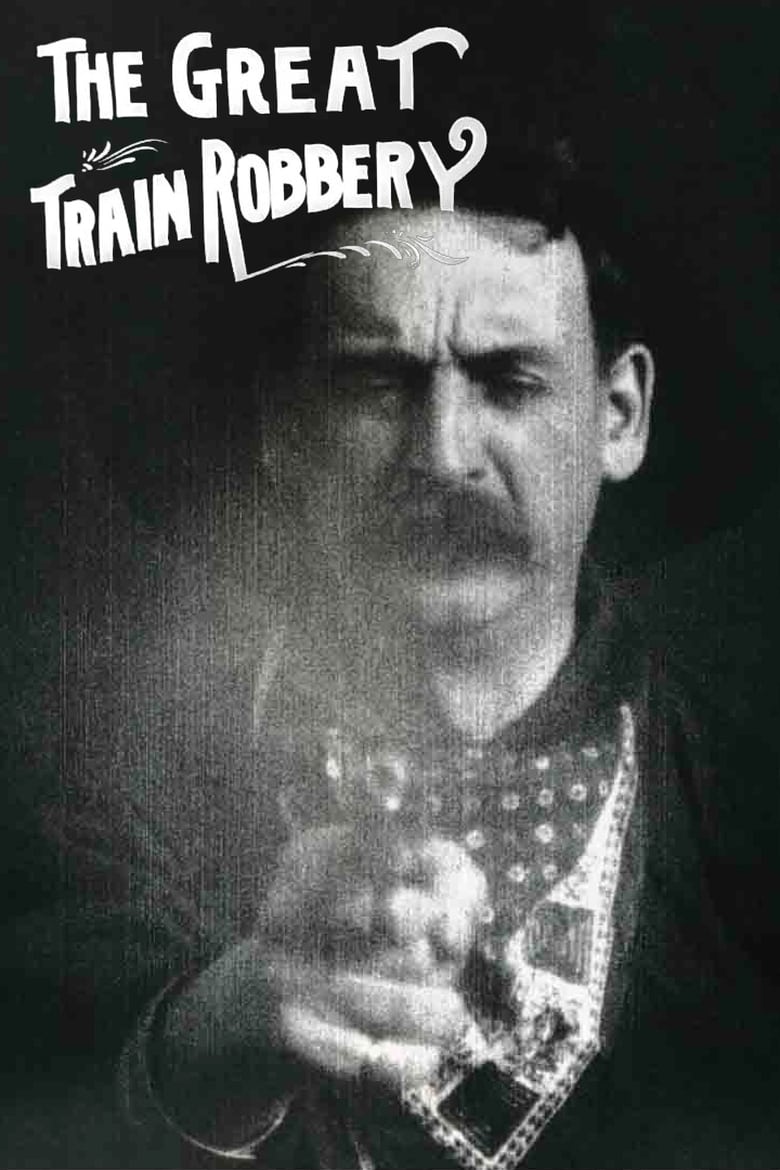
There's a moment near the end of The Great Train Robbery where an outlaw turns, raises his pistol, and fires it straight at you. Straight at the camera. Straight at the audience. In 1903, that must have been genuinely shocking, the kind of thing that made people flinch or gasp or grab the arm of the person next to them. I can picture it vividly. What I can't quite do, if I'm being honest, is feel it.
That's the central problem with Edwin S. Porter's 12-minute Western, and it's not really a problem with the film so much as it's a problem with time. This is one of the most significant films ever made. It pioneered narrative storytelling on screen, introduced cross-cutting between simultaneous action, and took the camera out into actual locations rather than keeping everything pinned to a static stage. It helped invent the grammar of cinema as we know it. I'd be a fool to dismiss it, and I'm not going to.
But I'd also be lying if I said it was an enjoyable watch in 2025.
Sitting through it now, what you're confronted with is stiff, pantomimed acting that looks less like performance and more like a group of men who've been told roughly where to stand and then left to get on with it. The pacing is a strange creature too, simultaneously rushed and sluggish, skipping over things you'd want to linger on while dwelling on moments that don't quite earn the attention. The plot, a train heist followed by a chase followed by a shootout, is as bare as it gets. There's no shame in that for a 12-minute film from the early twentieth century, but stripped of context it's difficult to feel much beyond a polite, arm's-length curiosity.
That's the honest verdict: you admire what The Great Train Robbery represents far more than you experience what it is. It's the cinematic equivalent of reading the opening paragraph of a novel that would eventually become a masterpiece. The DNA is there. The ambition is there. The finished article, by any modern measure of engagement, isn't quite.
I had a similar feeling watching A Trip to the Moon, Georges Méliès's 1902 fantasy made just a year before this. That one has a slight edge for me because its surreal imagery gives the imagination something to grip onto even now. Porter's film is earthier and in some ways more technically adventurous, but it's also harder to love as a piece of entertainment rather than a historical exhibit.
If you want to see what the Western became in more assured hands, you'd be much better off with something like Rio Bravo, a film that shows just how far the genre travelled in the half-century that followed. The distance between the two is almost vertiginous when you put them side by side.
None of this is a knock on Porter or the people who made The Great Train Robbery. They were working at the frontier of an art form that barely had rules yet, making them up as they went along. The final gunshot to camera, detached from the narrative and placed there purely for visceral effect, is still a bold and fascinating choice. Film history needed this film. It needed people willing to push the medium beyond the static recording of vaudeville acts and into something that could tell stories, cut between spaces, follow characters through time. This is where a lot of that begins.
Worth a glance for anyone tracing the roots of the medium, and essential viewing if you're seriously interested in where film came from. Just don't go in expecting to be gripped. Go in expecting to be respectful, because that's the honest response. One and a half stars.
Rating: ★½ | Year: 1903 | Watched: 2026-03-12
Where to watch
Watch in the US
Stream: FlixFling
Rent: FlixFling
Buy: FlixFling
Physical: Amazon US
Affiliate disclosure: Movies With Macca may earn a small commission on purchases or subscriptions started via these links. It costs you nothing extra.
Related on Movies With Macca
More from the 1900s: A Trip to the Moon (1902)
More western: The Ox-Bow Incident (1943) · Rio Bravo (1959) · Ride Lonesome (1959) · Bone Tomahawk (2015)
More crime: A Better Tomorrow (1986) · Angst (1983) · Stolen Face (1952) · Cairo Station (1958)