Portrait of a Young Girl at the End of the 60s in Brussels (1994)
★★★ — Portrait of a Young Girl at the End of the 60s in Brussels (1994)

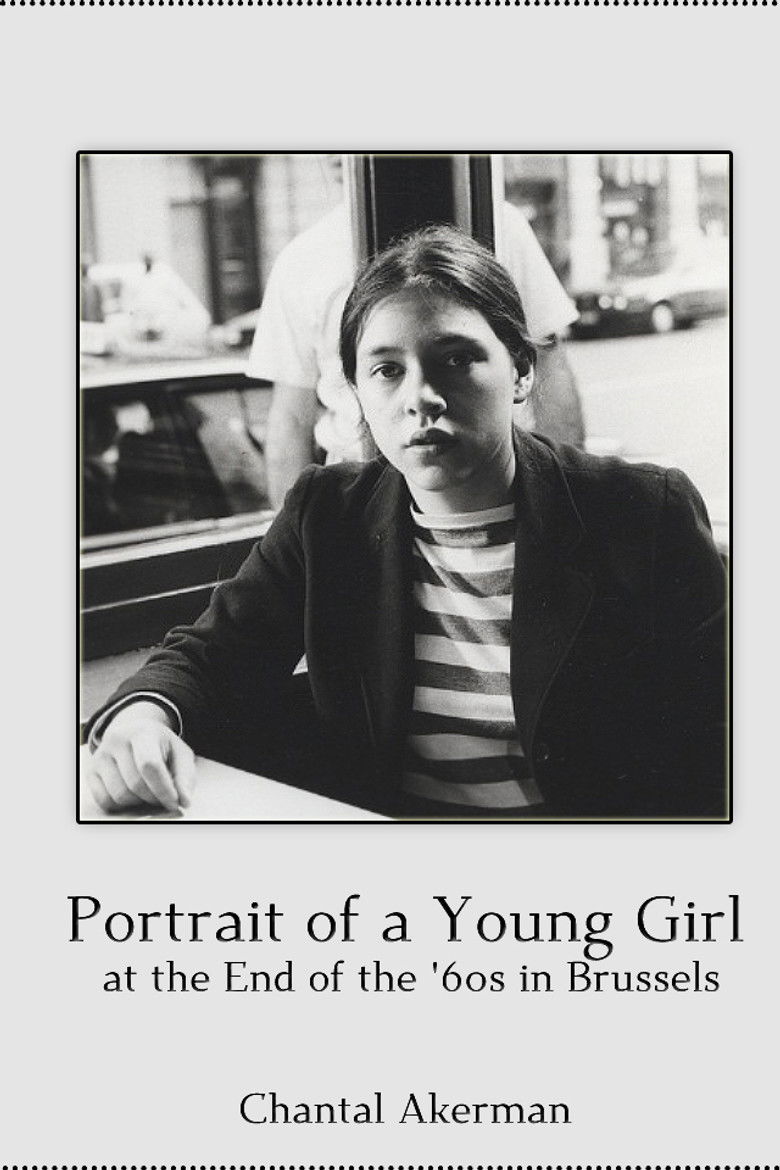
There's a specific kind of afternoon that only happens when you're a teenager. Time stretches, the city feels like it belongs to you, and a conversation with someone you've just met can feel more significant than anything that's happened in your entire life up to that point. Chantal Akerman captures that feeling in Portrait of a Young Girl at the End of the 60s in Brussels with such quiet precision that watching it feels less like watching a film and more like stumbling across an old memory you'd forgotten you had.
It's a short film, barely over an hour, and the plot is almost defiantly uneventful. A teenage girl wanders Brussels one afternoon, meets a boy, and they talk. They walk. They sit. They share the kind of open, drifting conversation that goes everywhere and nowhere. That's it. If you're expecting a dramatic climax or a tidy resolution, you'll be waiting a long time. But if you let yourself settle into its rhythm, it offers something genuinely rare: the feeling of youth rendered without sentimentality or exaggeration.
What struck me most is how natural everything feels. The dialogue doesn't sound written. The pauses don't feel staged. These two young people feel like they were caught on camera by accident, as though Akerman simply pointed a lens at Brussels and found them there, mid-thought. There's a dreamy, drifting quality to the whole thing, that particular teenage inertia where a single afternoon contains whole lifetimes of feeling, and nothing seems urgent because everything is.
I kept thinking of Before Sunrise while watching it, two young people wandering a European city, talking and feeling their way toward something they can't quite name. But where that film wraps its conversations in a certain romantic self-consciousness, this one is more tentative, more grounded. The connection between these two characters feels genuinely uncertain. Neither of them quite knows what this afternoon is or what it means, and Akerman doesn't tell them or us. It's that ambiguity that makes it linger.
I've been thinking lately about films that deal honestly with the experience of being young and female, and how rarely it's done without either over-dramatising or tidying things up. I had similar thoughts watching Mustang, which takes a very different approach but shares that same commitment to emotional honesty over narrative convenience. Akerman's film is quieter and smaller in scope, but no less precise in what it's observing.
My only real reservation is that the film's slightness can tip, at moments, into feeling almost too sparse. There are stretches where I wanted just a little more grip, some small detail or texture to hold onto. It's a film that demands patience, and while I'd say that patience is rewarded, I can't pretend it never tested mine. Three stars feels right to me: this is a genuinely lovely piece of work, but lovely in the way a single perfectly observed moment is lovely, rather than something that fully sustains itself as a complete experience.
Still, what Akerman achieves in such a compact runtime is impressive. She finds the weight inside the ordinary, the significance inside the casual. Two kids talking on a Brussels afternoon, hoping the conversation won't end. It's a small film, but it knows exactly what it's doing, and it does it with real grace.
Rating: ★★★ | Year: 1994 | Watched: 2026-03-08
Related on Movies With Macca
More from France: Fantastic Planet (1973) · Letter from Siberia (1957) · Lessons of Darkness (1992) · Here and Elsewhere (1976)
More from the 1990s: Lessons of Darkness (1992) · Shinjuku Boys (1995) · Blue (1993) · Cemetery Man (1994)
More tv movie: Lessons of Darkness (1992) · Style Wars (1983) · Travolta and Me (1993) · The War Game (1966)
More drama: Viy (1967) · Wonder (2017) · A Better Tomorrow (1986) · Beautiful Boy (2018)