Pink Floyd: Live at Pompeii (1972)
Pink Floyd: Live at Pompeii (1972)

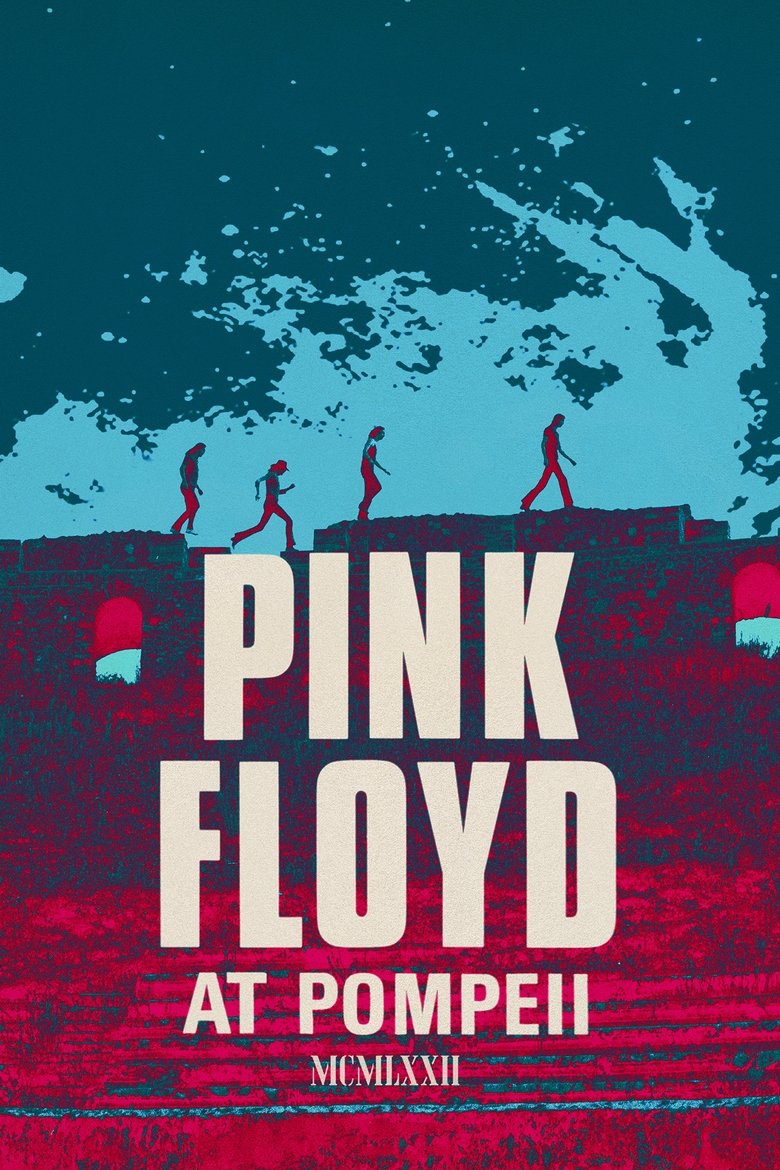
There's no score here. I can't bring myself to rate this, and frankly I don't think it would be right to try. Some things sit outside that kind of judgement.
What I can tell you is that Pink Floyd: Live at Pompeii is unlike anything else I've ever watched. Adrian Maben's film drops the band into the ancient amphitheatre at Pompeii, no audience, no applause, no crowd noise of any kind, just four musicians playing to crumbling stone and volcanic dust and the odd lizard basking in the sun. It sounds like a gimmick. It is absolutely not a gimmick. It's closer to a séance than a concert film.
The setting is doing extraordinary work here. This is a place where people lived and laughed and went about their ordinary lives, and then everything stopped. Playing music in that space, surrounded by that silence, gives the whole thing a weight that no arena show could ever manufacture. Maben seems to understand this instinctively. He doesn't fight the atmosphere or try to impose excitement on top of it. He lets the camera drift over sun-bleached ruins and volcanic stone, shoots on grainy 16mm that feels tactile and honest, and trusts the music to carry everything else.
And the music does carry it. The band were caught here at a fascinating in-between moment, somewhere after Meddle and before The Dark Side of the Moon, at a point when the psychedelic sprawl of their earlier work was tightening into something more considered and more devastating. You can hear the shape of what was coming. The performances are hypnotic and precise in equal measure. Gilmour's guitar doesn't just play notes, it aches. The rhythm section pulses like something biological, like a heartbeat or a tide, and the interplay between all four of them has this quality of shared concentration, four people genuinely listening to each other, locked in together.
Because there's no crowd to perform to, you see things you wouldn't otherwise notice. The focus on their faces. The small adjustments. The moments where someone hears something and reacts to it. It's intimate in a way that stadium footage never is, even when the stadium footage is technically superior. This strips everything back to the music and the people making it, and what's left is remarkable.
If you want a companion piece from roughly the same era, I was similarly floored by Amazing Grace, the Aretha Franklin gospel recording that sat in a vault for decades before the world finally got to see it. That film has a completely different energy, heat and congregation and holy joy rather than cool ruins and cosmic drift, but both share this quality of music filmed with genuine reverence, where the camera's job is to serve the performance rather than compete with it.
Pompeii is a meditation on time and silence and what survives. A civilisation thrived there and was swallowed whole. The amphitheatre remains. And now this film exists, a record of four men from London playing long, searching pieces of music in that ancient space, and it feels oddly profound that it does. Not because of any grand statement the film is making, it doesn't make grand statements, but because the location and the music together create something you can't quite shake.
Haunting, immersive, and genuinely unlike anything else. I won't be putting a star rating on it, but I'll be thinking about it for a long time.
Rating: Not rated | Year: 1972 | Watched: 2026-03-08
Where to watch
Watch in the UK
Rent: Apple TV Store · Amazon Video
Buy: Apple TV Store · Amazon Video
Physical: Amazon UK · Zavvi
Watch in the US
Rent: Amazon Video · Apple TV Store · Google Play Movies · YouTube
Buy: Amazon Video · Apple TV Store · Google Play Movies · YouTube
Physical: Amazon US
Affiliate disclosure: Movies With Macca may earn a small commission on purchases or subscriptions started via these links. It costs you nothing extra.
Related on Movies With Macca
More from Belgium: The Second Night (2016) · The Fourth Kind (2009) · Kirikou and the Sorceress (1998) · A Cat in Paris (2010)
More from the 1970s: Fantastic Planet (1973) · Here and Elsewhere (1976) · Italianamerican (1974) · Punishment Park (1971)
More music: Style Wars (1983) · 8 Mile (2002) · Chicken for Linda! (2023) · Tender Mercies (1983)
More documentary: Letter from Siberia (1957) · Lessons of Darkness (1992) · Style Wars (1983) · Here and Elsewhere (1976)