Le Samouraï (1967)
★★★★ — Le Samouraï (1967)

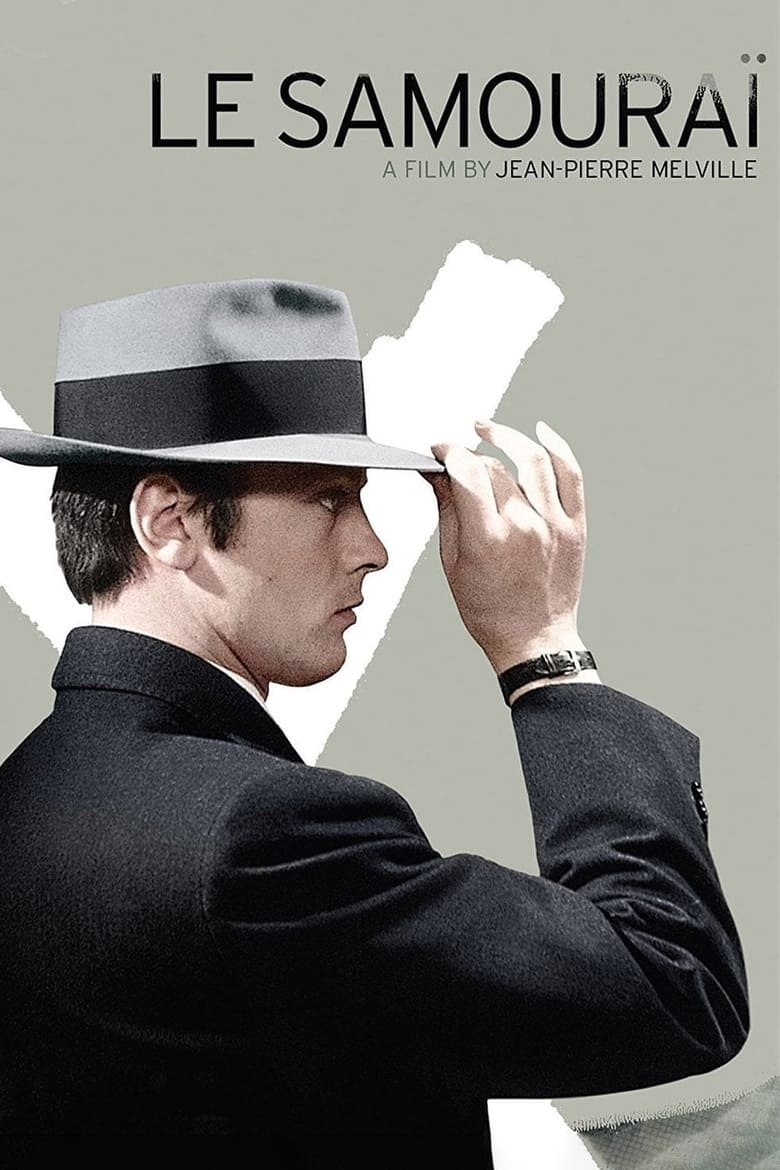
There's a moment early in Le Samouraï where we simply watch Jef Costello get dressed. Fedora. Trench coat. The brim adjusted to exactly the right angle in the mirror. It lasts longer than it has any right to, and yet you cannot look away. That, in a nutshell, is what Jean-Pierre Melville pulls off across the entire film: the transformation of the mundane into something utterly transfixing.
This is the quiet godfather of cool. A film so influential it practically wrote the rulebook for the stoic, solitary assassin that would stalk cinema for decades to come. Alain Delon plays Jef Costello, a contract killer whose life is a study in ritual and restraint. His apartment is bare save for a caged bird and a single photograph. He speaks sparingly, moves deliberately, and inhabits a world of muted colours and echoing silence. If you've ever wondered where Leon, Drive or The Driver came from, the answer is here. Every brooding antihero who followed owes Jef Costello a considerable debt, and most of them are still paying it off.
The pacing is slow by modern standards, and I want to be straight with you: that is precisely the point. Melville luxuriates in the mundane. The lighting of a cigarette. The careful pulling on of gloves. The patient, almost meditative waiting before a job. Each gesture carries weight; each silence hums with something just beneath the surface. It never feels indulgent because the discipline is total. Every quiet beat earns its place.
Delon's performance is ice-cold perfection, less acting than pure presence. He barely speaks, and he doesn't need to. His stillness is more compelling than most actors' monologues, and there's a strange melancholy buried somewhere behind those eyes that the film never fully explains and never needs to. The story itself is elegantly simple: a hit gone wrong, a man hunted simultaneously by the police and by his own employers. It unfolds with the precision of a chess match, every move calculated, every consequence feeling inevitable. No fat on it anywhere.
Where it connects interestingly for me is with Korean crime cinema, particularly something like A Bittersweet Life (2005), which wears this film's influence proudly on its sleeve. The lone operative caught between loyalty and survival, the cool visual geometry, the sense of a man defined entirely by his function until the world he serves turns on him. The bloodlines are unmistakable.
What Le Samouraï has that its descendants sometimes lack is style used as genuine substance rather than decoration. The muted, almost drained palette isn't an aesthetic choice made in post-production to look interesting. It's the whole texture of Jef's existence. The colour of a life stripped back to its barest essentials. Melville frames him in wide, cold spaces, lets the silence pool around him, and the effect is genuinely hypnotic.
My one honest admission is that the film's emotional distance can make it hard to feel the stakes viscerally. You admire it more than you fear for it. But I think that's the bargain Melville is offering. This isn't a thriller designed to make your heart race. It's a crime poem designed to get under your skin and stay there. The lack of explosive set-pieces is a feature, not a shortcoming.
Four stars. Timeless, immaculate, and a lesson in how to say everything by saying almost nothing at all.
Rating: ★★★★ | Year: 1967 | Watched: 2026-03-30
Where to watch
Watch in the UK
Stream: Amazon Prime Video · Amazon Prime Video with Ads
Rent: Apple TV Store · Amazon Video
Buy: Apple TV Store · Amazon Video
Physical: Amazon UK · Zavvi
Watch in the US
Stream: Amazon Prime Video · HBO Max Amazon Channel · HBO Max · Amazon Prime Video with Ads
Rent: Amazon Video · Apple TV Store · Google Play Movies · YouTube
Buy: Amazon Video · Apple TV Store · Google Play Movies · YouTube
Physical: Amazon US
Affiliate disclosure: Movies With Macca may earn a small commission on purchases or subscriptions started via these links. It costs you nothing extra.
Related on Movies With Macca
More from France: Fantastic Planet (1973) · Letter from Siberia (1957) · Lessons of Darkness (1992) · Here and Elsewhere (1976)
More from the 1960s: Viy (1967) · Persona (1966) · Carnival of Souls (1962) · Daisies (1966)
More crime: A Better Tomorrow (1986) · Angst (1983) · Stolen Face (1952) · Cairo Station (1958)
More thriller: Invasion of the Body Snatchers (1956) · Angst (1983) · The Long Walk (2025) · Punishment Park (1971)