Duck Soup (1933)
★★★½ — Duck Soup (1933)

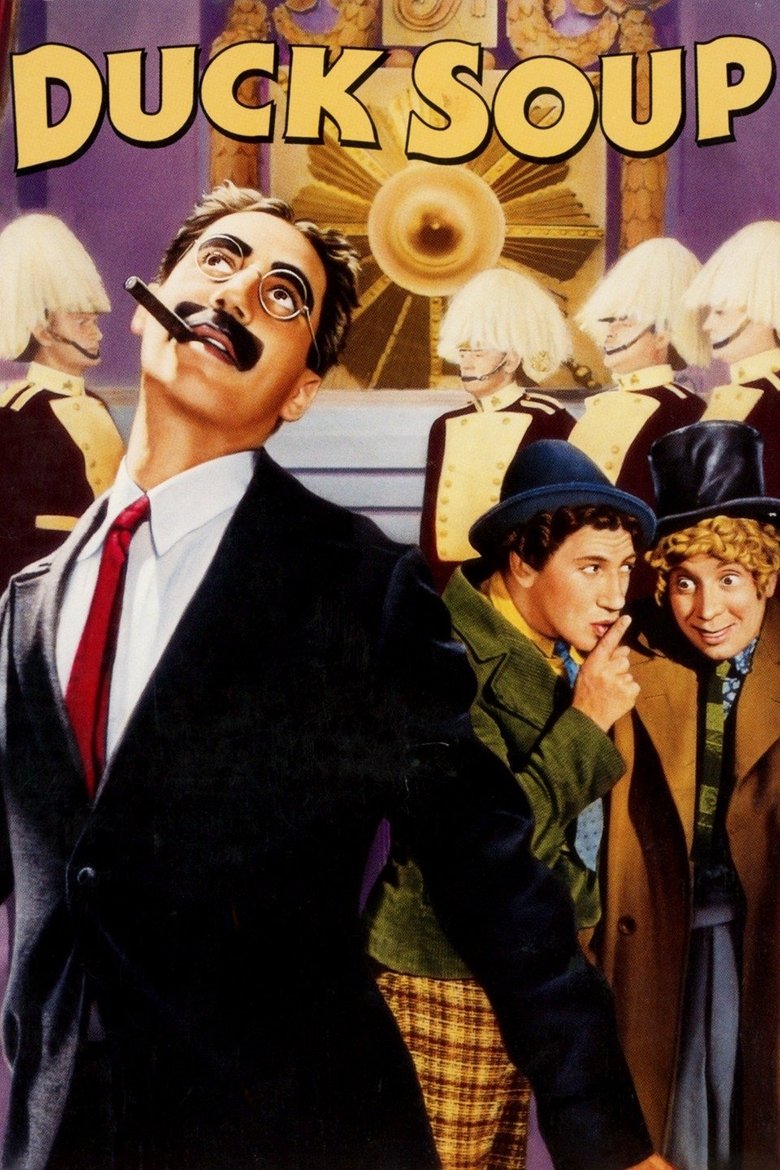
There's a moment in Duck Soup where the logic of the plot, the dignity of its characters, and any pretence of political seriousness all collapse at once into pure, beautiful chaos, and you realise that was always the point. This is the Marx Brothers at their sharpest and their silliest, a film that treats nationalism, bureaucracy, and the ego-driven march to war as exactly the farce they are. Nearly a century on, it's hard to decide whether that feels triumphant or a little bit depressing.
Groucho plays Rufus T. Firefly, the absurdly appointed leader of the bankrupt nation of Freedonia. His petty, sarcastic feud with a neighbouring state escalates, through a series of slights, misunderstandings, and sheer bloody-mindedness, into full-blown war. Leo McCarey directs with a kind of controlled pandemonium, somehow keeping the energy up even as the film refuses to follow any conventional dramatic logic. It's anarchic, gleefully anti-authoritarian, and deeply suspicious of anyone who takes themselves seriously enough to seek power. If that sounds astonishingly relevant for a 1933 comedy, that's because it absolutely is.
The jokes come thick and fast: puns, sight gags, fourth-wall breaks, surreal non-sequiturs piled on top of each other like dominoes queued up for the shove. Some of the punchlines feel telegraphed now, but that's only because the Marx Brothers essentially invented them. Groucho's cigar-chomping cynicism, Harpo's mute physical mischief, Chico's cheerful malapropisms, they became the foundational DNA for generations of comedy that followed. You can draw a straight line from Duck Soup to Dr. Strangelove, to The Simpsons, to pretty much any comedy sketch show that's ever dared to be properly weird. I'd looked at their earlier Paramount work before coming to this one, and it's striking how much sharper and more focused their anarchic energy feels here, like all that earlier chaos has been honed into something with an actual target.
That said, I want to be honest about the bits that don't quite work for me, because pretending otherwise would be daft. The pacing drags in places, particularly around the musical numbers, which were clearly a studio-mandated requirement of the era rather than something anyone was desperately passionate about. They interrupt the comic momentum at moments when you just want the Brothers to keep doing their thing. Even so, there's an odd charm to them in context, a reminder that you're watching something built from the conventions of its time, and kicking against most of them.
The target of the satire is ego, pure and simple: the ego of leaders who start wars over wounded pride, of institutions that dress up absurdity in the language of patriotism, of any system that rewards the loudest and most self-important voice in the room. Duck Soup doesn't make a sophisticated argument against any of this so much as it simply holds it up and laughs until the thing deflates. Sometimes that's the more effective move.
Not every gag lands in 2026, and I won't pretend the film is without its rough edges. But its spirit of irreverence, its fundamental refusal to be impressed by authority, and its sheer audacity still crackle with life. The best political satire doesn't age so much as it waits patiently for the world to give it fresh material. Duck Soup, it seems, has never had to wait very long.
Three and a half stars.
Rating: ★★★½ | Year: 1933 | Watched: 2026-03-11
Where to watch
Watch in the UK
Rent: Apple TV Store · Amazon Video · Google Play Movies · Sky Store
Buy: Apple TV Store · Amazon Video · Google Play Movies · Sky Store
Physical: Amazon UK · Zavvi
Watch in the US
Stream: YouTube TV
Rent: Amazon Video · Apple TV Store · Google Play Movies · YouTube
Buy: Amazon Video · Apple TV Store · Google Play Movies · YouTube
Physical: Amazon US
Affiliate disclosure: Movies With Macca may earn a small commission on purchases or subscriptions started via these links. It costs you nothing extra.
Related on Movies With Macca
More with Groucho Marx: Monkey Business (1931)
More from the 1930s: Earth (1930) · Monkey Business (1931) · Sabotage (1936) · People on Sunday (1930)
More comedy: The Eagle (1925) · The General (1926) · Americana (2023) · The Naked Gun: From the Files of Police Squad! (1988)
More war: Lessons of Darkness (1992) · The General (1926) · Men Without Wings (1946) · Fires Were Started (1943)