A Day in the Country (1946)
★★½ — A Day in the Country (1946)

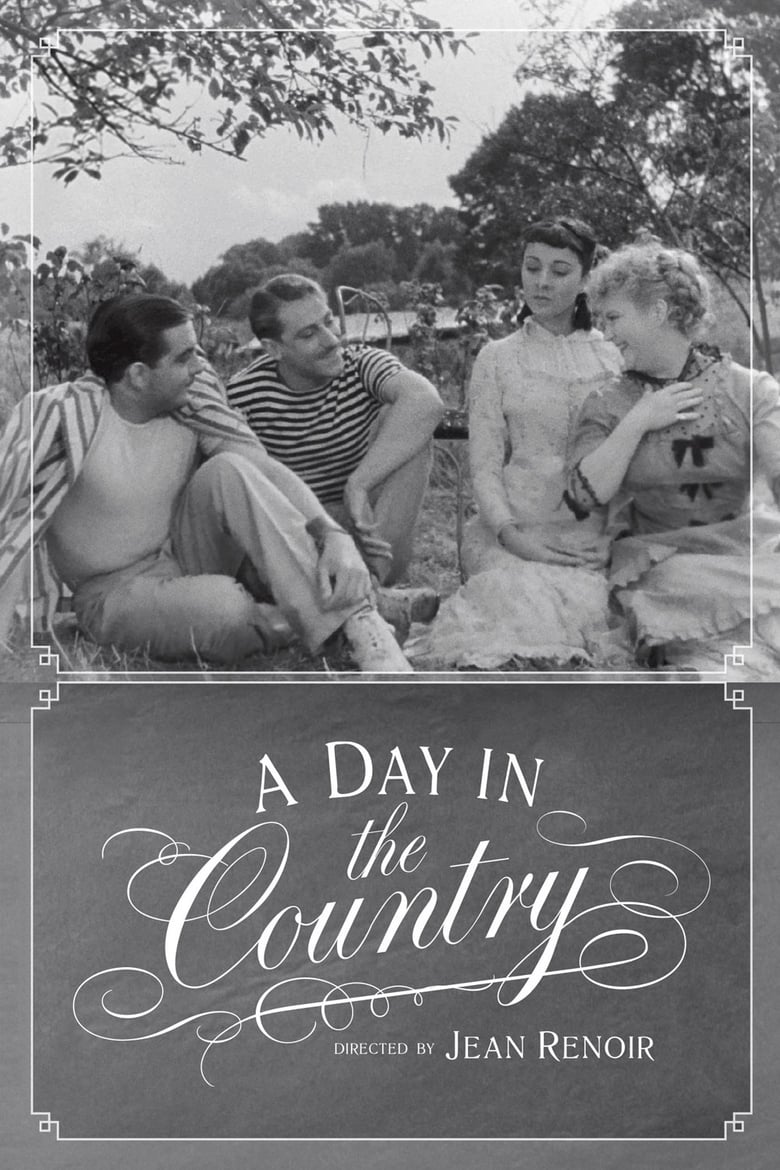
Let me be honest with you: I've been told my whole life that Partie de Campagne is a poetic masterpiece, one of those films you're supposed to watch and feel the weight of cinema history pressing gently on your shoulders. I watched it. I felt the warmth of the sun through the willow trees, heard the laughter drifting over the river, noticed the quiet longing in a glance held a beat too long. And then it ended, and I thought: is that it?
That's not a dismissal. Jean Renoir's short film has genuine, undeniable beauty in it. The naturalism of the performances, the soft, dappled light, the score with its gentle classical touches that seem to float just above the action rather than underline it. There's a melancholy undercurrent running through the whole thing, something about fleeting youth and chances that slip away before you've even recognised them as chances. That mood lingers. I won't pretend otherwise.
But here's what I can't get past: it's unfinished. Not in the loose, impressionistic sense where you might say a film is "open-ended" or "refuses easy resolution." Literally unfinished. Shooting was abandoned after only a few weeks, owing to weather and, eventually, the war, and what we have is a collection of scenes stitched together with intertitles explaining what's missing. A family go on a picnic. Two young women attract the attention of a pair of local men. There's flirtation, a row on the river, a moment of connection, and then time passes and life moves on. That's the film.
Now, I know the argument. "Nothing happens" can be a structural choice, a philosophy even. I've sat with films that make stillness and drift feel profound, and I've appreciated them. But there's a difference between a film that chooses to be a fragment and one that simply is a fragment by circumstance. The intertitles are the giveaway. They're not an artistic flourish; they're an apology, filling in the gaps where scenes that were never shot would have gone. Calling the finished version a complete work feels like calling a rough sketch a painting because the pencil marks are graceful.
What Partie de Campagne does well, it does very well. The cinematography is gorgeous in a way that still holds up, all soft edges and natural light and compositions that feel observed rather than arranged. The performances are subtle and warm. And that undercurrent of loss, the sense that this one summer afternoon contains within it the whole shape of a life's regret, does register. It's not nothing. If you're interested in the lineage of a certain kind of European naturalism, the kind of sun-drenched sensory filmmaking you get in something like Call Me by Your Name, then this is worth your time as a piece of that history.
But masterpiece? I can't get there. That word implies completion, implies a work that achieves what it set out to achieve. This is more like finding a beautiful postcard from someone else's holiday. You can admire it, hold it up to the light, appreciate what it captures. You just can't shake the feeling that there was supposed to be a letter inside the envelope too.
Two and a half stars. Worth watching once, for the visual poetry and the historical curiosity of it. Just don't go in expecting depth or payoff or any of the other things the reputation promises. It's a lovely fragment of a film, and the honest version of this review has to say that a fragment, however lovely, is not the same thing as the thing itself. I get the admiration. I genuinely do. I just don't share it.
Rating: ★★½ | Year: 1946 | Watched: 2025-11-01
Where to watch
Watch in the US
Stream: HBO Max Amazon Channel · Criterion Channel · HBO Max
Rent: Amazon Video · Apple TV Store · Fandango At Home
Buy: Amazon Video · Apple TV Store · Fandango At Home
Physical: Amazon US
Affiliate disclosure: Movies With Macca may earn a small commission on purchases or subscriptions started via these links. It costs you nothing extra.
Related on Movies With Macca
More from France: Fantastic Planet (1973) · Letter from Siberia (1957) · Lessons of Darkness (1992) · Here and Elsewhere (1976)
More from the 1940s: Louisiana Story (1948) · The Ox-Bow Incident (1943) · Men Without Wings (1946) · The Bank Dick (1940)
More drama: Viy (1967) · Wonder (2017) · A Better Tomorrow (1986) · Beautiful Boy (2018)
More romance: The Eagle (1925) · The Last Picture Show (1971) · The General (1926) · The Docks of New York (1928)