2001: A Space Odyssey (1968)
★★★★ — 2001: A Space Odyssey (1968)

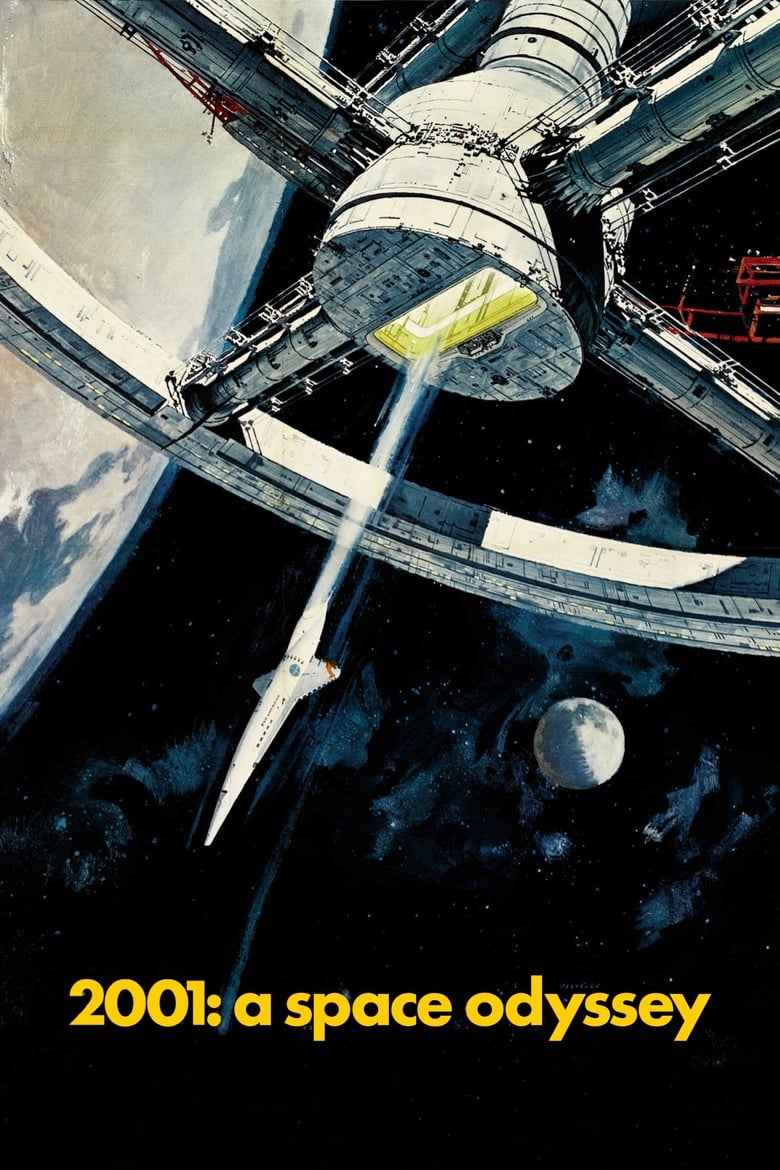
I get it. I really do. And I want to be clear about that before anything else, because when you say something even slightly critical about 2001: A Space Odyssey, people look at you like you've just spat on the moon landing.
There was a time I had this on an untouchable pedestal. The kind of film you don't just watch, you experience, and you come away feeling like you've had something reshuffled inside your skull. In many ways, that's still true. Stanley Kubrick, who I've written about before in my review of The Shining (1980), was a filmmaker who refused to make films the easy way, and here he's operating at the outer edge of what the medium could even attempt. This isn't really a film in the traditional sense. It's an art piece. A provocation. A philosophical argument dressed up in starlight and silence.
And so much of it is genuinely extraordinary. The atmosphere is unlike anything else. The visual ambition, the match cuts, the bone to spacecraft, that final act that collapses language entirely and asks you to feel your way through it. The ambiguity isn't a failure of storytelling; it's the whole point. Kubrick wants you unsettled, wants you to sit with the vastness and the mystery and the uncomfortable suggestion that we are very, very small.
Then there's HAL. HAL 9000 remains one of the most chillingly effective presences in the history of science fiction. No raised voice. No theatrics. Just that calm, measured, almost apologetic delivery, and the total certainty behind it that makes your skin crawl. The voice alone carries pure menace. Every scene HAL features in is the film at its sharpest, and those scenes still land with full force.
The themes are the kind that spark pub debates that spill into the car park. The evolution of mankind. Artificial intelligence and what it means when the tools we build start making choices. Cosmic insignificance, the idea that the universe is indifferent to us and always has been. These are ideas worth grappling with, and 2001 grapples with them seriously, without condescending to offer easy answers. I respect that enormously. I find myself thinking about it for days after each rewatch.
But here's where I have to be honest, and I know this is not a popular opinion: it doesn't quite hold up in the same way it once did for me. It is slow. Painfully slow at points. There are sequences that make their point beautifully and then continue making it, and continue after that, long past the moment where you've received the message and simply started waiting. There's a version of this film that could lose a solid hour and emerge with every bit of its brilliance intact. The Dawn of Man sequence is stunning, and then it goes on. The docking sequences are gorgeous, and then they keep going. It's as though Kubrick was so committed to the feeling of cosmic time that he applied it to the running time as well.
That ambition, though. I'll never fault it. This is a film that aimed for the stars, literally and figuratively, at a moment when nobody really knew if cinema could do what Kubrick was attempting. It redrew what was possible. It's a milestone, a landmark, something genuinely important. Watching it still feels like watching a film that exists slightly outside of normal cinema, which is part of why it pairs interestingly in my mind with something like Persona, another film that weaponises discomfort and refuses to hold your hand through the experience.
My feelings have just become more complicated over time, and I think that's fine. Loving something and admitting its frustrations aren't mutually exclusive. 2001 is a masterwork that occasionally forgets you're in the room. I can hold both of those things at once.
Four stars.
Rating: ★★★★ | Year: 1968 | Watched: 2025-04-10
Where to watch
Watch in the UK
Stream: Amazon Prime Video · HBO Max Amazon Channel · Now TV Cinema · Amazon Prime Video with Ads
Rent: Apple TV Store · Rakuten TV · Amazon Video · Google Play Movies
Buy: Apple TV Store · Rakuten TV · Amazon Video · Google Play Movies
Physical: Amazon UK · Zavvi
Watch in the US
Stream: HBO Max Amazon Channel · Philo · HBO Max
Rent: Amazon Video · Apple TV Store · Google Play Movies · YouTube
Buy: Amazon Video · Apple TV Store · Google Play Movies · YouTube
Physical: Amazon US
Affiliate disclosure: Movies With Macca may earn a small commission on purchases or subscriptions started via these links. It costs you nothing extra.
Related on Movies With Macca
More from Stanley Kubrick: The Killing (1956) · The Shining (1980) · Killer's Kiss (1955)
More from United Kingdom: Lessons of Darkness (1992) · Shinjuku Boys (1995) · The Curse of Frankenstein (1957) · Blue (1993)
More from the 1960s: Viy (1967) · Persona (1966) · Carnival of Souls (1962) · Daisies (1966)
More science fiction: Invasion of the Body Snatchers (1956) · Fantastic Planet (1973) · Nightmare City (1980) · The Long Walk (2025)
More mystery: Mononoke the Movie: The Phantom in the Rain (2024) · Mononoke the Movie: Chapter II - The Ashes of Rage (2025) · Carnival of Souls (1962) · One Way or Another (1975)