The Plague of the Zombies (1966)
★★★½ — The Plague of the Zombies (1966)

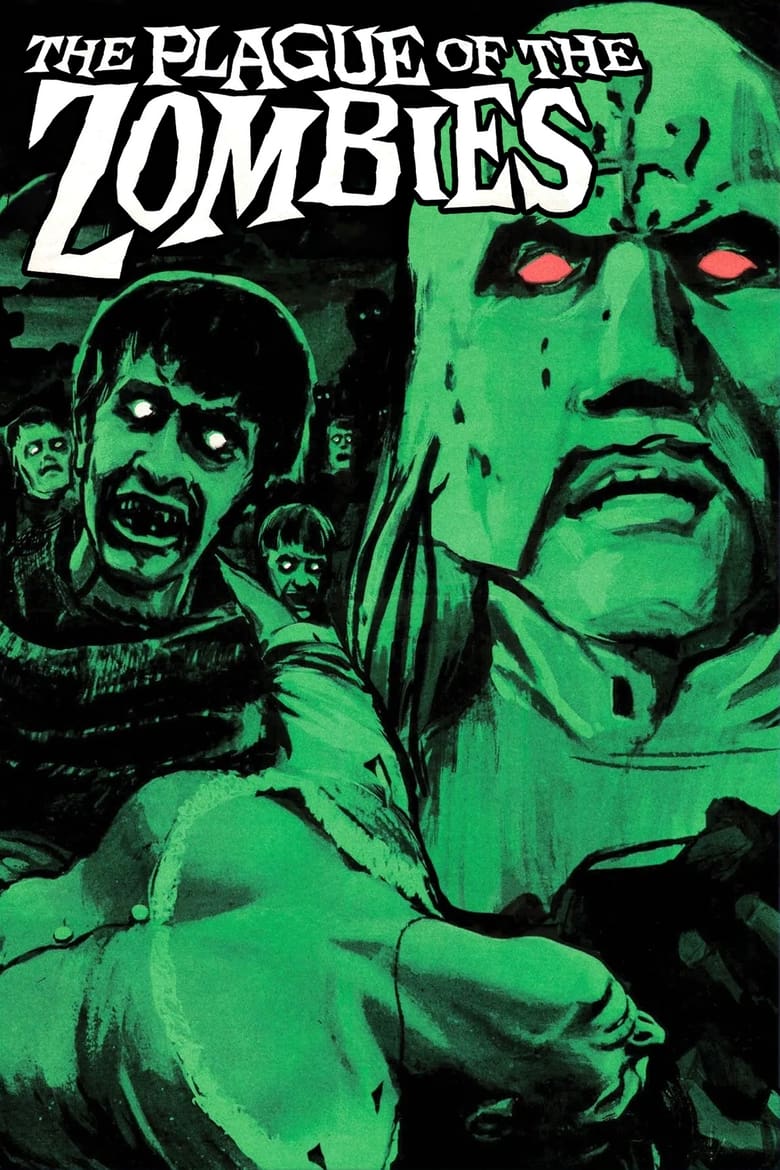
Here's a question worth asking: how many films can you point to that genuinely changed the course of a genre, that quietly introduced the bones of something enormous, and still remain largely unknown outside enthusiast circles? The Plague of the Zombies is one of those films. It came out in 1966, three years before George Romero's Night of the Living Dead, and while Romero rightly gets the credit for building the modern zombie myth, John Gilling's modest Hammer production was already laying the foundations.
I'll be honest, I came to this one expecting a fairly standard piece of Hammer gothic horror, the kind of thing that's more atmospheric than frightening, more charming than genuinely unsettling. And yes, it's atmospheric and charming. But it's also genuinely unsettling in ways I didn't quite anticipate. The story takes us to a fog-drenched Cornish village beset by mysterious deaths, disappearing bodies and men returning from the grave, pale-faced, hollow-eyed, robbed of every scrap of will, and put to work in the local tin mines by a voodoo-practising squire who fancies himself a god. These aren't flesh-eating monsters. They're slaves. And somehow that's worse.
What Gilling does so well is position this film at exactly the crossroads between two traditions. You've got the older Caribbean voodoo zombie of the 1930s and 40s, the puppet without agency, and you've got the shuffling reanimated corpse that would soon dominate popular culture. Plague of the Zombies bridges that gap in a way that feels organic rather than calculated. It's not straining to be innovative. It just is.
The atmosphere is the real star. Foggy moors, candlelit crypts, the sound of eerie chanting drifting through village nights. The score does exactly what a score should do in this kind of film, it gets under your skin without announcing itself. And the zombie makeup, subtle by today's standards but genuinely striking for 1966, gets the job done. Pale, hollowed, stiff. There's a dreamlike quality to the scenes involving them that lingers after the credits roll, and I think that's the mark of real craft working quietly beneath the surface.
I reviewed The Curse of Frankenstein (1957) a while back, and what strikes me returning to Hammer's output is just how consistent they were at wringing genuine quality from tight budgets and tight schedules. They understood that dread is mostly a matter of suggestion and tone, not spectacle. Plague of the Zombies is another example of that instinct at its most effective.
It's not a perfect film. Some of the performances are uneven, and the pacing sags in a few places where the script loses its nerve slightly. And I won't pretend it carries anything like the cultural weight of what Romero would later achieve. But that's not really a fair comparison, and it's one I'd rather not make too heavily, because it risks making Plague of the Zombies sound like a footnote when it deserves to be read as a chapter in its own right.
If you're a horror fan and you've somehow never got round to this one, that's worth correcting. It sits in an interesting bit of genre history, not flashy, not loud, not particularly well remembered by mainstream audiences, but genuinely vital if you want to understand how the zombie as we know it came to be. The folk-horror atmosphere, the voodoo mythology shading into something more viscerally modern, the sense of bodies used as instruments of labour and control. All of it is here, three years before Night of the Living Dead made the world pay attention.
Three and a half stars. Creepy, intelligent, historically fascinating. Not the beginning of the end, but quietly, unmistakably, the beginning of the undead uprising.
Rating: ★★★½ | Year: 1966 | Watched: 2025-10-11
Where to watch
Watch in the UK
Stream: Studiocanal Presents Amazon Channel
Rent: Amazon Video
Buy: Amazon Video
Physical: Amazon UK · Zavvi
Affiliate disclosure: Movies With Macca may earn a small commission on purchases or subscriptions started via these links. It costs you nothing extra.
Related on Movies With Macca
More with André Morell: Stolen Face (1952)
More from United Kingdom: Lessons of Darkness (1992) · Shinjuku Boys (1995) · The Curse of Frankenstein (1957) · Blue (1993)
More from the 1960s: Viy (1967) · Persona (1966) · Carnival of Souls (1962) · Daisies (1966)
More horror: Invasion of the Body Snatchers (1956) · Viy (1967) · Nightmare City (1980) · Angst (1983)
More mystery: Mononoke the Movie: The Phantom in the Rain (2024) · Mononoke the Movie: Chapter II - The Ashes of Rage (2025) · Carnival of Souls (1962) · One Way or Another (1975)