The Little Girl Who Sold the Sun (1999)
★★★ — The Little Girl Who Sold the Sun (1999)

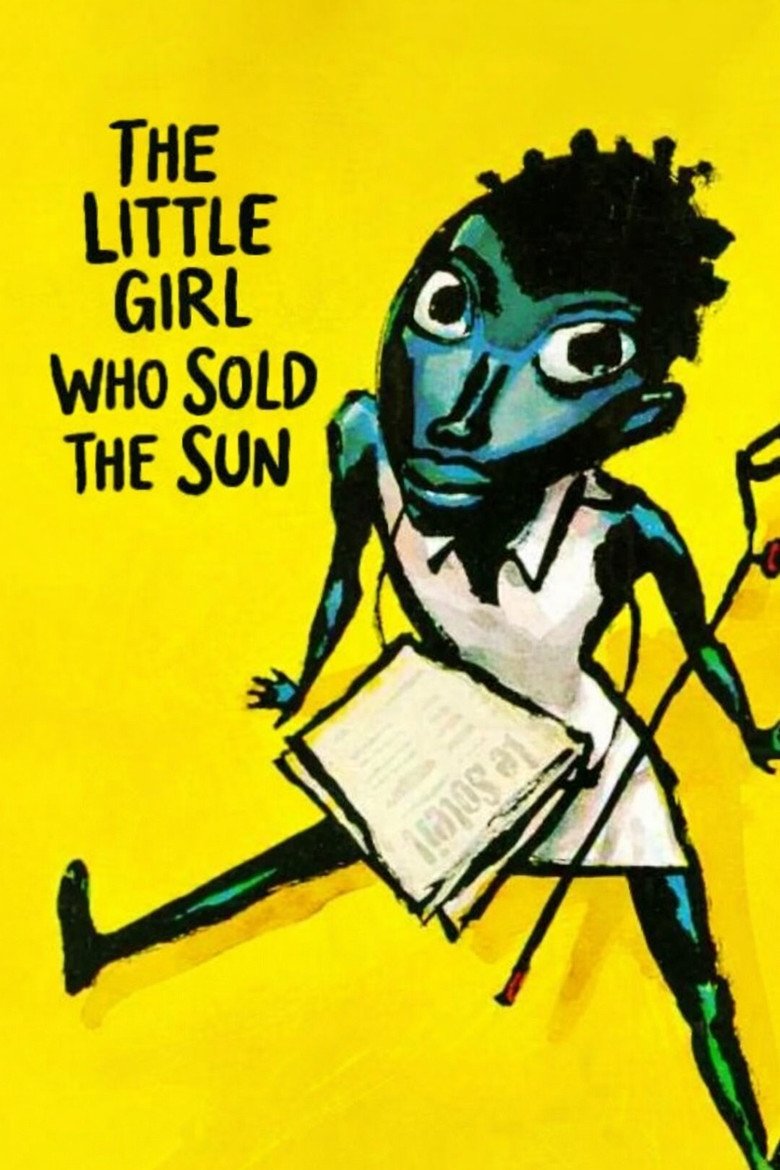
There's a moment in The Little Girl Who Sold the Sun where you realise the whole film is basically an act of quiet defiance. Not loud, not showy, just this steady, gentle insistence that the people the world tends to overlook deserve to be seen. It's a modest film, and I want to be honest about that. But modest isn't the same as slight, even if it does drift in that direction by the end.
This was the final film from Senegalese director Djibril Diop Mambéty, and if you know his work, you'll know he had a gift for finding poetry in the everyday lives of people the world tends to pass by. Here he turns his attention to a young girl in Dakar, physically disabled and navigating a city that wasn't built with her in mind, who decides to enter the male-dominated street trade of newspaper selling. The paper she hawks is Le Soleil, which means "The Sun." The symbolism isn't subtle, but Mambéty earns it.
Shot on real Dakar streets with non-professional actors, the film has the texture of neorealism, dusty pavements, improvised moments, the noise and heat of city life pressing in from all sides. But there's also something lyrical running underneath it. Children singing. Small gestures of solidarity. A sense that community, however frayed, is still holding together. It reminded me in places of the plainspoken humanity I admired in Black Girl (1966), Ousmane Sembène's landmark, which also uses a relatively simple story to excavate something much deeper about dignity and exclusion. Mambéty is working in a different register, warmer and less confrontational, but the underlying concern is similar: who gets to take up space, and on whose terms?
The film is part of Mambéty's unfinished "Tales of Little People" trilogy, and Le Franc, the previous entry, is worth watching alongside it. Both films share that same empathy for the overlooked, and together they give you a real sense of what Mambéty was building towards before his death. There's a consistent ethical vision across them: that the small victories of ordinary people matter, and that cinema is a decent place to record them.
So what holds The Little Girl Who Sold the Sun back from being something truly great? Honestly, it's the scope. At under an hour, it's more vignette than proper narrative, more mood than momentum. The girl's struggle is compelling, and the film's refusal to sentimentalise her is admirable, but it also doesn't quite build to anything. It observes, it insists quietly on dignity, and then it fades. You're left with a feeling rather than an experience, and the feeling, while genuinely warm, doesn't linger as long as you'd want it to.
That's not a failure exactly. Some films are content to be small, and this one wears its modesty honestly. Mambéty's direction is purposeful throughout, never wasting a frame, never reaching for effect when understatement will do. The performances feel unforced, particularly from the young lead, who carries the whole thing on her shoulders with a matter-of-fact determination that the film mirrors in its own approach. And the critique of gender norms and economic exclusion is real and present, even if it never raises its voice above a murmur.
Three stars. A fitting final note from a filmmaker who deserves to be far better known outside of African cinema circles, even if this isn't the film I'd start someone on. I'm glad it exists. I'm glad Mambéty made it. I just wish I felt it a little more by the time the credits came up.
Rating: ★★★ | Year: 1999 | Watched: 2026-03-02
Where to watch
Watch in the US
Physical: Amazon US
Affiliate disclosure: Movies With Macca may earn a small commission on purchases or subscriptions started via these links. It costs you nothing extra.
Related on Movies With Macca
More from Djibril Diop Mambéty: Le Franc (1994)
More with Aminata Fall: Le Franc (1994)
More from Senegal: Saloum (2021) · Black Girl (1966) · Le Franc (1994) · Atlantics (2019)
More from the 1990s: Lessons of Darkness (1992) · Shinjuku Boys (1995) · Blue (1993) · Cemetery Man (1994)
More drama: Viy (1967) · Wonder (2017) · A Better Tomorrow (1986) · Beautiful Boy (2018)