Black Girl (1966)
★★★½ — Black Girl (1966)

There's a scene in Black Girl where Diouana stands in the middle of a pristine French apartment, surrounded by the trappings of European comfort, and you feel the walls closing in around her. She hasn't been shouted at. Nobody has raised a hand. And yet the violence of the moment is absolutely suffocating. That's what Ousmane Sembène does in this film: he shows you oppression operating at room temperature, and it's all the more devastating for it.
Sembène, a Senegalese writer and filmmaker who would go on to become one of the towering figures of African cinema, made this in 1966, and it is widely regarded as the first feature film by a Black African director from sub-Saharan Africa. That context matters, but it's not the only reason to watch it. You should watch it because it's a brilliant, bruising piece of filmmaking that still cuts deep more than half a century later.
The story is deceptively straightforward. Diouana, a young woman from Dakar, takes a job with a white French couple, initially as a nanny for their children. She arrives in the south of France with genuine hope, a suitcase, and a gorgeous African mask she presents as a gift to her employers. What she finds instead of the life she imagined is a kind of slow erasure. She becomes a cook, a cleaner, an invisible fixture in someone else's home. Nobody is cartoonishly cruel. That's almost the point. The cruelty is casual, polite, bone-deep.
Sembène's visual approach matches the subject perfectly. Long, static shots. Minimal dialogue. A restraint that feels almost clinical. He doesn't sensationalise anything. He simply watches, and lets you feel the accumulation of small indignities. The film runs to just over an hour, but it carries the weight of something much longer. Every scene earns its place.
The African mask becomes the film's central symbol, and it's handled with real poetic intelligence. It starts as an expression of cultural pride and identity, something Diouana offers freely and warmly. Over time, hanging on that white apartment wall, it becomes something else entirely. A trophy. An artefact. An object stripped of meaning by the people who own it without understanding it. When the mask reappears near the film's end, it hits you in a way that's hard to shake.
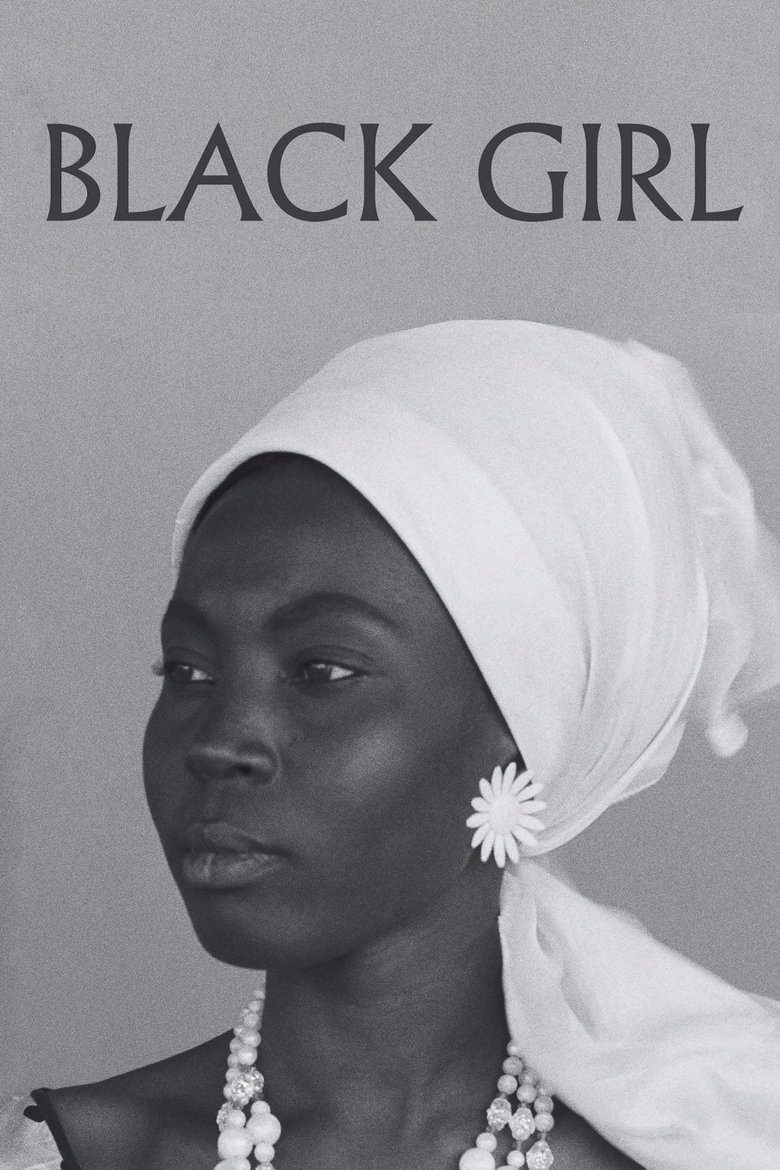
And then there's Mbissine Thérèse Diop, who carries the whole film on her shoulders with extraordinary quiet force. So much of her performance lives in her eyes, in the micro-adjustments of her face as she registers each fresh slight. She never tips into melodrama. She doesn't need to. The sorrow is there in every frame, restrained and real and completely persuasive. It's the kind of performance that makes you wonder why she isn't talked about more in conversations about great screen acting.
The film works as an indictment of postcolonial hypocrisy, yes. The couple see themselves as enlightened, generous even, and the gap between that self-image and the reality of how they treat Diouana is where Sembène does his sharpest work. But it never becomes a polemic. It stays rooted in one woman's experience, one woman's interiority, and that specificity is what gives it its lasting power. If you've seen Sugar Cane Alley, another film that locates the weight of colonial history inside deeply personal, intimate storytelling, you'll recognise a similar instinct at work here.
I also kept thinking about Persona, made the same year, which shares that same willingness to strip a film down to its barest elements and find something psychologically enormous inside the simplicity. Two very different films, obviously, but both trust their audiences to sit with silence and discomfort. Both feel years ahead of their time.
Black Girl is short, stark, and genuinely unforgettable. Every frame serves both the character and the argument. I don't think you can call yourself a serious student of world cinema without having seen it, but more than that, I don't think you should miss it just as a piece of human storytelling. Its history is remarkable. Its heart is what stays with you.
Three and a half stars.
Rating: ★★★½ | Year: 1966 | Watched: 2026-03-10
Where to watch
Watch in the UK
Rent: Amazon Video
Buy: Apple TV Store · Amazon Video
Physical: Amazon UK · Zavvi
Watch in the US
Stream: HBO Max Amazon Channel · HBO Max
Rent: Amazon Video · Apple TV Store · Google Play Movies · YouTube
Buy: Amazon Video · Apple TV Store · Google Play Movies · YouTube
Physical: Amazon US
Affiliate disclosure: Movies With Macca may earn a small commission on purchases or subscriptions started via these links. It costs you nothing extra.
Related on Movies With Macca
More from France: Fantastic Planet (1973) · Letter from Siberia (1957) · Lessons of Darkness (1992) · Here and Elsewhere (1976)
More from the 1960s: Viy (1967) · Persona (1966) · Carnival of Souls (1962) · Daisies (1966)
More drama: Viy (1967) · Wonder (2017) · A Better Tomorrow (1986) · Beautiful Boy (2018)