Le Franc (1994)
★★½ — Le Franc (1994)

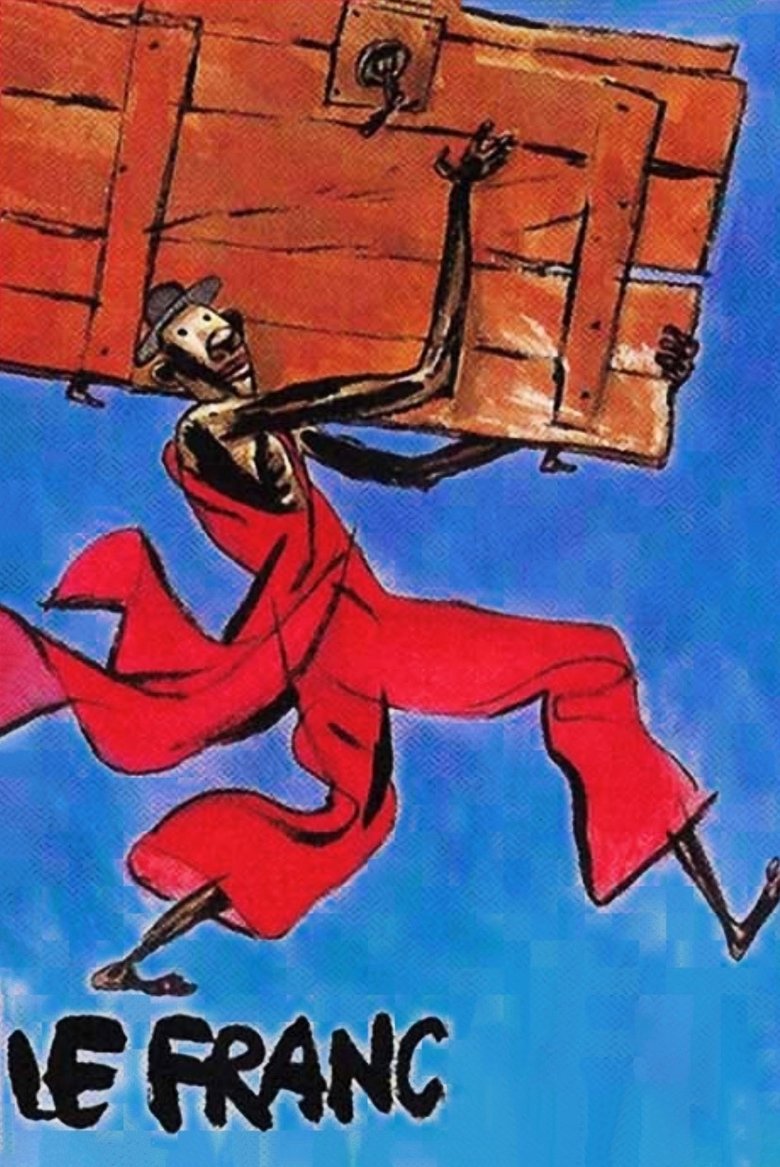
There's a version of Le Franc that I think I'd love. A short, sharp fable about a broke musician who wins the lottery but can't cash the ticket because he's got no ID. That premise is brilliant in its simplicity, and the way Djibril Diop Mambéty builds it into a Kafkaesque tour of bureaucratic absurdity, poverty and postcolonial dysfunction is genuinely inventive. I wanted to love this. I really did. But wanting isn't the same as doing, and somewhere in the middle of all the symbolism and theatrical staging, it lost me.
Mambéty is working with minimal resources and maximal ambition. You can feel both. The film's rough edges aren't accidental; they're part of the aesthetic, a kind of wiry, improvised energy that suits a story about people living on the margins, making do with scraps. The performances lean into exaggeration and absurdism, the visuals blur fantasy and reality, and there are stretches where the whole thing feels genuinely dreamlike in a way that only low-budget, high-imagination filmmaking can achieve. I've got real respect for all of that.
But respect and enjoyment aren't always the same thing either, are they? The pacing is a problem. It drags in ways that feel less deliberate and more like the film doesn't quite have enough material to justify its running time, even at a fairly compact length. The humour is very dry indeed, which I can normally get on with, but here the comedy often feels smothered under the weight of the allegory. When the symbolism becomes the point rather than the vehicle, I start to feel like I'm watching a diagram rather than a film.
The social commentary is sharp in its intentions. Mambéty is clearly angry about what postcolonial economic systems have done to ordinary Senegalese people, and Le Franc is part of his "Tales of Little People" series, which frames the whole project as an act of solidarity with the marginalised. That's a real and admirable artistic mission. I just found that the allegory sometimes crowded out the humanity. You can care deeply about an idea and still struggle to connect with the people carrying it.
For context, I've watched a fair bit of Senegalese cinema lately. I found Black Girl devastating in a way that this never quite manages, and Mambéty's own later short The Little Girl Who Sold the Sun feels sharper and more emotionally immediate despite covering similar thematic ground. That film hits harder in a fraction of the space. With Le Franc, I often felt like I was watching something that had been made for a particular kind of film festival audience and wasn't especially concerned with bringing the rest of us along for the ride.
None of which means it's without value. If you're interested in African cinema, in the history of Senegalese filmmaking, or in the broader tradition of surrealist political fable, then Le Franc is clearly a film worth seeking out. Mambéty's visual wit is evident even when the rhythm isn't working, and there are individual images here that stick. I'm not going to pretend it's a bad film, because it isn't. It's a creative, passionate piece of work made by someone who knew exactly what he wanted to say.
It just isn't quite my cup of tea. More admirable than enjoyable, more interesting as an artefact than satisfying as an experience. Two and a half stars, and I mean that generously.
Rating: ★★½ | Year: 1994 | Watched: 2026-03-06
Where to watch
Watch in the US
Physical: Amazon US
Affiliate disclosure: Movies With Macca may earn a small commission on purchases or subscriptions started via these links. It costs you nothing extra.
Related on Movies With Macca
More from Djibril Diop Mambéty: The Little Girl Who Sold the Sun (1999)
More from Senegal: Saloum (2021) · Black Girl (1966) · The Little Girl Who Sold the Sun (1999) · Atlantics (2019)
More from the 1990s: Lessons of Darkness (1992) · Shinjuku Boys (1995) · Blue (1993) · Cemetery Man (1994)
More comedy: The Eagle (1925) · The General (1926) · Americana (2023) · The Naked Gun: From the Files of Police Squad! (1988)