The Black Cat (1934)
★★½ — The Black Cat (1934)

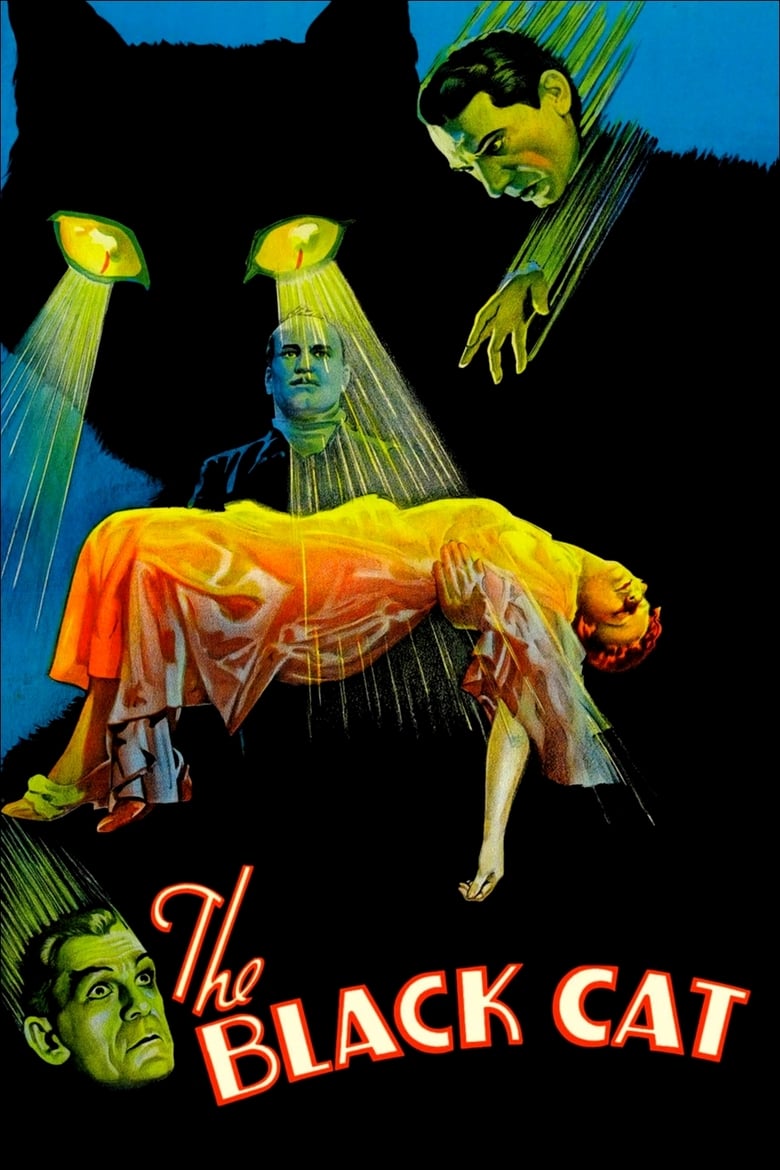
Two legends. One screen. You'd think that would be enough. Boris Karloff and Bela Lugosi, the twin pillars of 1930s horror, face off for the very first time, and what we get is... fine. Creepy in patches, striking to look at, and then largely forgettable once the credits roll. That's the maddening thing about The Black Cat. On paper it should be extraordinary. In practice, it's a curiosity that never quite fulfils its own promise.
Edgar G. Ulmer directs with a visual confidence that far outstrips the material he's working with. The sets are genuinely remarkable: all clean geometric lines, sleek Art Deco architecture, and shadow-drenched corridors that feel like they belong in a fevered dream about modernism gone wrong. There's a sharp, strange undercurrent running through the whole thing, drawing on Satanism and the psychological wreckage of the First World War, and for brief, crackling stretches, Ulmer makes you feel it in your chest. The atmosphere is real. I'll give it that much.
But atmosphere is seasoning, not a meal, and The Black Cat tries to live on seasoning alone. The plot is a mess. What starts out as a psychological thriller, taut and claustrophobic, gradually loses its nerve and wanders off into melodrama, occult ritual and bursts of abrupt violence that feel yanked in from a different picture entirely. Nothing coheres. The romantic subplot involving the young couple at the centre of it all feels tacked on and keeps pulling focus away from the two men we actually came to watch. The pacing lurches badly in the middle stretch, and by the time the film reaches its climax, you're watching events unfold rather than being gripped by them.
And then there's the central tragedy of the whole enterprise: Karloff and Lugosi are both here, both capable of extraordinary things, and neither is given nearly enough to work with. They're reduced largely to posturing, circling each other with menace that the script can't quite back up. Lugosi, playing against type in a more sympathetic role, has his moments. Karloff cuts an icily compelling figure. But moments are all we get. Two icons sharing the screen should add up to more than the sum of their parts. Here, it barely equals them.
It's worth saying that Ulmer clearly had ambitions beyond the B-picture grind. I've long admired what he managed to do with almost nothing on Detour (1945), a film that punches so far above its budget it's almost indecent. Here, he had more resources, genuine star power and an intriguing premise, and yet the result is somehow less satisfying than that lean, desperate little noir. Strange how that works. And if you want to see what the Universal horror machine could do when it was properly firing, The Old Dark House is a far better use of your evening, a film that nails the atmosphere and gives its cast room to breathe.
I'm not saying skip it. Horror completists absolutely should see The Black Cat once, for its historical novelty if nothing else. This is where it all began for Karloff and Lugosi together, and that means something. The images linger, too. Ulmer frames things beautifully, and there are individual shots here that deserve to be remembered far better than the film surrounding them. But don't go in expecting a masterpiece. It's a footnote dressed up in very elegant clothes.
Two and a half stars.
Rating: ★★½ | Year: 1934 | Watched: 2026-03-27
Where to watch
Watch in the US
Rent: Amazon Video · Apple TV Store · Google Play Movies · YouTube
Buy: Amazon Video · Apple TV Store · Google Play Movies · YouTube
Physical: Amazon US
Affiliate disclosure: Movies With Macca may earn a small commission on purchases or subscriptions started via these links. It costs you nothing extra.
Related on Movies With Macca
More from Edgar G. Ulmer: People on Sunday (1930) · Detour (1945) · Bluebeard (1944)
More with Boris Karloff: The Old Dark House (1932) · The Mummy (1932)
More from the 1930s: Earth (1930) · Monkey Business (1931) · Sabotage (1936) · People on Sunday (1930)
More horror: Invasion of the Body Snatchers (1956) · Viy (1967) · Nightmare City (1980) · Angst (1983)
More thriller: Invasion of the Body Snatchers (1956) · Angst (1983) · The Long Walk (2025) · Punishment Park (1971)