Stalker (1979)
★★★ — Stalker (1979)

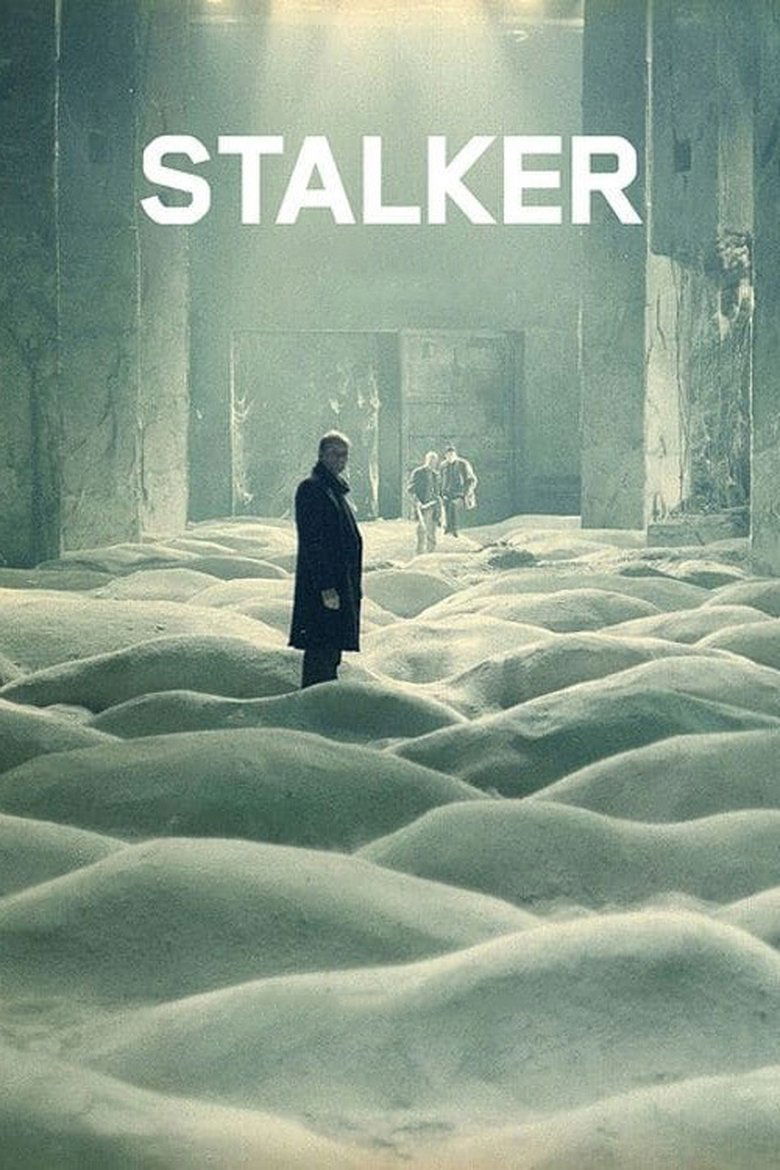
Let me be honest with you: I went into Stalker expecting a revelation. It's sitting at 55th on Letterboxd, comfortably in the BFI top 30, and it has a perfect score on Rotten Tomatoes. The consensus is basically that Andrei Tarkovsky made something approaching the divine here. And yet, two and a half hours later, I was sat there thinking the most interesting thing in the entire film was its final thirty seconds. That's not nothing, but it's also not quite the transcendence I'd been promised.
And look, I want to be fair to it, because there's genuine brilliance here. The shift from sepia into colour as the characters enter the Zone is one of the most quietly stunning visual ideas I've seen. It feels less like a stylistic flourish and more like a change in the laws of physics. Every frame Tarkovsky composes has this deliberate, waterlogged weight to it, like you're wading through someone else's dream. The atmosphere is genuinely unmatched. I'll give it that without hesitation. Having also watched The Color of Pomegranates as part of my world movie tour, I'm increasingly convinced that Soviet-era filmmakers operated in a completely different register to everyone else, pursuing pure image and sensation over conventional storytelling. Tarkovsky is the apex of that.
But here's my problem. The film drags. Not in the way that slow cinema sometimes drags, where the patience pays off in waves of feeling. It drags in a way that starts to feel like a test you haven't revised for. Long silences, philosophical monologues about desire and despair, extended walks through industrial wasteland. All of that is fine in principle. In practice, stretched across this runtime, it starts to feel more like homework than something I actually want to sit with. The story, such as it is, barely moves. I understand that's the point. I understand the journey is the destination and the Zone is a mirror and desire is the real trap. I get it. But when the journey is this slow and the emotional temperature this cool, you need something to hold onto, and I kept finding my grip slipping.
Where I did find myself genuinely gripped was in that ending, and in the theory it sent me down afterwards. The Stalker himself, I think, might not be human at all. There's something about him that reads as alien to me, some kind of entity watching humanity lurch towards meaning it can never quite name, frustrated by how confused and contradictory we all are. And then his daughter's telekinesis in those final moments, those glasses moving across the table, suggests something beyond ordinary evolution. It feels like a hint at divine disappointment, or perhaps the next step arriving quietly while the adults are busy arguing about what they want. That idea genuinely intrigued me, more than most of the two hours that preceded it if I'm being straight with you.
So where does that leave me? Admiring the craft while being emotionally somewhat untouched. It's beautifully made, clearly the work of a filmmaker who thought deeply about every single choice. But there's a coldness to it that kept me at arm's length, and I'm not sure the film is entirely wrong to do that, I just also don't think I need to pretend it didn't happen. Some films reward you for surrendering to them. Stalker asks for surrender and then doesn't quite meet you halfway.
Three stars. Stunning in parts, exhausting in others, and haunted by a final image I genuinely cannot shake.
Rating: ★★★ | Year: 1979 | Watched: 2025-08-28
Where to watch
Watch in the UK
Rent: Apple TV Store · Amazon Video · Google Play Movies · Curzon Home Cinema
Buy: Apple TV Store · Amazon Video · Google Play Movies · YouTube
Physical: Amazon UK · Zavvi
Watch in the US
Stream: HBO Max Amazon Channel · HBO Max
Rent: Amazon Video · Apple TV Store · Google Play Movies · YouTube
Buy: Amazon Video · Apple TV Store · Google Play Movies · YouTube
Physical: Amazon US
Affiliate disclosure: Movies With Macca may earn a small commission on purchases or subscriptions started via these links. It costs you nothing extra.
Related on Movies With Macca
More from Soviet Union: Viy (1967) · Earth (1930) · By the Bluest of Seas (1936) · The Color of Pomegranates (1969)
More from the 1970s: Fantastic Planet (1973) · Here and Elsewhere (1976) · Italianamerican (1974) · Punishment Park (1971)
More science fiction: Invasion of the Body Snatchers (1956) · Fantastic Planet (1973) · Nightmare City (1980) · The Long Walk (2025)
More drama: Viy (1967) · Wonder (2017) · A Better Tomorrow (1986) · Beautiful Boy (2018)