By the Bluest of Seas (1936)
★★ — By the Bluest of Seas (1936)

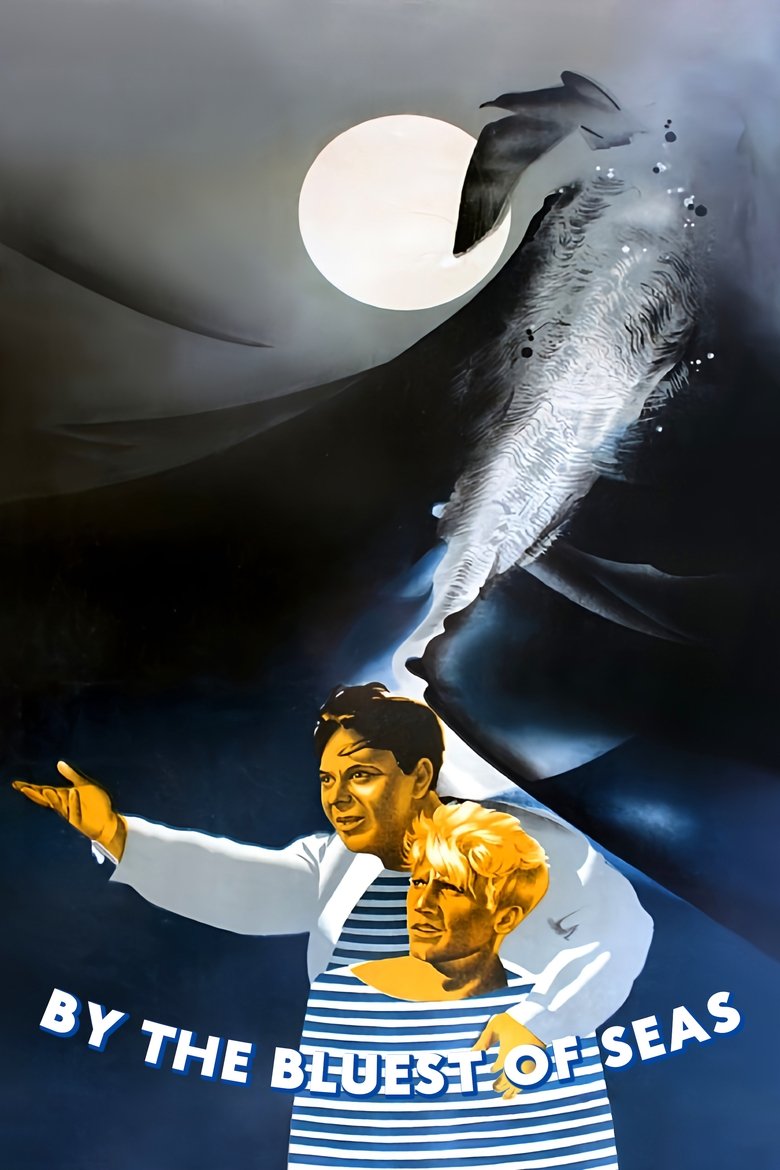
There's a particular kind of frustration that comes with watching a film you can see should work. The images are lovely. The setting, the sun-baked shores of Azerbaijan with the Caspian glittering behind everything, is genuinely gorgeous. The compositions have a lyrical, almost painterly quality that stops you in your tracks. And yet, for all that, By the Bluest of Seas left me cold. Not hostile, not bored in any energising way, just... distant. Like looking at a beautiful postcard sent from somewhere you'll never visit, written in a language you don't quite speak.
Boris Barnet's 1936 film sits in an odd hybrid territory, part talkie, part silent, and that in-between quality isn't just technical, it describes the whole experience. It's caught between eras, between modes, between charm and drama, and it never fully commits to any of them. The story, such as it is, turns on a romantic triangle between two fishermen and the woman they both fall for. There's a Chaplinesque physicality to the performances, a broad, pantomimed quality that can be endearing in flashes. But endearing flashes do not a satisfying film make.
The pacing is the real problem. It meanders, and not in the freewheeling, associative way that the best Soviet cinema of the period could get away with. When I watched Man with a Movie Camera (1929), the lack of conventional narrative felt like a creative choice with genuine momentum behind it, every cut alive with purpose and energy. Here, the drift feels unintentional. Scenes float by with the weightlessness of a daydream, and not the good kind. The revolutionary fervour and collective spirit that presumably animated Soviet audiences in the thirties, that sense of shared cultural context that might have given the film its charge, simply doesn't travel across ninety years to a viewer in 2026 with no stake in it.
That's not entirely a criticism of the film, to be fair. Context shapes experience, and I'm aware I'm watching this stripped of everything that might have made it sing. But silent cinema, and near-silent cinema, demands something in exchange for the patience it asks of you. Rhythm, or emotional clarity, or a physical performance so precisely calibrated that it bypasses language entirely. By the Bluest of Seas doesn't consistently deliver any of those things. The performances tip from playful into mannered. The narrative doesn't so much resolve as simply stop. And the emotional stakes, the question of which man gets the girl, never accumulates any weight.
Compare it to something like Earth (1930), another piece of Soviet filmmaking from roughly the same period, and the gap becomes clear. Dovzhenko's film has a pantheistic, overwhelming quality, you feel the landscape and the ideology pressing in on you from all sides. Barnet's film is airier, warmer, more interested in gentle comedy than grand statement, and I can respect that as an intention. The trouble is that lightness requires precision to land. Without the right timing and the right emotional specificity, it just evaporates.
What you're left with is a historical curiosity that's genuinely worth a look if you're working through the period, and genuinely pretty to sit with if you're in the right mood for something slow and sun-drenched. As a piece of cinema to actually engage with dramatically or emotionally? It's not really there. The waters glisten, the compositions hold, and the whole thing drifts pleasantly off into the middle distance without ever quite arriving anywhere.
Two stars. Pretty, intermittently charming, and almost entirely inert.
Rating: ★★ | Year: 1936 | Watched: 2026-04-03
Where to watch
Watch in the US
Physical: Amazon US
Affiliate disclosure: Movies With Macca may earn a small commission on purchases or subscriptions started via these links. It costs you nothing extra.
Related on Movies With Macca
More from Soviet Union: Viy (1967) · Earth (1930) · The Color of Pomegranates (1969) · Man with a Movie Camera (1929)
More from the 1930s: Earth (1930) · Monkey Business (1931) · Sabotage (1936) · People on Sunday (1930)
More romance: The Eagle (1925) · The Last Picture Show (1971) · The General (1926) · The Docks of New York (1928)
More drama: Viy (1967) · Wonder (2017) · A Better Tomorrow (1986) · Beautiful Boy (2018)