Princes and Princesses (2000)
★★★ — Princes and Princesses (2000)

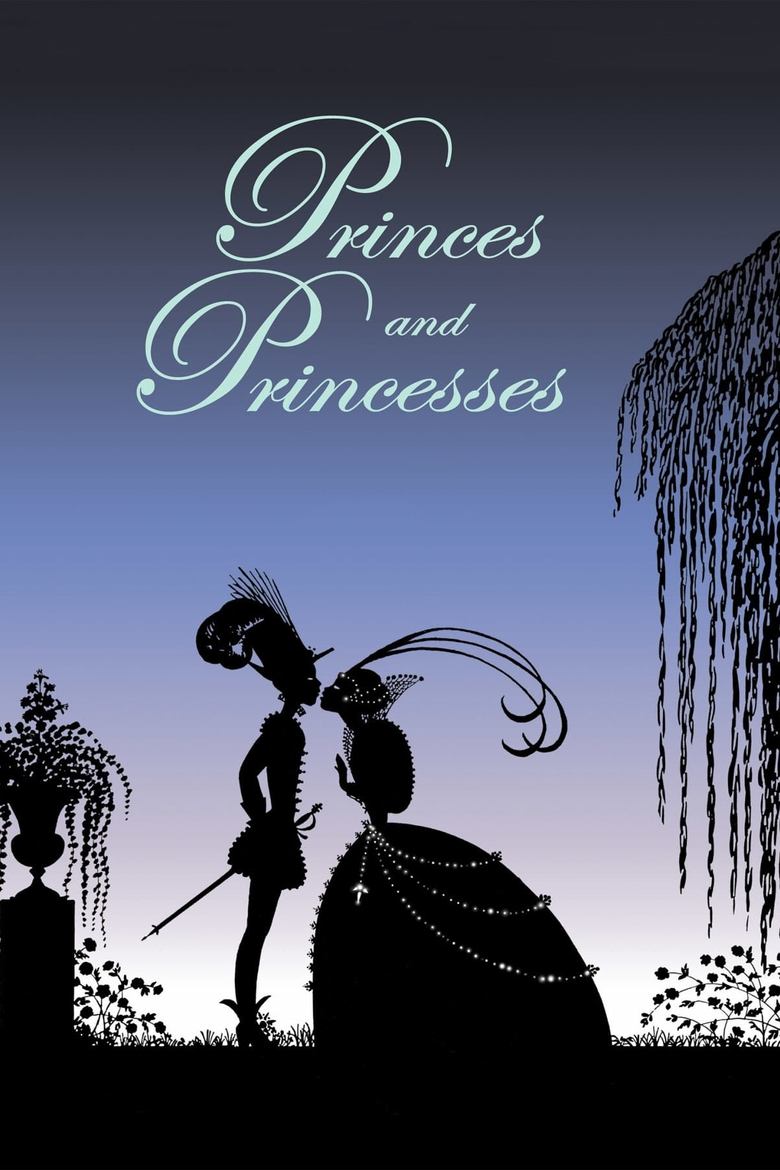
There's a moment watching Princes and Princesses when you stop thinking about animation as a medium and start thinking about it as witchcraft. A paper silhouette tilts its head, a shadow shifts across a textured backdrop, and somehow, without a single visible facial expression, you feel something. That's not a small achievement. That's the whole game.
This French film, made around the turn of the millennium, is the kind of thing that makes you question why we spend hundreds of millions of pounds on animated features when a handful of people with paper, a lightbox and an obsessive dedication to craft can produce something this beautiful. If I've understood the production correctly, this was essentially the work of an art teacher and two students. Let that sit for a moment.
The format is a series of fairy tale vignettes, princes and princesses encountering each other across different settings and eras, each story modest in scope and simple in structure. Don't come looking for complex plotting or psychological depth. These are mood pieces, little poems in silhouette form, and they know exactly what they are. The stories serve the artistry, not the other way around, and that's a deliberate and correct choice.
Because the artistry is extraordinary. The silhouette technique, working entirely without colour or facial expression, forces every emotion through posture and gesture. A slumped shoulder, an outstretched hand, the angle of a head during a glance. It's a masterful constraint, the kind that unlocks creativity rather than strangling it. You find yourself reading into the shadow-play in ways you wouldn't if you were given a fully rendered face to look at. Limitation becomes eloquence. I kept thinking of Fantastic Planet (1973), another film that uses unconventional animation to create a world that feels genuinely unlike anything else, where the technique isn't separate from the storytelling but is the storytelling.
The score complements the pacing beautifully without muscling in on it. It's minimal, appropriately dreamlike, giving the imagery room to breathe. There's no bombast here, no swelling orchestral cues to tell you how to feel. The film trusts you, which is increasingly rare.
I want to be honest about what this isn't, though. It isn't narratively rich. Some of the vignettes feel thinner than others, and if you're coming in hoping for the emotional complexity of a Miyazaki film or the wit and invention of something from Kirikou and the Sorceress (1998), you'll need to adjust your expectations. This is a quieter pleasure. It rewards patience and a willingness to let go of story and simply inhabit a mood.
But here's the thing: in an era of algorithm-driven animation built by committee for maximum demographic reach, something this handmade and personal feels almost radical. Every frame carries the physical evidence of human hands at work, of hours spent hunched over a lightbox coaxing tiny pieces of paper into something approaching magic. Cinema began as exactly this, as trickery and shadow and wonder in a darkened room. Princes and Princesses reconnects with that original spirit in a way that billion-dollar productions, for all their technical brilliance, rarely manage.
It's not a perfect film. But it's a genuinely inspiring one, a reminder that passion and precision can achieve things that money simply cannot buy. Three and a half stars.
Rating: ★★★ | Year: 2000 | Watched: 2026-04-07
Related on Movies With Macca
More from Michel Ocelot: Kirikou and the Wild Beasts (2005) · Kirikou and the Sorceress (1998)
More from France: Fantastic Planet (1973) · Letter from Siberia (1957) · Lessons of Darkness (1992) · Here and Elsewhere (1976)
More from the 2000s: Kirikou and the Wild Beasts (2005) · Anchorman: The Legend of Ron Burgundy (2004) · Daredevil (2003) · Apocalypto (2006)
More drama: Viy (1967) · Wonder (2017) · A Better Tomorrow (1986) · Beautiful Boy (2018)
More animation: Fantastic Planet (1973) · Alice in Wonderland (1951) · Mononoke the Movie: The Phantom in the Rain (2024) · Mononoke the Movie: Chapter II - The Ashes of Rage (2025)