Louis Theroux: The Settlers (2025)
Louis Theroux: The Settlers (2025)

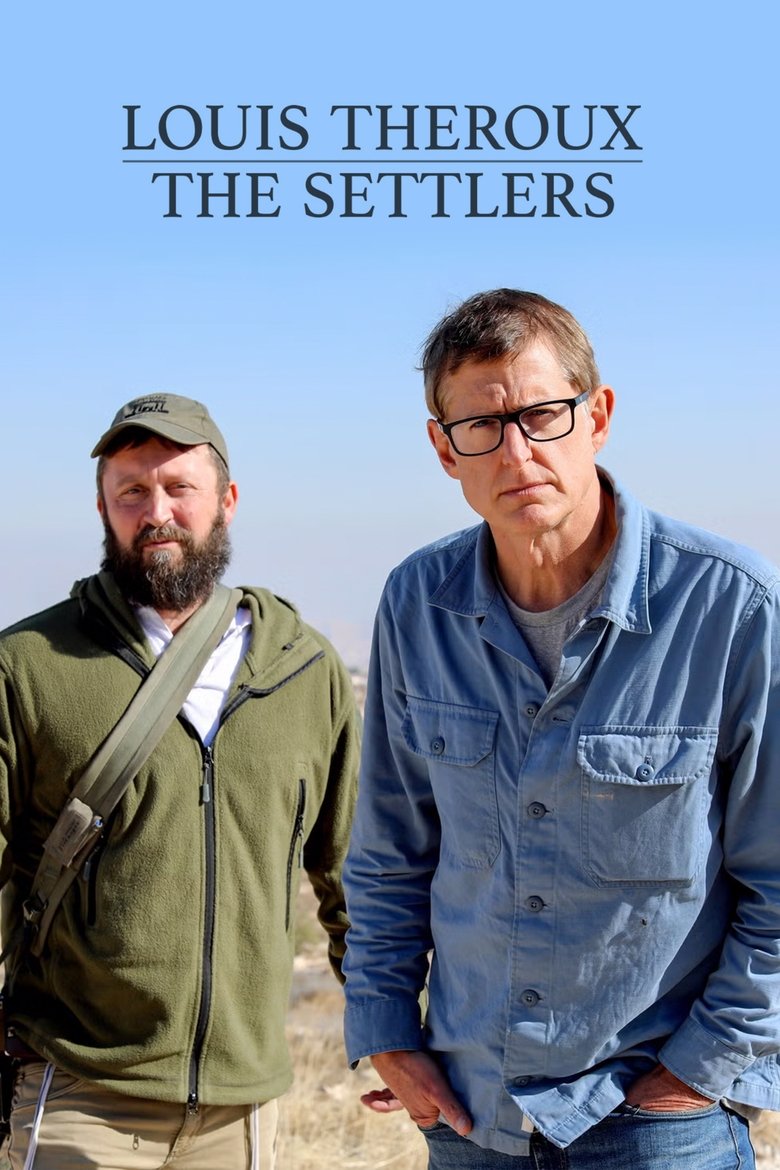
Some films you can't rate. Not because they fail you, but because the whole business of stars feels beside the point the moment the credits roll. Louis Theroux's The Settlers is one of those. I've sat with it for a while now, and I still can't tell you it's a four-star film or a three-star film, because it isn't really operating in that register. It's testimony. And you don't give testimony a score.
What I can tell you is that it got under my skin, and it hasn't left.
Theroux embeds himself among Israeli settlers living in the West Bank, people who believe, with apparent sincerity, that God has granted them this land. I'll be honest: as rationalisations go, I find that one particularly difficult to take seriously, because the logic is infinitely transferable. Anyone, anywhere, could make the same claim under the same premise and it would carry exactly the same weight, which is to say none at all. But Theroux doesn't stand there and say that. He never does. He listens, he asks quiet questions, he lets the camera sit in the room. And in doing so, he gives these people enough rope to be entirely themselves.
That's always been his gift, hasn't it? The disarming manner, the slightly baffled follow-up question, the willingness to be in the room without dominating it. I've watched a lot of his work over the years, and I reviewed Louis Theroux: Inside the Manosphere not long ago, which shows him deploying the exact same toolkit on a very different group of true believers. The method is consistent. What changes is the weight of what it uncovers.
Here, the weight is considerable. Through interviews and fly-on-the-wall observation, the film builds a picture of occupation not as abstract politics but as lived, daily machinery: land seizures, the harassment of Palestinian neighbours, armed patrols, a casual sense of entitlement that papers over what is, by any honest accounting, systemic displacement. The imbalance of power is never stated outright. It doesn't need to be. It's in every frame. There's a chilling clarity to it, the kind that sticks with you precisely because nobody is performing villainy. People are just going about their lives, and their lives are built on someone else's erasure.
The film is impeccably shot and thoughtfully structured. It doesn't simplify, which I appreciated. Some settlers show flickers of doubt. Others dig in harder when pressed. Palestinian voices are present in the film, though access is necessarily limited, and that limitation is itself part of what the documentary is documenting. The barriers are the story.
If I had to compare the experience of watching it to anything, I'd point to Werner Herzog's Lessons of Darkness (1992), another film about a kind of catastrophe rendered with almost unbearable visual composure. Different in method and tone, obviously, but both films share that quality of bearing witness without flinching, of trusting the image to do the moral work so the filmmaker doesn't have to.
What The Settlers is not is comfortable viewing. It won't leave you feeling resolved or cathartic or informed in that tidy, podcast-episode way. It'll leave you troubled. I came away from it with the same low-grade unease I get from reading about a situation where the facts are not in serious dispute but the response to those facts remains, somehow, endlessly contested. Theroux doesn't tell you what to think. He just makes it impossible to look away. And in a world saturated with content designed to confirm what you already believe, that refusal to editorialize is, in its own quiet way, radical.
Essential viewing. Not because it's enjoyable, but because it's necessary. There's a difference, and this film understands it completely.
Rating: Not rated | Year: 2025 | Watched: 2026-02-23
Where to watch
Watch in the UK
Stream: BBC iPlayer
Physical: Amazon UK · Zavvi
Watch in the US
Stream: Britbox Apple TV channel · BBC Select Apple Tv channel
Physical: Amazon US
Affiliate disclosure: Movies With Macca may earn a small commission on purchases or subscriptions started via these links. It costs you nothing extra.
Related on Movies With Macca
More with Louis Theroux: Louis Theroux: Inside the Manosphere (2026)
More from United Kingdom: Lessons of Darkness (1992) · Shinjuku Boys (1995) · The Curse of Frankenstein (1957) · Blue (1993)
More from the 2020s: Mononoke the Movie: The Phantom in the Rain (2024) · Mononoke the Movie: Chapter II - The Ashes of Rage (2025) · The Long Walk (2025) · Americana (2023)
More documentary: Letter from Siberia (1957) · Lessons of Darkness (1992) · Style Wars (1983) · Here and Elsewhere (1976)
More tv movie: Lessons of Darkness (1992) · Style Wars (1983) · Travolta and Me (1993) · The War Game (1966)