
High School (1968)
High School (1968)

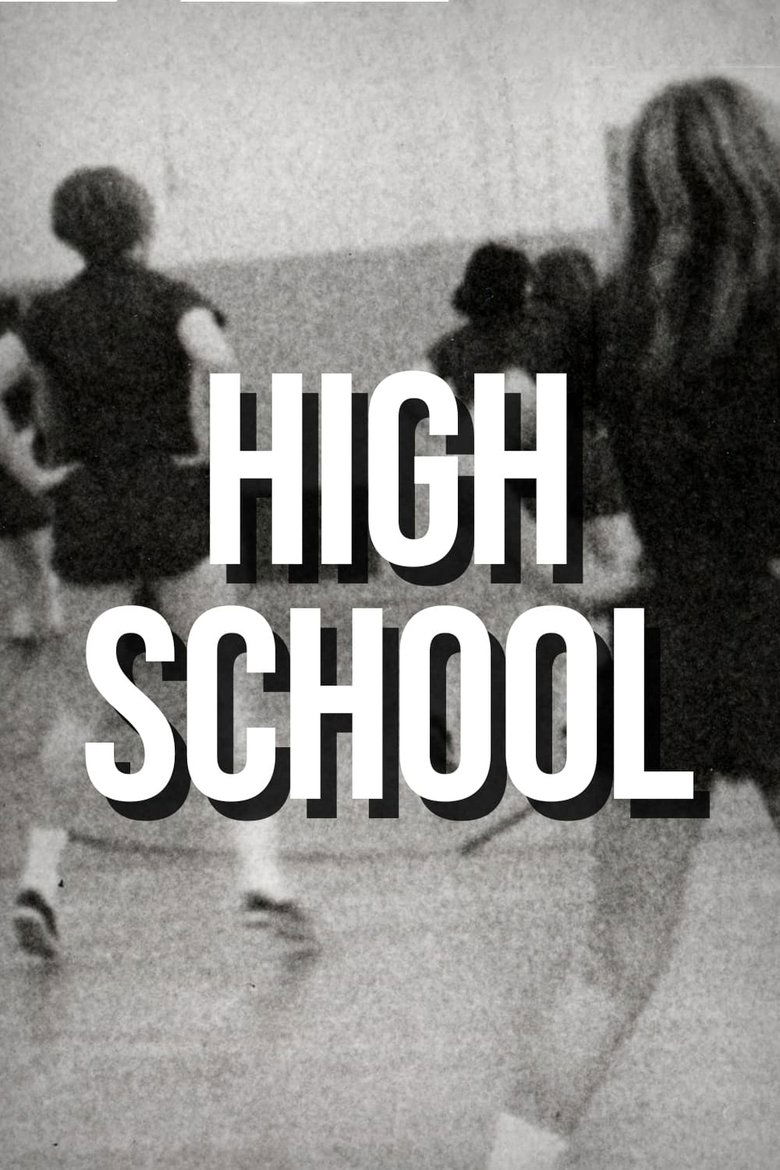
There's a moment watching Frederick Wiseman's High School where a teacher dresses down a student with the kind of weary, bureaucratic certainty that makes your skin crawl a little. Not because it's cruel, exactly. But because you can see the whole machinery of it: the assumption of authority, the student's resigned acceptance, the transaction of power so routine that neither party seems fully conscious of it. Wiseman doesn't comment. He doesn't need to. He just keeps the camera running, and that restraint is the whole point.
Made in 1968, filmed at Northeast High School in Philadelphia, this is cinéma vérité in its purest and most demanding form. No narration. No talking-head interviews. No music cue to tell you how to feel. Just Wiseman and his crew, as unobtrusive as furniture, watching an institution go about its daily business. Pep rallies. Classroom drudgery. A sex-ed lecture so stilted it's almost painful. Teachers dispensing wisdom, condescension and discipline in roughly equal measure. It's the kind of filmmaking that asks a lot of you, and I'd be lying if I said it always gave a lot back.
Because as pure cinema, it is, I'll be honest, one-note. That's not necessarily a criticism. It's a formal choice, and Wiseman commits to it absolutely. But the lack of any imposed narrative means the film's momentum lives or dies on your tolerance for observational realism. Some sequences genuinely captivate. Others meander long enough that you start wondering whether a particular hallway conversation is building to something or just, well, a conversation in a hallway. The answer, often enough, is the latter. Whether that excites or frustrates you probably tells you something about where you stand on documentary as a form.
What keeps it essential, though, is its value as a time capsule. The haircuts alone are worth the price of admission. But beyond the surface period detail, there's something anthropologically gripping about watching the rigid gender roles, the casual authoritarianism, the unquestioned assumptions of how young people should be shaped and sorted. You're not watching a story unfold so much as eavesdropping on a lost world, one that's close enough to feel familiar and distant enough to feel genuinely alien. The America on screen here is on the cusp of enormous upheaval, and there's something quietly eerie about watching an institution going through its motions as if the ground beneath it isn't already shifting.
Wiseman's approach reminds me, in spirit at least, of what I found compelling about Letter from Siberia (1957), Chris Marker's equally patient and quietly subversive documentary gaze, though where Marker deploys irony and commentary as his tools, Wiseman strips everything away and trusts the image completely. He doesn't judge. He simply shows. And what he shows, bored teenagers, weary adults, the socialisation machine grinding on without fanfare, is strangely, quietly compelling once you've given yourself over to it.
It won't grip you like a thriller. There's no third-act revelation, no villain, no redemption arc. What it offers instead is something rarer: the sensation of watching real life caught on film, unposed and unresolved, lingering in the mind like a memory you never actually lived. It reminded me, in a small way, of the unsettled feeling I had watching Lessons of Darkness (1992), that particular quality of documentary that makes you feel like a witness to something you can't quite classify.
This is not a film for everyone, and I won't pretend otherwise. If you need narrative momentum, look elsewhere. But if you're curious about what documentary can do when it refuses to editoralise, when it simply holds up a mirror and dares you to look, High School is essential. Patient, unobtrusive, and in its quiet way, genuinely revelatory.
Rating: Not rated | Year: 1968 | Watched: 2026-03-29
Where to watch
Watch in the UK
Stream: MUBI · BFI Player · BFI Player Amazon Channel · MUBI Amazon Channel
Rent: Apple TV Store · Amazon Video
Buy: Apple TV Store · Amazon Video
Physical: Amazon UK · Zavvi
Watch in the US
Physical: Amazon US
Affiliate disclosure: Movies With Macca may earn a small commission on purchases or subscriptions started via these links. It costs you nothing extra.
Related on Movies With Macca
More from the 1960s: Viy (1967) · Persona (1966) · Carnival of Souls (1962) · Daisies (1966)
More documentary: Letter from Siberia (1957) · Lessons of Darkness (1992) · Style Wars (1983) · Here and Elsewhere (1976)



