Duel (1971)
★★★½ — Duel (1971)

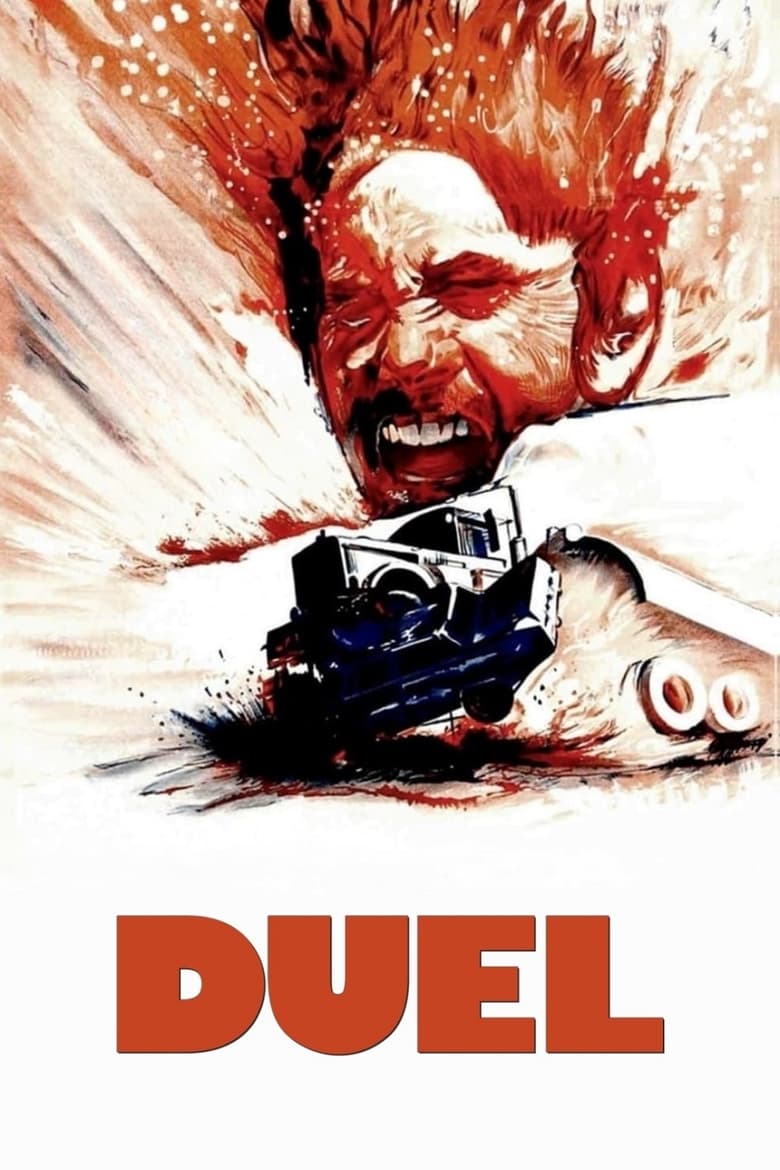
There's a moment in Duel where a battered saloon car sits trembling at the roadside, its driver pale and shaking inside, and the massive tanker that's been terrorising him simply idles nearby, engine growling, waiting. Nothing happens. And that's precisely what makes it so bloody terrifying. No explanation. No motivation. Just the truck, the road, and the creeping certainty that something very bad is coming.
The premise sounds like it belongs on a grindhouse double bill. An ordinary bloke on a routine drive gets hunted across the California desert by a massive, rust-caked tanker truck driven by a figure we never properly see. That's it. That's your film. And yet what Steven Spielberg does with that premise is extraordinary, particularly when you consider this was a TV movie, made on a tight schedule with limited resources, by a director who was barely out of his twenties.
What Spielberg understood, even this early, is that suggestion is almost always more frightening than revelation. We catch glimpses of the driver's boots, a tattooed arm, nothing more. The truck itself becomes the character. That front grille, enormous and insect-like, looms in shot after shot like something genuinely predatory. The wide-open desert highways, which should feel liberating, start to close in around you. Spielberg frames all of it with a control that feels far beyond a debut, TV or otherwise. Every camera choice earns its place.
Dennis Weaver holds the whole thing together as David Mann, a salesman whose name is probably doing a bit of obvious work but who functions brilliantly as an everyman stand-in. He's not a hero. He's sweating, panicking, making bad decisions, and utterly convincing throughout. The film strips away backstory and keeps dialogue to a minimum, which is a brave call. It trusts the audience to feel the tension rather than be told about it. The score does its job too, winding you up and then dropping into silence at exactly the right moments.
The genius, as I said, is the ambiguity. Because we never learn who or what is behind the wheel, the truck stops being a vehicle and becomes something more like a force of nature. Faceless, relentless, irrational. You could read all sorts into it if you were so inclined, but honestly, the film works best if you just let it do what it does: make your palms sweat for ninety minutes.
My one complaint, and it's a genuine one, is the ending. After all that sustained, beautifully constructed dread, the final confrontation feels oddly flat. Predictable in a way the rest of the film carefully avoids being. It's not a disaster, but it is a conventional payoff bolted onto an unconventional thriller, and you feel the join. The road leads exactly where you expect it to, which is a shame when the journey itself has been so inventive.
Still, this is a film that deserves to be talked about alongside Spielberg's bigger, shinier work. When I think about what he went on to do with Jurassic Park or Close Encounters of the Third Kind, it's fascinating to trace those instincts back here. The slow reveal of a threat. The ordinary person overwhelmed by something vast and incomprehensible. The camera that always seems to know exactly where to look. It's all here in embryonic form, on a TV budget, in the middle of the desert.
If you've got any love for lean, stripped-back suspense filmmaking, Duel is well worth your time. Don't go in expecting a twist or a tidy explanation. There isn't one. Just a man, a truck, and one hell of a long road. Three and a half stars.
Rating: ★★★½ | Year: 1971 | Watched: 2026-02-07
Where to watch
Watch in the UK
Rent: Apple TV Store · Amazon Video · Google Play Movies · Sky Store
Buy: Apple TV Store · Amazon Video · Google Play Movies · Sky Store
Physical: Amazon UK · Zavvi
Watch in the US
Rent: Amazon Video · Apple TV Store · Google Play Movies · YouTube
Buy: Amazon Video · Apple TV Store · Google Play Movies · YouTube
Physical: Amazon US
Affiliate disclosure: Movies With Macca may earn a small commission on purchases or subscriptions started via these links. It costs you nothing extra.
Related on Movies With Macca
More from Steven Spielberg: Close Encounters of the Third Kind (1977) · E.T. the Extra-Terrestrial (1982) · The Lost World: Jurassic Park (1997) · Jurassic Park (1993)
More from the 1970s: Fantastic Planet (1973) · Here and Elsewhere (1976) · Italianamerican (1974) · Punishment Park (1971)
More action: A Better Tomorrow (1986) · The General (1926) · Hand of Death (1976) · Daredevil (2003)
More thriller: Invasion of the Body Snatchers (1956) · Angst (1983) · The Long Walk (2025) · Punishment Park (1971)