Chinatown (1974)
★★★★ — Chinatown (1974)

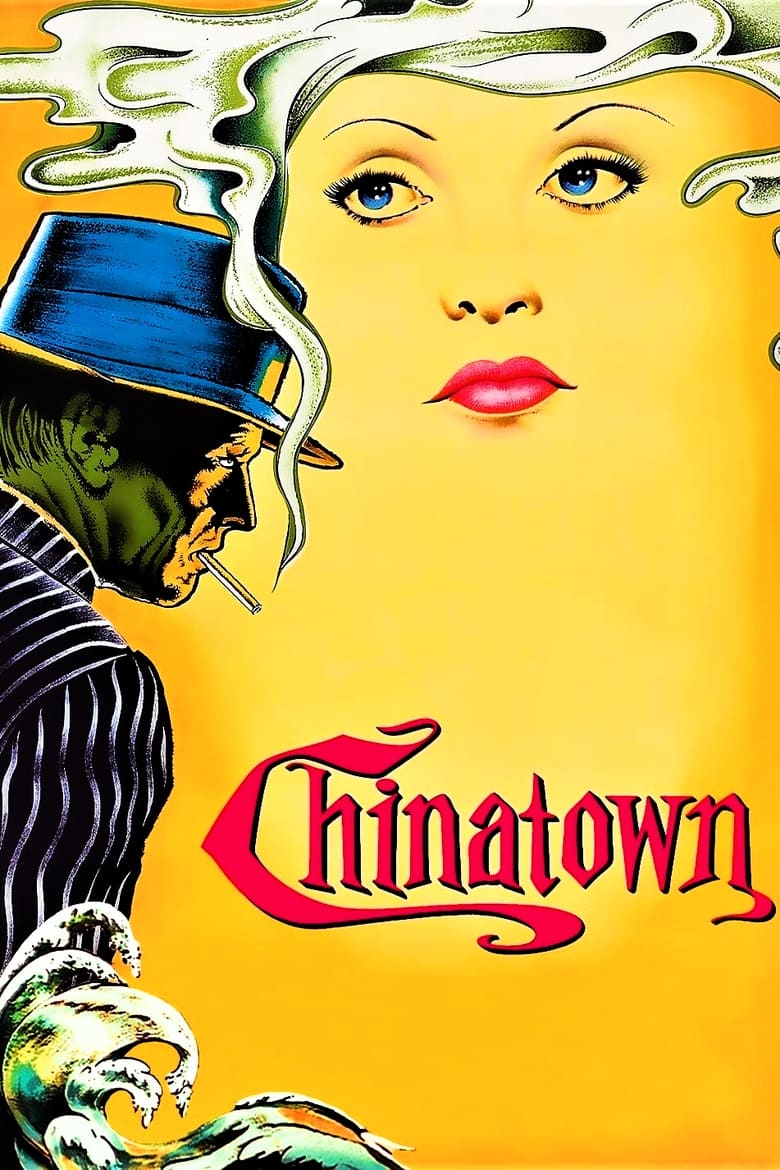
That ending. If you've seen it, you know exactly what I mean. If you haven't, I won't say a word, except that it lands like a fist to the stomach and leaves you sitting in silence, staring at the credits, wondering what you just witnessed. Few films earn a conclusion like that. Chinatown earns every second of it.
Jack Nicholson plays J.J. "Jake" Gittes, a slick private detective operating in the sun-baked sprawl of 1930s Los Angeles. He's the kind of man who thinks he's seen it all, who wears cynicism like a tailored suit, who cracks wise because that's how you keep the darkness at arm's length. Nicholson is absolutely magnetic here. Charming, sharp, increasingly haunted. You watch him peel back layer after layer of lies, each one worse than the last, and the transformation from cocky operator to genuinely shaken human being is handled with such precision that it creeps up on you. It's one of the finest performances of his career, and that's saying something. I've loved what he does elsewhere too, but there's something about the way he carries the weight of this particular story that feels unrepeatable. (For another angle on Nicholson at his peak, I'd point you to my review of One Flew Over the Cuckoo's Nest.)
Roman Polanski directs with icy, almost surgical control. Whatever you make of the man personally, and that's a conversation the film itself invites you to have elsewhere, the craft here is undeniable. He builds a world where power corrupts absolutely and quietly, where the worst crimes happen in boardrooms and drawing rooms rather than dark alleys. Los Angeles looks gorgeous and rotten all at once, all bleached light and long shadows.
Robert Towne's screenplay is razor-sharp. Up there with the best scripts ever written, full stop. The dialogue feels natural and poetic at the same time, every line doing double duty, every conversation laced with irony and dread. And the central conceit, a conspiracy rooted in water rights and land grabs and the kind of generational sin that gets buried under city foundations, is both historically grounded and entirely timeless. Corruption on this scale isn't a period detail. It's a permanent feature of how cities get built and who gets to benefit.
Jerry Goldsmith's score deserves its own paragraph. That mournful trumpet theme that slides in and out of the film like smoke under a door. It underscores every twist with exactly the right amount of melancholy and menace, never overselling the emotion, always nudging it deeper. It's the sound of something being lost, slowly and inevitably.
Now, the one honest reservation I'll flag: if you've watched a lot of classic noir, the structural beats here will feel familiar. The femme fatale, the conspiracy that goes higher than expected, the detective who gets in too deep. The genre's bones are visible. But this is a film that knows exactly what it's doing with those conventions. It follows the noir playbook and then tears the final pages out and replaces them with something far bleaker, far more honest, and far more devastating than the genre usually allows itself to be. It doesn't transcend noir by ignoring it. It transcends it by taking its darkest implications completely seriously.
If you want to trace the DNA of the cynical crime picture back a little further, Little Caesar is worth your time as a companion piece, a much earlier snapshot of American corruption and the men it chews up.
Four stars. Chinatown is flawless in craft, suffocating in tone, and it gets under your skin and stays there long after the lights come up. It's not just a great mystery. It's a devastating portrait of a city, and a man, powerless against the rot beneath the surface. See it. Then sit with that ending for a while. You'll need to.
Rating: ★★★★ | Year: 1974 | Watched: 2025-12-01
Where to watch
Watch in the UK
Stream: Paramount Plus · Paramount+ Amazon Channel · Paramount Plus Premium · Paramount Plus Basic with Ads
Rent: JustWatch TV · Apple TV Store · Rakuten TV · Amazon Video
Buy: Apple TV Store · Rakuten TV · Amazon Video · Google Play Movies
Physical: Amazon UK · Zavvi
Watch in the US
Stream: MGM+ Amazon Channel · Philo · MGM Plus Roku Premium Channel · MGM Plus
Rent: JustWatch TV · Amazon Video · Apple TV Store · Google Play Movies
Buy: Amazon Video · Apple TV Store · Google Play Movies · YouTube
Physical: Amazon US
Affiliate disclosure: Movies With Macca may earn a small commission on purchases or subscriptions started via these links. It costs you nothing extra.
Related on Movies With Macca
More from Roman Polanski: The Pianist (2002)
More with Jack Nicholson: The Shining (1980) · One Flew Over the Cuckoo's Nest (1975)
More from the 1970s: Fantastic Planet (1973) · Here and Elsewhere (1976) · Italianamerican (1974) · Punishment Park (1971)
More crime: A Better Tomorrow (1986) · Angst (1983) · Stolen Face (1952) · Cairo Station (1958)
More mystery: Mononoke the Movie: The Phantom in the Rain (2024) · Mononoke the Movie: Chapter II - The Ashes of Rage (2025) · Carnival of Souls (1962) · One Way or Another (1975)