Wavelength (1967)
½ — Wavelength (1967)

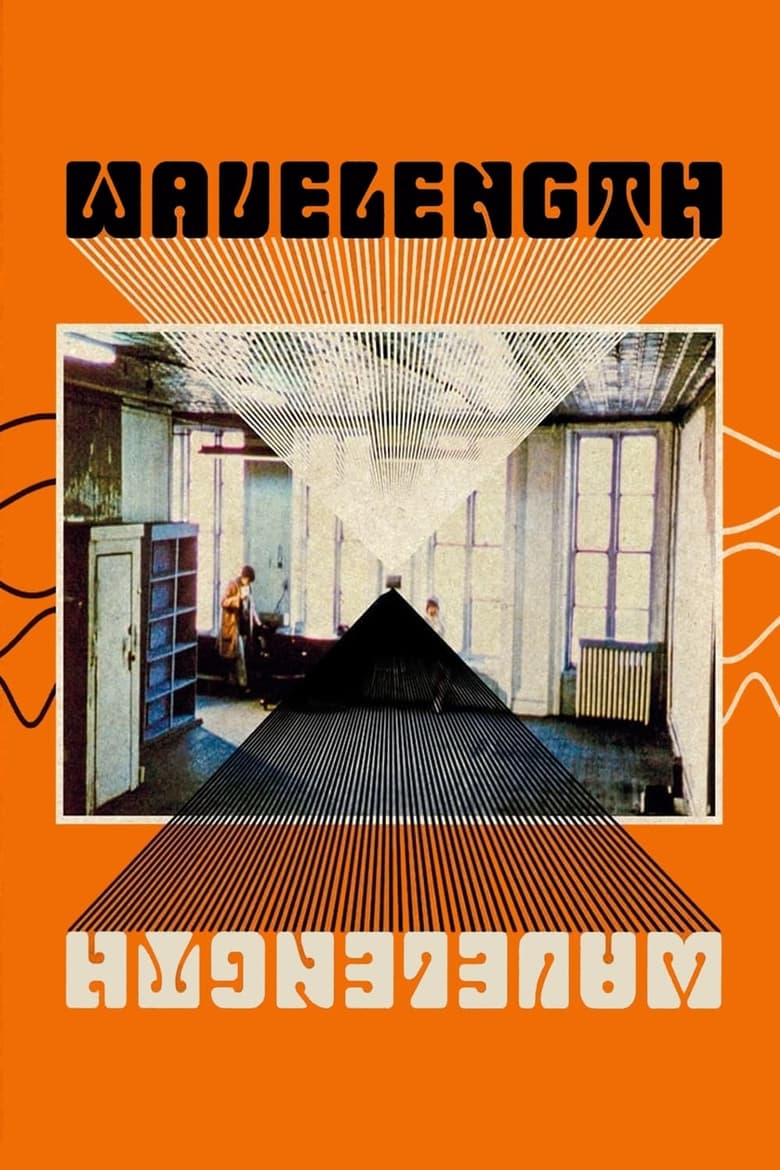
Forty-five minutes. One zoom. A photograph of waves on a wall. That's your lot.
Michael Snow's Wavelength is frequently described as one of the most important experimental films ever made. A landmark of avant-garde cinema. A profound meditation on perception, time, and the very nature of the medium. And look, I'll give it this much: I can recite those claims back to you with a straight face. What I can't do is pretend that watching it was anything other than an endurance test with intellectual pretensions stapled to the front.
The premise, if you can call it that, is a slow zoom across a New York loft towards a photograph of ocean waves pinned to the far wall. That journey takes 45 minutes. Along the way there are shifts in colour and light, the occasional sine wave tone bleeding through the soundtrack, and a handful of people who drift through the space like they've wandered in from a different, more interesting film. One of them, at some point, dies on the floor. The camera keeps zooming. Supposedly this is bold. Supposedly this is saying something.
Here's my problem with that. Admiration and enjoyment are not the same thing, and neither is admiration and respect. I can acknowledge that Wavelength was influential without pretending the experience of sitting through it is anything but comatose. Yes, it challenges conventions. Yes, it asks questions about how we see and how attention works and what a frame can mean. But if the destination after 45 minutes of visual monotony is a still photograph you could have clocked in under a second, then the film has to earn that journey. This one doesn't. It just makes you wait and calls the waiting profound.
There's something almost smug about it. The death scene being pointedly ignored while the zoom trudges on isn't a bold subversion of narrative expectation. It's a shrug dressed up as a statement. And the colour shifting? It's not evocative. It's boring. The kind of boring that dares you to say so, because then you've revealed yourself as someone who simply doesn't understand. I understand fine. I just don't care.
I think about something like Persona, which similarly deconstructs what film can be and what it can do to an audience, but does so while maintaining a pulse, a genuine sense of unease and human pressure. That's a film that earns its strangeness. Wavelength mistakes strangeness for substance.
The defence you'll hear most often is that this is art, and art doesn't owe you entertainment. Fair enough. But art does owe you something. A feeling, a thought, a shift in how you see the room when you walk back out into it. A cold, mechanical zoom towards a photo of waves gave me nothing except a stiff neck and mild irritation. If someone set their phone on a tripod in a loft and let it record for 45 minutes, they'd capture roughly 80% of what's happening here. The remaining 20% is the sine wave, which I could have done without.
I'm not against experimental film. I'm not even against slow film. What I'm against is the kind of work that wraps emptiness in theory and then looks down at you for blinking. Wavelength is pretentious to the point of self-parody, and the tragedy is that it doesn't even seem to know it. It's not avant-garde. It's a dare. And my answer is: no thank you.
Half a star.
Rating: ½ | Year: 1967 | Watched: 2025-09-25
Related on Movies With Macca
More from Canada: History of the World in Three Minutes Flat (1980) · Resident Evil: Retribution (2012) · Resident Evil: The Final Chapter (2016) · Resident Evil: Afterlife (2010)
More from the 1960s: Viy (1967) · Persona (1966) · Carnival of Souls (1962) · Daisies (1966)
More drama: Viy (1967) · Wonder (2017) · A Better Tomorrow (1986) · Beautiful Boy (2018)