Wagon Master (1950)
★★★ — Wagon Master (1950)

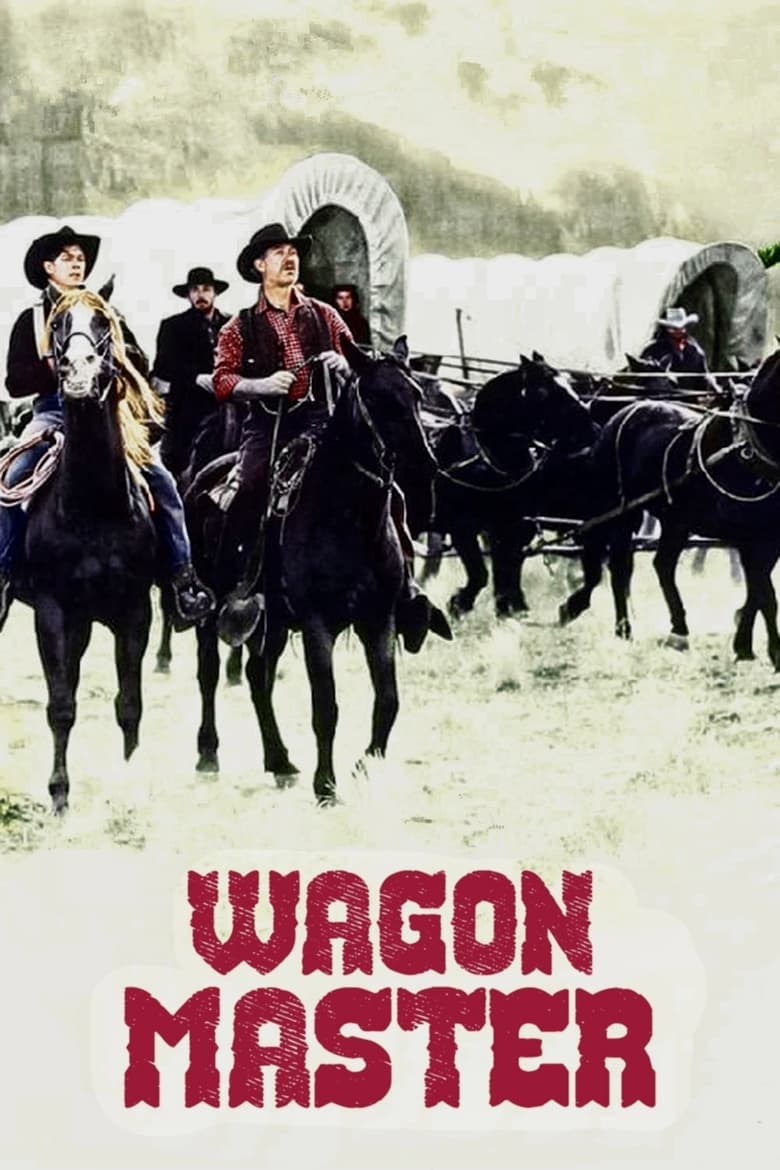
There's a moment in Wagon Master where nobody is shooting anybody, nobody is scheming or betraying or riding hard after a villain. People are just sitting around a fire, singing. And it's one of the most purely western things I've ever seen on screen. That tells you most of what you need to know about this film.
John Ford made plenty of westerns, some of them enormous and celebrated. This one is quieter, smaller, less discussed, and in some ways more honest than any of them. It follows two young cowboys who agree to guide a Mormon wagon train across punishing desert terrain. That's roughly it for plot. What fills the running time isn't twists or showdowns but the rhythm of the trail itself: the negotiations, the prayers, the singing, the exhaustion, the small courtesies between strangers who have to trust each other to survive. Ford lets it breathe. He lets it wander a little, like the journey itself. The film is episodic almost to the point of being a series of vignettes, and if you come to it expecting a tight three-act structure, you'll feel that looseness as a problem. I didn't. I felt it as honesty.
What makes the film genuinely special is its sense of community and the way it treats ordinary people with dignity. Hollywood westerns of this era loved heroes and villains, lone gunfighters and evil ranchers. Ford here is interested in something humbler: what it actually costs a group of people, with their wagons and their faith and their hope, to push themselves across a landscape that doesn't care whether they make it. The music runs right through the middle of all that. Folk hymns, fiddle tunes, group singalongs around the fire. It isn't background dressing; it's structural. The music is how these people hold themselves together, and Ford understands that completely.
Ben Johnson and Harry Carey Jr. as the two leads are easy and natural on screen, the kind of performers who look like they've always been there rather than like actors doing western. Johnson in particular has a quiet, unhurried authority that suits the film's pace perfectly. It's the sort of performance that looks effortless and probably wasn't.
Where the film wobbles is with its villains. A roving outlaw family called the Cleggs arrive to threaten the wagon train, and they're played with a broad, almost pantomime energy that jars badly against everything else Ford has built. The film around them is grounded and sincere; they're cartoons. Every scene they dominate feels like it belongs to a different, lesser picture. I understand dramatically why Ford needed a threat, something to tighten the story toward a conclusion, but the execution is clumsy and the acting is genuinely poor. It's the one thing that keeps Wagon Master from being the small masterpiece it so nearly is.
But "so nearly" is still a lot. There's a strand of the western genre that I find genuinely moving when it's done right, the one that's less interested in violence as spectacle and more interested in the act of crossing, of enduring, of arriving somewhere new and building something from nothing. For a companion piece that works the genre from a very different angle, I always point people toward The Ox-Bow Incident (1943), which uses the frontier setting to devastating moral effect rather than lyrical effect, but both films share that refusal to treat the West as pure mythology.
Ford trades spectacle for soul here, and mostly he wins that trade. The landscape is vast and beautiful. The people are recognisably human. The songs get into your head. If you come looking for gunfights and showdowns, this'll frustrate you inside twenty minutes. But if you want to feel the dust on the road and hear the voices of people crossing a continent with nothing but faith and stubbornness holding them together, then Wagon Master is the real thing. Flawed, yes. But also genuinely lovely in a way that a lot of louder, more celebrated westerns aren't.
Three and a half stars.
Rating: ★★★ | Year: 1950 | Watched: 2025-11-24
Where to watch
Watch in the UK
Physical: Amazon UK · Zavvi
Watch in the US
Rent: Amazon Video · Apple TV Store · Google Play Movies · YouTube
Buy: Amazon Video · Apple TV Store · Google Play Movies · YouTube
Physical: Amazon US
Affiliate disclosure: Movies With Macca may earn a small commission on purchases or subscriptions started via these links. It costs you nothing extra.
Related on Movies With Macca
More with Ben Johnson: The Getaway (1972) · Breakheart Pass (1975)
More from the 1950s: Invasion of the Body Snatchers (1956) · Alice in Wonderland (1951) · Letter from Siberia (1957) · Invaders from Mars (1953)
More adventure: Alice in Wonderland (1951) · The Eagle (1925) · Louisiana Story (1948) · The General (1926)
More western: The Ox-Bow Incident (1943) · Rio Bravo (1959) · Ride Lonesome (1959) · The Great Train Robbery (1903)