Virile Games (1988)
★★½ — Virile Games (1988)

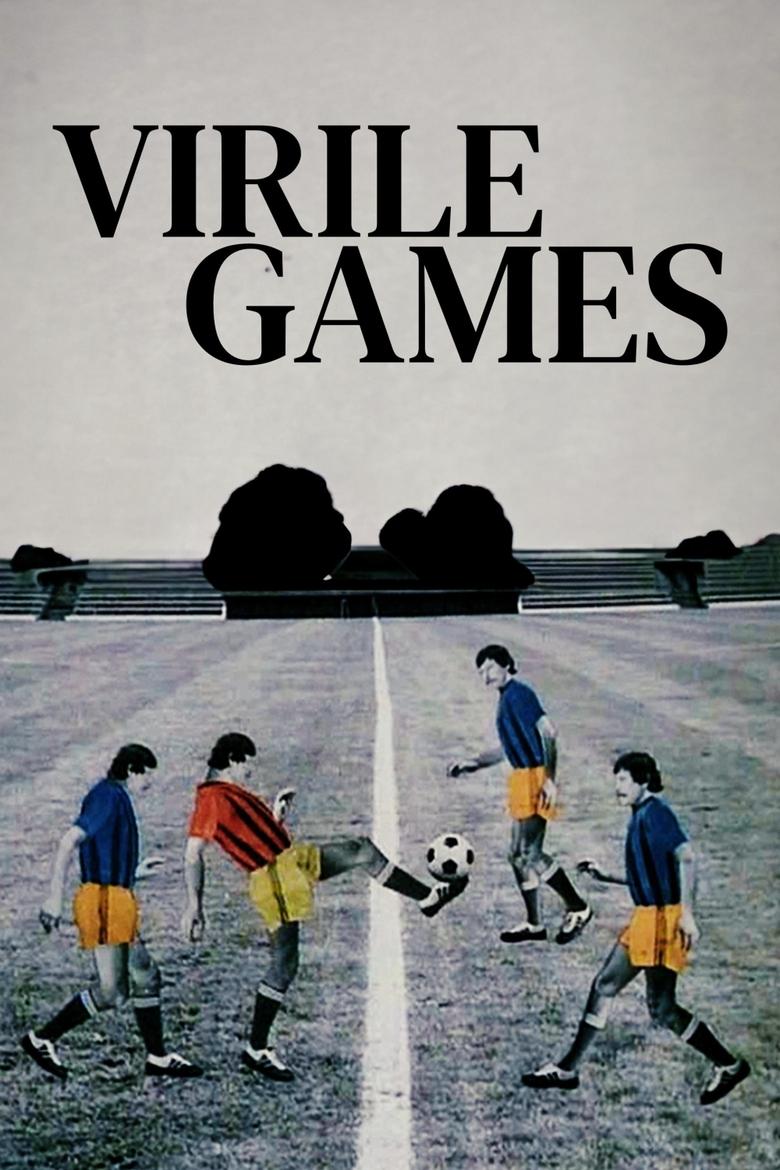
There's a moment in Virile Games where a footballer's limb detaches with such cheerful precision, such careful stop-motion logic, that you genuinely don't know whether to laugh or wince. You probably do both. Jan Švankmajer's 1988 short is about twelve minutes long, and in those twelve minutes it does exactly what it promises on the tin: takes a man watching a football match on the telly and drags the whole thing straight into the pit of grotesque, gleeful absurdity. It is, without question, absolutely mental.
The setup is disarmingly mundane. Bloke. Sofa. Football on the screen. And then, incrementally, the match starts to curdle. Players dissolve into meaty chaos. Limbs snap and contort. Bodies cease to behave like bodies. Švankmajer works in that collision of stop-motion clay figures, puppetry, and live action that he's made his signature, and the tactile quality here is remarkable. You can almost feel the clay between your fingers. Each brutal little gag is choreographed with the kind of frame-by-frame patience that makes you respect the work even when the work is making you slightly nauseous. It's like Tom and Jerry after a gothic nightmare got hold of the storyboards and decided the cat and mouse stuff was too soft.
The craftsmanship, I won't argue with. Švankmajer is a genuine master of this kind of animation, and if you want evidence of what a human being can do with clay and an obsessive eye for detail, this'll show you. The carnage is inventive in ways that keep surprising you right up until the credits. That's not nothing. That's actually quite a lot.
But. And it's a real but. Technical brilliance doesn't automatically translate into a satisfying watch. Without any emotional anchor, without narrative stakes worth caring about, the relentless parade of mutilation starts to feel one-note fairly quickly. It becomes a sensory assault in the least thrilling sense: not overwhelming, just repetitive. You admire the skill, you acknowledge the vision, and then you sit there waiting for something to land beyond the next inventive dismemberment. For me, it never quite did.
I think about something like Fantastic Planet, which manages to be genuinely strange and unsettling while still giving you a world to inhabit and a reason to stay. Virile Games doesn't seem particularly interested in that bargain. It's content to be a showcase, and on those terms it succeeds. But a showcase is a different thing from a piece of art that pulls you in.
Švankmajer's genius is evident throughout. I'd never question that. But this one sits closer to technical demonstration than fully realised film. It's the work of someone who can do extraordinary things with clay and a camera, and who here has chosen to do those extraordinary things in the service of a joke that's funny once, maybe twice, before the loop becomes apparent. The football setting gives it a vaguely satirical texture, a suggestion that sport itself is this barely contained spectacle of violence, but it doesn't push that idea far enough to make it stick.
Worth seeing once, genuinely. If you've any interest in animation, in Eastern European surrealism, in what stop-motion can do when someone with real commitment gets hold of it, sit down for the twelve minutes. You'll be impressed. You probably won't be moved. And unless you have a particular appetite for this flavour of grotesquerie, you likely won't feel the urge to go back.
Two and a half stars.
Rating: ★★½ | Year: 1988 | Watched: 2026-03-12
Related on Movies With Macca
More from Czechoslovakia: Fantastic Planet (1973) · Men Without Wings (1946) · Daisies (1966) · The Firemen's Ball (1967)
More from the 1980s: Nightmare City (1980) · A Better Tomorrow (1986) · Style Wars (1983) · Garlic Is as Good as Ten Mothers (1980)
More animation: Fantastic Planet (1973) · Alice in Wonderland (1951) · Mononoke the Movie: The Phantom in the Rain (2024) · Mononoke the Movie: Chapter II - The Ashes of Rage (2025)
More comedy: The Eagle (1925) · The General (1926) · Americana (2023) · The Naked Gun: From the Files of Police Squad! (1988)