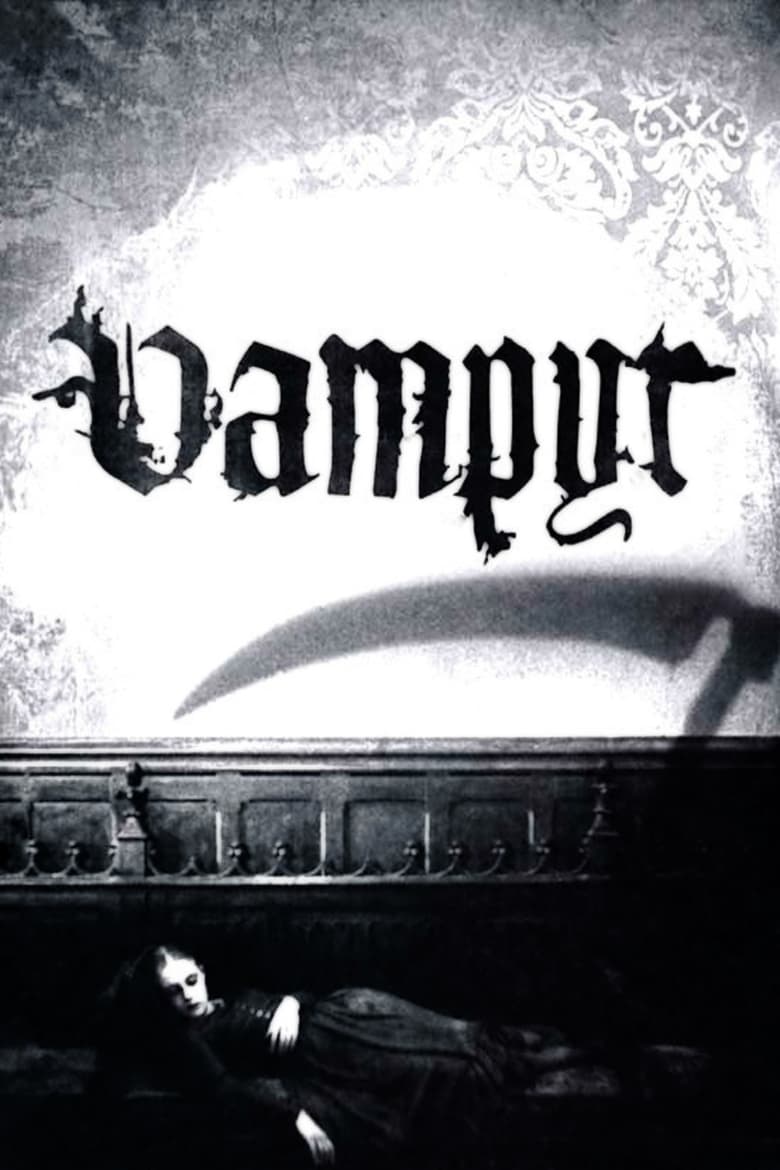
Vampyr (1932)
★★ — Vampyr (1932)

There's a specific kind of guilt that comes with watching a celebrated classic and feeling, well, a bit bored. I'll own it: Vampyr left me cold, and not in the way a good horror film should.
Carl Theodor Dreyer's 1932 picture arrives draped in prestige. It's spoken about in hushed, reverent tones by film historians, cited as a visual forerunner to poetic horror, praised for its dreamlike atmosphere and painterly compositions. And look, I can see all of that. The mist-drenched images, the haunting use of shadows, the occasional burst of genuinely striking negative imagery. There are frames here that belong in a gallery. Dreyer clearly had an eye for the strange and the uncanny, and when Vampyr works visually, it really works.
But a gallery is not a cinema, and watching a film is not the same as studying one.
The premise has real potential. A wanderer arrives in a cursed village, something sinister is at work, a vampire lurks at the edges of the story. That's fertile ground. The trouble is that Dreyer seems far more interested in mood than in story, which might be fine if the mood were consistently gripping. Instead, Vampyr sits at a peculiar remove, held at arm's length by its own opacity. The narrative is genuinely difficult to follow, not in a rewarding, puzzle-like way but in a "did I miss something, or is there simply not much here?" way. The minimal script offers almost no emotional anchor, and without one, the long stretches of near-silence start to feel less eerie than just empty.
The transition to sound was clearly uncomfortable for many filmmakers in this era, and Vampyr wears that discomfort openly. Dialogue is sparse to nonexistent. Much of the storytelling relies on intertitle-style text inserts, which creates a strange hybrid of silent and sound filmmaking that feels neither here nor there. The creaking doors and distant whispers that presumably sent a chill through audiences in 1932 now tip, more than once, into the unintentionally comic. Time has not been kind to those moments.
I reviewed The Invisible Man, made just a year later, and that film shows how the early sound era could be navigated with wit, invention and genuine menace. Vampyr, by comparison, feels like a director still figuring out what to do with the new technology, leaning on silence because sound hadn't quite been tamed yet.
And then there's the pace. Even at its relatively short runtime, Vampyr drags. There's a difference between slow cinema that uses its stillness to build dread, and slow cinema that simply moves slowly. This falls into the latter category too often for comfort. I kept waiting for a jolt, an emotional escalation, something to pull me fully in. It never really arrived.
I want to be fair. Cinephiles will rightly celebrate the visual daring on display here, and they're not wrong to. As an object of study, as a document of what horror was reaching towards in the early 1930s, Vampyr earns its place on syllabuses and in essay collections. If you're interested in the archaeology of the genre, there's material worth examining.
But as a viewing experience? It's ponderous, frequently alienating, and shows its age without apology. Some classics age into something richer every time you return to them. This one sits behind glass, demanding admiration it hasn't quite earned as entertainment. A respectful nod, then reach for the remote. There are far better vampire films out there.
Two stars.
Rating: ★★ | Year: 1932 | Watched: 2026-03-11
Where to watch
Watch in the UK
Stream: Bloodstream
Rent: Amazon Video
Buy: Amazon Video
Physical: Amazon UK · Zavvi
Watch in the US
Stream: HBO Max Amazon Channel · Philo · Screambox Amazon Channel · FlixFling
Rent: Amazon Video · Apple TV Store · Google Play Movies · YouTube
Buy: Amazon Video · Apple TV Store · Google Play Movies · YouTube
Physical: Amazon US
Affiliate disclosure: Movies With Macca may earn a small commission on purchases or subscriptions started via these links. It costs you nothing extra.
Related on Movies With Macca
More from France: Fantastic Planet (1973) · Letter from Siberia (1957) · Lessons of Darkness (1992) · Here and Elsewhere (1976)
More from the 1930s: Earth (1930) · Monkey Business (1931) · Sabotage (1936) · People on Sunday (1930)
More horror: Invasion of the Body Snatchers (1956) · Viy (1967) · Nightmare City (1980) · Angst (1983)
More fantasy: Viy (1967) · Alice in Wonderland (1951) · Mononoke the Movie: The Phantom in the Rain (2024) · Mononoke the Movie: Chapter II - The Ashes of Rage (2025)