
The Sting (1973)
★★★★½ — The Sting (1973)

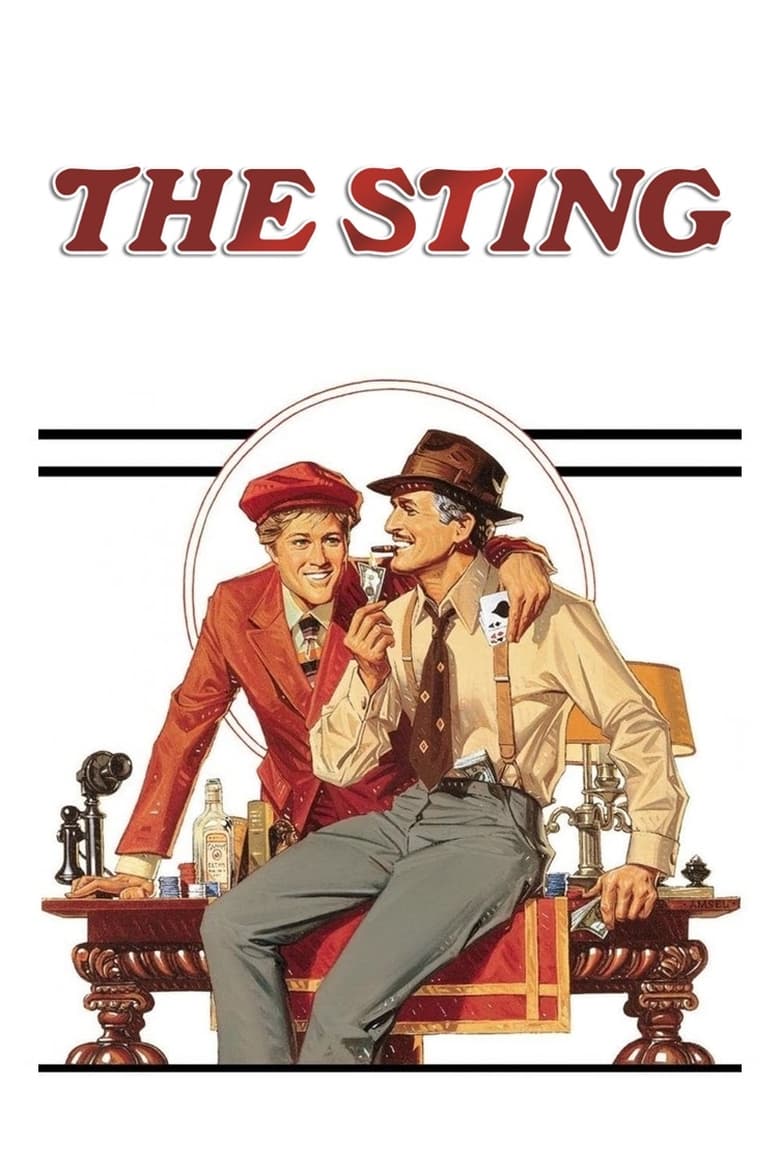
There's a moment near the end of The Sting where everything clicks into place, where the elaborate machinery of the whole film reveals itself, and I dare you not to grin like an idiot. I did. Both times I've seen it. The film plays you for a mark and you walk out of it delighted, not embarrassed, because being conned this elegantly is its own kind of pleasure.
This is, without question, one of the best films ever made. Not one of the best con films, not one of the best films of the 1970s. One of the best, full stop. I don't throw that around lightly.
From the very first frame, the film announces itself with complete confidence. The vintage title cards, the warm sepia palette, the ragtime score built around Scott Joplin's music, reworked by Marvin Hamlisch into something soulful and infectious. It's all telling you to settle in, to trust it, to enjoy the ride. And then it proceeds to earn every bit of that trust before pulling the rug out from under you in the most satisfying way imaginable.
Paul Newman and Robert Redford were, of course, brilliant together in Butch Cassidy and the Sundance Kid, but I'd argue this is the better film of the two, and their chemistry here reaches another level entirely. Newman's Henry Gondorff is cool and weathered and funny, a man who's seen every angle and still finds the game worth playing. Redford's Johnny Hooker is hungry and sharp and just a touch reckless, the kind of kid who's smart enough to be dangerous but not yet wise enough to know it. Together they're electric. There's wit in every exchange, and a quiet, real warmth underneath it all. You'd follow these two anywhere.
George Roy Hill directs with the kind of elegant, unhurried confidence that lesser directors mistake for slowness. The tension never lets up, even when the film is being playful, because you always sense the stakes coiling tighter beneath the surface. Every scene feels purposeful. Every character, every line of dialogue, every small detail is a piece of the mechanism. The screenplay is precision engineering. You don't see the trap being built because you're too busy enjoying the scenery, and that's exactly the point.
Robert Shaw as crime boss Doyle Lonnegan is pitch-perfect casting. Cold, controlled, quietly menacing. A man who considers himself too smart to be taken. The irony of that characterisation is one of the film's great pleasures. The supporting cast around him is equally strong, every face fitting neatly into the world the film builds, which is one of those rare screen recreations of a time and place that feels lived-in rather than dressed-up.
What I love most, though, is the feeling it leaves you with. The final revelation doesn't make you feel stupid for not seeing it coming. It makes you feel like the film respected you enough to play the long game. You were conned, yes. But conned by experts, with care and craft and affection. Walking out, or reaching the credits, there's no sting of embarrassment. Only the warm glow of having been genuinely, thoroughly entertained.
Cinema, at its most joyful, is a confidence trick. It asks you to believe in people who don't exist, in events that never happened, in worlds built from light and sound and performance. The Sting understands that better than almost any film I've seen. It doesn't just tell a story about deception. It embodies it, practices it, celebrates it.
Five stars. No notes. A masterwork.
Rating: ★★★★½ | Year: 1973 | Watched: 2025-11-15
Where to watch
Watch in the UK
Stream: Netflix · Netflix Standard with Ads
Rent: Apple TV Store · Rakuten TV · Amazon Video · Google Play Movies
Buy: Apple TV Store · Rakuten TV · Amazon Video · Google Play Movies
Physical: Amazon UK · Zavvi
Watch in the US
Stream: YouTube TV
Rent: Amazon Video · Apple TV Store · Google Play Movies · YouTube
Buy: Amazon Video · Apple TV Store · Google Play Movies · YouTube
Physical: Amazon US
Affiliate disclosure: Movies With Macca may earn a small commission on purchases or subscriptions started via these links. It costs you nothing extra.
Related on Movies With Macca
More from George Roy Hill: Butch Cassidy and the Sundance Kid (1969)
More with Paul Newman: Butch Cassidy and the Sundance Kid (1969) · Cars (2006)
More from the 1970s: Fantastic Planet (1973) · Here and Elsewhere (1976) · Italianamerican (1974) · Punishment Park (1971)
More comedy: The Eagle (1925) · The General (1926) · Americana (2023) · The Naked Gun: From the Files of Police Squad! (1988)
More crime: A Better Tomorrow (1986) · Angst (1983) · Stolen Face (1952) · Cairo Station (1958)



