The King of Comedy (1982)
★★★½ — The King of Comedy (1982)

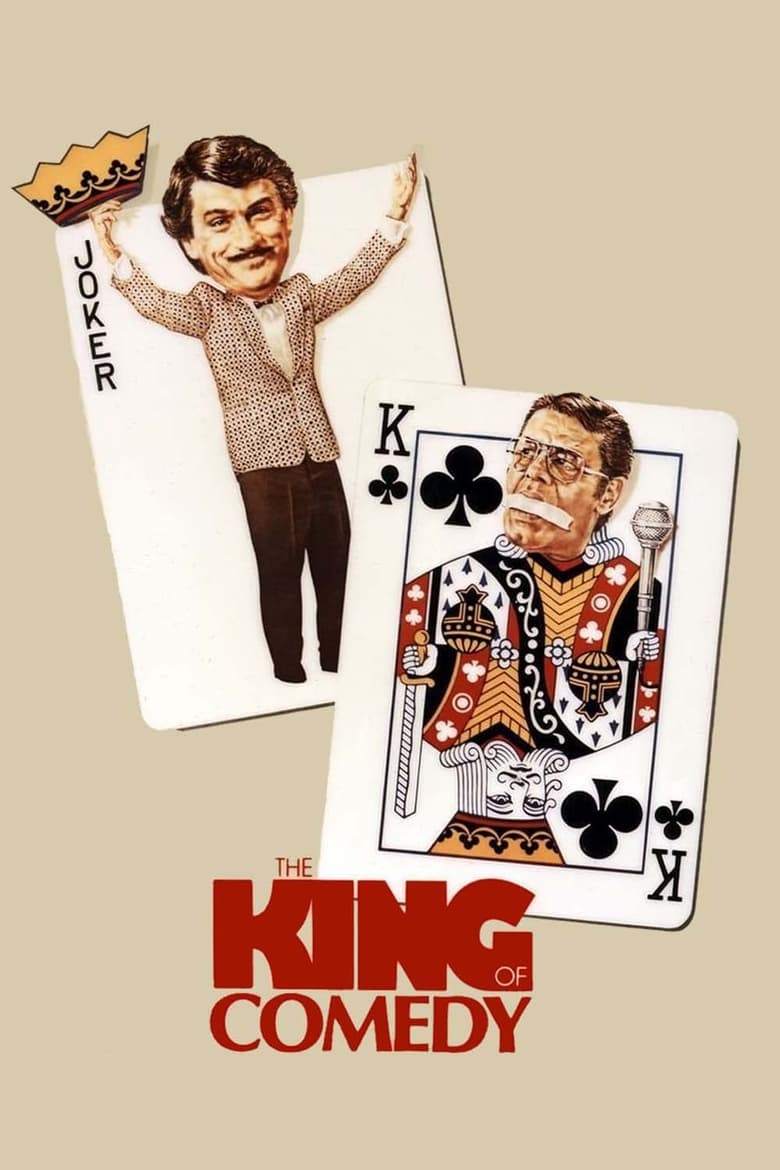
There's a moment in The King of Comedy where Rupert Pupkin, sitting in his mother's basement, conducts an imaginary chat show in front of cardboard cutouts of celebrities, laughing at his own jokes to a non-existent audience, and it hit me like a slow, creeping chill. No jump scare, no dramatic music sting. Just a man, alone, completely convinced of his own genius. It's one of the most quietly disturbing things I've seen in a Scorsese film, and that's saying something from a director who once had Robert De Niro mohawked and murderous in Taxi Driver.
De Niro is extraordinary here, and I mean that in the truest sense. Rupert Pupkin is delusional, socially oblivious, and utterly convinced that fame is something he's owed rather than earned. He stalks late-night host Jerry Langford, played with brilliant, tight-lipped restraint by Jerry Lewis, not out of malice exactly, but out of a manic entitlement that's somehow more unsettling than outright menace. De Niro plays him with no winking at the audience, no invitation to laugh him off. You watch, and you squirm, and you can't look away.
What Scorsese does so cleverly is build suspense out of almost nothing. There's no violence, no chase sequences, barely any conventional "plot" in the thriller sense. Instead, he uses static frames, cramped interiors, and silences that go on just a beat too long. It feels like watching a pressure cooker with no release valve. The script, by Paul D. Zimmerman, is sharp and savagely funny in the way that only deeply uncomfortable things can be, particularly in the scenes where Rupert bulldozes his way into Langford's life with the cheerful confidence of a man who has never once entertained the possibility of rejection. The cringe is almost physical.
Sandra Bernhard, as fellow obsessive Masha, is a live wire throughout. She's chaotic and funny and genuinely unhinged, though I'll admit her subplot tips occasionally into a kind of excess that slightly dilutes the film's otherwise icy control. It's a minor complaint, but it's there.
The ending is the thing people tend to argue about, and rightly so. It's ambiguous, cynical, and deliberately unsatisfying in a way that feels entirely intentional. This isn't a film that wants to send you out buzzing. It wants to leave something uncomfortable lodged in your chest. The question it's really asking, whether fame itself is indistinguishable from infamy in a media-saturated culture, feels less like a 1982 provocation and more like a documentary about the present. Influencers, clout-chasers, people who are famous for simply refusing to go away. Rupert Pupkin didn't predict that world. He basically founded it.
It's not an easy watch, and I wouldn't call it a film I'd throw on for a Friday night. Rupert is pitiable but never quite sympathetic enough to root for, and the film offers no comfort in that ambiguity. But that's the point, isn't it. The King of Comedy isn't interested in making you feel good. It's interested in making you think, and maybe glance sideways at your own hunger for recognition.
Three and a half stars. Brilliantly acted, psychologically sharp, and years ahead of its time. Not a crowd-pleaser, but absolutely a haunting piece of work that has only grown more relevant with age. See it once. You won't forget it.
Rating: ★★★½ | Year: 1982 | Watched: 2026-02-18
Where to watch
Watch in the UK
Rent: Apple TV Store · Rakuten TV · Amazon Video · Google Play Movies
Buy: Apple TV Store · Rakuten TV · Amazon Video · Google Play Movies
Physical: Amazon UK · Zavvi
Watch in the US
Rent: Amazon Video · Apple TV Store · Fandango At Home
Buy: Amazon Video · Apple TV Store · Fandango At Home
Physical: Amazon US
Affiliate disclosure: Movies With Macca may earn a small commission on purchases or subscriptions started via these links. It costs you nothing extra.
Related on Movies With Macca
More from Martin Scorsese: Italianamerican (1974) · Gangs of New York (2002) · Cape Fear (1991) · Taxi Driver (1976)
More with Robert De Niro: The Untouchables (1987) · Shark Tale (2004) · Little Fockers (2010) · Meet the Fockers (2004)
More from the 1980s: Nightmare City (1980) · A Better Tomorrow (1986) · Style Wars (1983) · Garlic Is as Good as Ten Mothers (1980)
More drama: Viy (1967) · Wonder (2017) · A Better Tomorrow (1986) · Beautiful Boy (2018)
More comedy: The Eagle (1925) · The General (1926) · Americana (2023) · The Naked Gun: From the Files of Police Squad! (1988)