Taxi Driver (1976)
★★★½ — Taxi Driver (1976)

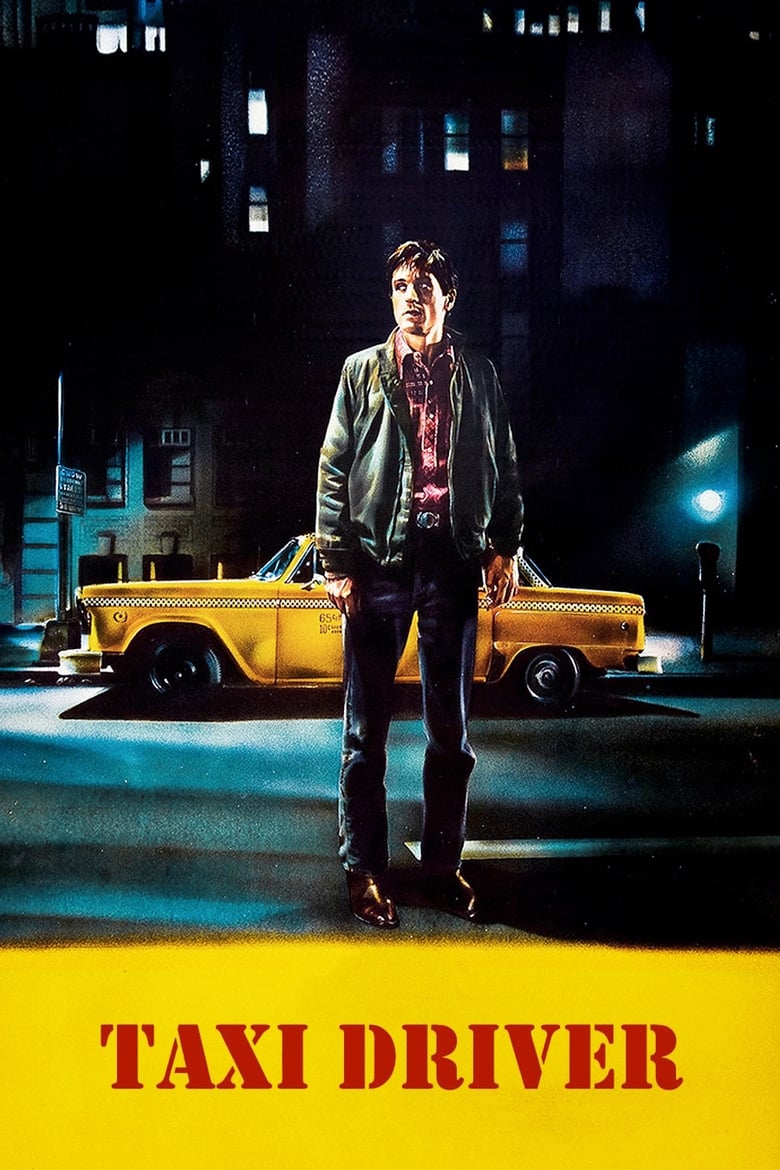
There's a question that nags at me every time I think about Taxi Driver, and it's not one with a comfortable answer: is the film critiquing Travis Bickle, or is it in love with him? Because Scorsese's direction is so precise, De Niro's performance so magnetic, the whole thing so meticulously constructed, that it becomes genuinely difficult to tell. And that difficulty, for me, is both the film's greatest achievement and its most serious problem.
Let me be clear about what works, because plenty does. Robert De Niro's Travis Bickle is one of the great screen performances. The character is an insomniac Vietnam vet turned nocturnal New York cabbie, and De Niro finds him not in grand declarations but in the small, creeping details: the way he stares too long into mirrors, the muttered self-talk, the almost ceremonial care he takes cleaning his weapons. He's a man assembling a sense of purpose out of paranoia and rot, and you can't take your eyes off him even when he repels you. Which he frequently does.
The filmmaking around him is equally impressive. Bernard Herrmann's score, all smoky saxophone and low, simmering dread, wraps itself around the imagery like the steam that rises from the New York streets. The cinematography is voyeuristic and grimy, giving the whole film the texture of a fever dream you half-remember in the morning. The tension is coiled so tight in places that certain scenes feel almost unbearable, building to a finale of brutal, clinical intensity. As pure filmmaking, it's undeniably powerful stuff, a landmark of American cinema from any angle you approach it.
And yet. And yet.
The film is deeply uncomfortable, and not in the way great art is supposed to make you uncomfortable. My unease isn't about the violence. It's about what the film seems to be romanticising. Travis develops an obsession with a young woman working the streets, pursues her relentlessly despite repeated rejections, and casts himself as her saviour. The film frames all of this through his warped perspective, which is a legitimate artistic choice. The problem is that it too often seems to be admiring that perspective rather than interrogating it. The line between critique and complicity gets razor thin, and I think the film slips over it more than once.
There's a version of Taxi Driver that holds Travis at arm's length, that lets us see the full grotesqueness of his delusion. And flashes of that version are genuinely here. But Scorsese and his collaborators are so seduced by their own protagonist that they can't quite commit to keeping that distance. The result is a film that feels, in places, like it's endorsing the very saviour fantasy it ought to be dissecting. That queasy feeling doesn't lift.
It's worth noting that Scorsese returned to this kind of territory in The King of Comedy, another study in delusion and obsession and a man utterly convinced of his own rightness in the face of all evidence. I actually find that film easier to sit with, partly because the comedy creates just enough distance from the protagonist's mania. Here, the distance collapses.
I respect Taxi Driver enormously on a technical level. De Niro, the score, the direction, the atmosphere of damp and neon and urban unease. It earns its place in the canon on craft alone. But respect and enjoyment are different things, and enjoyment is in short supply here. The queasiness it leaves behind is real, and I'm not convinced the film has earned it in quite the way it thinks it has.
Three and a half stars. A remarkable piece of work that I admire more than I can bring myself to like.
Rating: ★★★½ | Year: 1976 | Watched: 2025-07-25
Where to watch
Watch in the UK
Stream: Sony Pictures Core Amazon Channel
Rent: Apple TV Store · Rakuten TV · Amazon Video · Google Play Movies
Buy: Apple TV Store · Rakuten TV · Amazon Video · Google Play Movies
Physical: Amazon UK · Zavvi
Watch in the US
Rent: Amazon Video · Apple TV Store · Google Play Movies · YouTube
Buy: Amazon Video · Apple TV Store · Google Play Movies · YouTube
Physical: Amazon US
Affiliate disclosure: Movies With Macca may earn a small commission on purchases or subscriptions started via these links. It costs you nothing extra.
Related on Movies With Macca
More from Martin Scorsese: Italianamerican (1974) · The King of Comedy (1982) · Gangs of New York (2002) · Cape Fear (1991)
More with Robert De Niro: The Untouchables (1987) · The King of Comedy (1982) · Shark Tale (2004) · Little Fockers (2010)
More from the 1970s: Fantastic Planet (1973) · Here and Elsewhere (1976) · Italianamerican (1974) · Punishment Park (1971)
More crime: A Better Tomorrow (1986) · Angst (1983) · Stolen Face (1952) · Cairo Station (1958)
More drama: Viy (1967) · Wonder (2017) · A Better Tomorrow (1986) · Beautiful Boy (2018)