The Good, the Bad and the Ugly (1966)
★★★★★ — The Good, the Bad and the Ugly (1966)

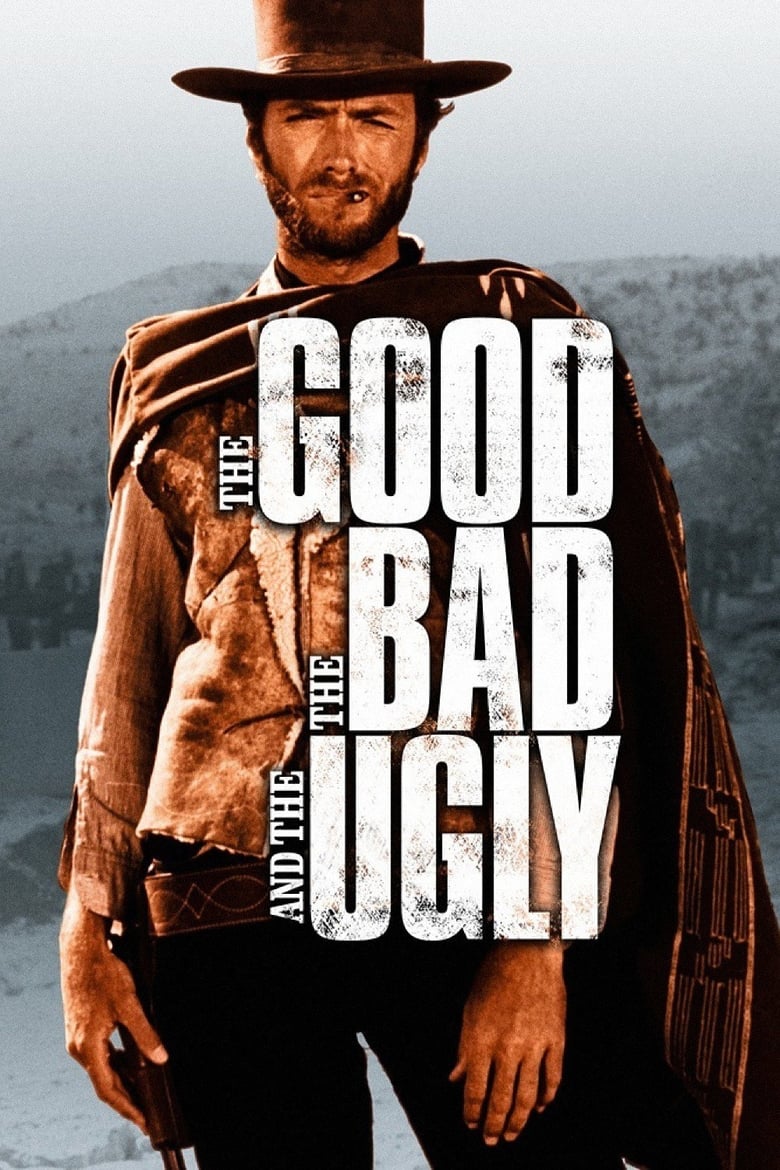
If aliens showed up tomorrow and asked me what cinema is, I wouldn't hand them a list of films. I'd sit them down, press play on this one, and let it do the talking.
The Good, the Bad and the Ugly isn't just a Western. It's THE Western. The definitive one. The one every other film in the genre is quietly measured against, whether its makers admit it or not. Sergio Leone built something here that feels less like a film and more like a force of nature. A sprawling, sun-baked, sweat-soaked epic that makes you feel the weight of every mile and every grain of sand.
What strikes me every single time, and I genuinely mean every time, is how physically present this film is. You squint when the dust flies into frame. You want to swat the flies away in the sweltering heat. There's a texture to it, a sheer material reality, that no amount of CGI or studio money could manufacture today. This is a film built from actual landscapes, actual light, actual human faces. That's not nostalgia talking. That's just the truth. And the fact that it still feels this alive and this immediate as it approaches its 60th year is, frankly, astounding.
I've written about Leone before. I loved A Fistful of Dollars (1964) and thought For a Few Dollars More (1965) was a real step up, but this is where he arrived somewhere almost impossible to describe. The Dollars Trilogy reaches its peak here, and what a peak it is.
Then there's Ennio Morricone. I could write an entire piece just about the score and still feel like I'd undersold it. It functions as a fourth main character. Not an accompaniment to the film, not a backdrop. It IS the film. It speaks in places where words have no business being spoken. Every duel, every lingering close-up, every moment of loaded silence is given a voice by Morricone's music that no dialogue could replicate. The main theme alone has probably done more for Western cinema than most directors manage in an entire career.
And then the final showdown. The three-way standoff in the cemetery. I don't know how many times I've watched it, but the tension still coils in my chest like I've never seen it before. Leone's editing, the extreme close-ups of eyes and hands, the way time seems to stretch and compress all at once, it's as pure an expression of what this medium can do as anything I've ever seen. Morricone's music swells and the whole thing becomes something close to transcendent. That's not hyperbole. I genuinely believe that sequence is among the finest pieces of filmmaking ever committed to celluloid.
Five stars. No argument. No caveats.
Some films are great. Some are important. A very rare few are both, and rarer still are those that make you feel, in your gut, why this art form exists at all. The Good, the Bad and the Ugly is one of those films. Show it to anyone. Show it to everyone. Show it to the aliens.
Rating: ★★★★★ | Year: 1966 | Watched: 2025-04-01
Where to watch
Watch in the UK
Stream: MGM Plus Amazon Channel
Rent: Apple TV Store · Amazon Video · Sky Store
Buy: Apple TV Store · Amazon Video · Sky Store
Physical: Amazon UK · Zavvi
Watch in the US
Stream: fuboTV · MGM+ Amazon Channel · Philo · MGM Plus Roku Premium Channel
Rent: Amazon Video · Apple TV Store · Google Play Movies · YouTube
Buy: Amazon Video · Apple TV Store · Google Play Movies · YouTube
Physical: Amazon US
Affiliate disclosure: Movies With Macca may earn a small commission on purchases or subscriptions started via these links. It costs you nothing extra.
Related on Movies With Macca
More from Sergio Leone: Duck, You Sucker (1971) · Once Upon a Time in America (1984) · A Fistful of Dollars (1964) · For a Few Dollars More (1965)
More with Clint Eastwood: Million Dollar Baby (2004) · High Plains Drifter (1973) · Hang 'em High (1968) · Unforgiven (1992)
More from Italy: Nightmare City (1980) · Cemetery Man (1994) · One Way or Another (1975) · Chicken for Linda! (2023)
More from the 1960s: Viy (1967) · Persona (1966) · Carnival of Souls (1962) · Daisies (1966)
More western: The Ox-Bow Incident (1943) · Rio Bravo (1959) · Ride Lonesome (1959) · The Great Train Robbery (1903)