A Fistful of Dollars (1964)
★★★★ — A Fistful of Dollars (1964)

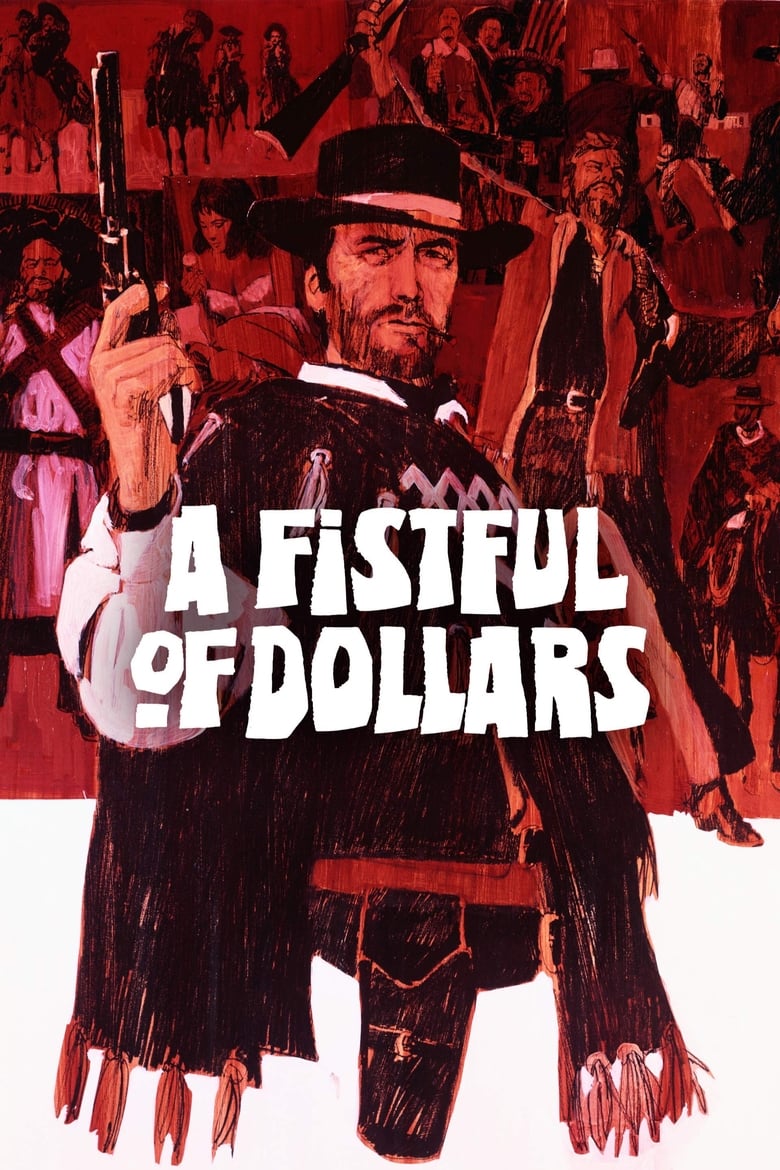
Right, let me be upfront about something: if you've seen Akira Kurosawa's Yojimbo, you've essentially seen A Fistful of Dollars. Sergio Leone lifted the bones of that film so thoroughly that Kurosawa himself reportedly said it was "a fine film, but it was my film." The lawsuits followed. That's not me being reductive, that's just the honest starting point for any conversation about this one.
So what we've got is a nameless drifter riding into a dusty border town caught between two feuding families. He's a gun for hire with no particular loyalty to anyone, and he's smart enough to play both sides against each other for his own gain. Sound familiar? It should. The genius of Yojimbo was in that exact setup, the ronin as a cynical, self-serving agent of chaos who ends up being the closest thing to a moral force the story has. Leone transplants all of that wholesale into the American Southwest, swaps the sword for a revolver and a poncho, and points the camera at Clint Eastwood.
And look, Eastwood is genuinely magnetic here. The Man with No Name is all squint and silence and economy of movement. He does more with a cheroot and a raised eyebrow than most actors manage with a full monologue. Leone clearly knew exactly what he had in front of his lens, and he frames Eastwood accordingly, big close-ups on the eyes, slow builds to sudden violence. The grammar of the spaghetti western is basically invented here, and it still works.
But the real star, and I'll hear no argument on this, is Ennio Morricone's score. It's extraordinary. That main theme is one of the most recognisable pieces of film music ever written, all twanging guitars and whistling and percussion that sounds like it's scored a myth rather than a movie. Every time it kicks in, the film gets ten percent better on the spot. Morricone could make a man walking across a car park feel like the most significant thing that has ever happened, and here he's working at full power. I've said it before reviewing other Leone films, and I'll keep saying it: the man was operating on a different level entirely.
Where the film is slightly less interesting than its Japanese source material, for me anyway, is in the texture around the central plot. Yojimbo has a wiry, almost comedic energy to it, a sense of Kurosawa enjoying the absurdity of his own premise. Leone plays things straighter and grander, which suits the landscape, but occasionally the story feels thinner for it. The rival families are functional rather than fascinating. The stakes are clear but not particularly felt.
That said, this is still a four-star film because it does what it sets out to do with enormous confidence and style. Leone was building something here, the foundation of a whole new way of making westerns. The sequels push the ambition further. I think For a Few Dollars More is a step up, and Once Upon a Time in the West is where Leone achieved something close to operatic perfection. But you can feel all of that potential being assembled in real time right here.
My honest recommendation is: watch Yojimbo first, then come straight to this. Not because one cancels the other out, but because seeing them back to back is one of cinema's great pleasures, a masterclass in how the same story can feel completely native to two entirely different worlds. Then read my review of Yojimbo as well, because apparently that's where I put all my better thoughts on this particular plot.
Four stars. Morricone alone is worth the price of admission.
Rating: ★★★★ | Year: 1964 | Watched: 2025-04-13
Where to watch
Watch in the UK
Stream: MGM Plus Amazon Channel
Rent: Apple TV Store · Amazon Video · Sky Store
Buy: Apple TV Store · Amazon Video · Google Play Movies · YouTube
Physical: Amazon UK · Zavvi
Watch in the US
Stream: fuboTV · MGM+ Amazon Channel · Philo · MGM Plus Roku Premium Channel
Rent: Amazon Video · Apple TV Store · Google Play Movies · YouTube
Buy: Amazon Video · Apple TV Store · Google Play Movies · YouTube
Physical: Amazon US
Affiliate disclosure: Movies With Macca may earn a small commission on purchases or subscriptions started via these links. It costs you nothing extra.
Related on Movies With Macca
More from Sergio Leone: Duck, You Sucker (1971) · Once Upon a Time in America (1984) · For a Few Dollars More (1965) · Once Upon a Time in the West (1968)
More with Clint Eastwood: Million Dollar Baby (2004) · High Plains Drifter (1973) · Hang 'em High (1968) · Unforgiven (1992)
More from Germany: Lessons of Darkness (1992) · Cemetery Man (1994) · The Grand Budapest Hotel (2014) · Resident Evil: Retribution (2012)
More from the 1960s: Viy (1967) · Persona (1966) · Carnival of Souls (1962) · Daisies (1966)
More western: The Ox-Bow Incident (1943) · Rio Bravo (1959) · Ride Lonesome (1959) · The Great Train Robbery (1903)