The Cabinet of Dr. Caligari (1920)
★★★ — The Cabinet of Dr. Caligari (1920)

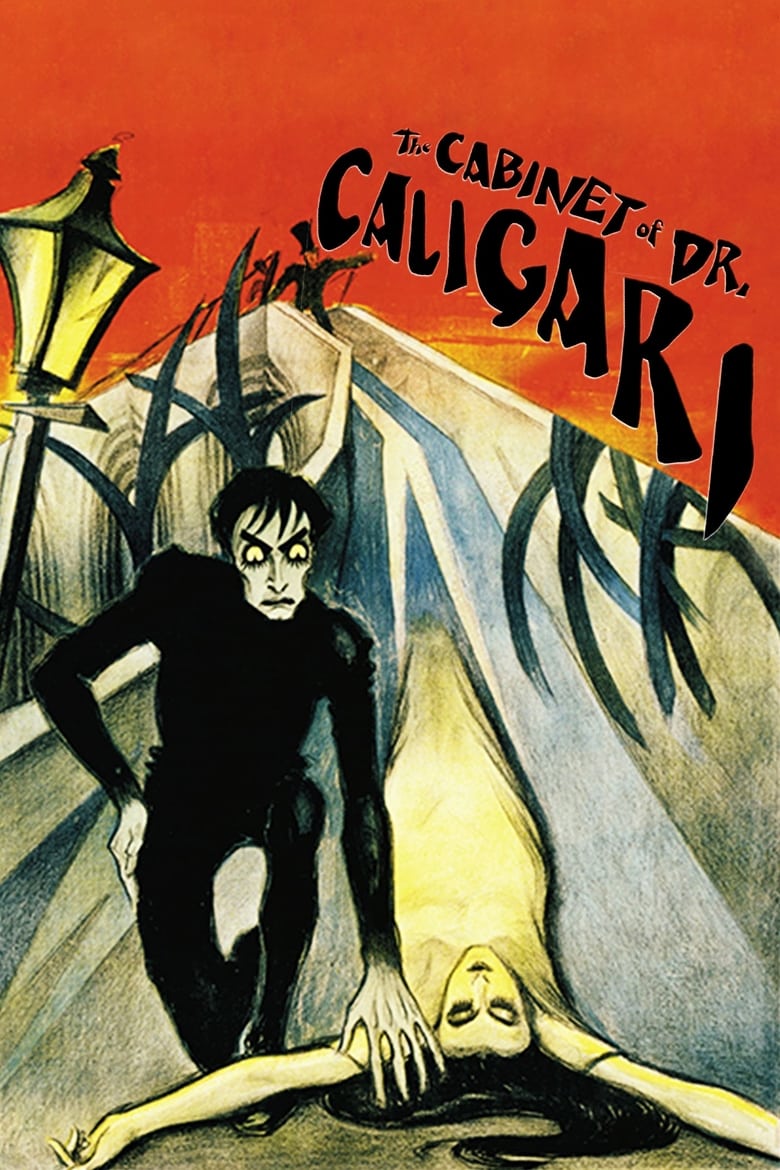
There's a version of watching The Cabinet of Dr. Caligari where you feel the full weight of what it achieved. Jagged rooftops jutting at impossible angles, shadows painted directly onto the sets, a world that looks like it was designed inside a fever dream. It's one of the most visually distinctive films ever made, and I mean that without any caveats. The expressionist design work here isn't decoration, it's argument. The warped geometry tells you, before a single title card appears, that something is deeply wrong with the world you're entering. That's a remarkable thing to pull off, and it influenced everything from Nosferatu to The Third Man to decades of psychological horror that followed. Watching it, you're essentially watching the birth of a visual language that cinema is still speaking today.
So why am I only giving it three stars? Because knowing something matters and actually feeling it are two very different things.
The story follows a hypnotic doctor, Caligari, and his somnambulist, Cesare, a figure he controls like a weapon, sending him out in the dead of night to kill on command. It's a genuinely unnerving premise, the stuff of proper nightmares, and the film deserves enormous credit for how completely it commits to externalising psychological dread through its design rather than through conventional storytelling. This wasn't a film that simply told a horror story. It warped the entire physical world to reflect a disturbed mind. That's a bold, brilliant idea, and it laid the groundwork for almost every psychological thriller that came after it.
But sitting with it in 2025, I'd be lying if I said it was an easy watch. The performances are wildly theatrical, all rolling eyes and outstretched arms and exaggerated stagecraft that made perfect sense in the context of early silent cinema but now reads as almost comical. That's not a criticism of the cast, it's just the honest experience of watching a film made for audiences whose entire frame of reference was the stage. The pacing is slow, the plot revealed in deliberate, halting chunks through title cards that feel stiff and distant. There's a remove to it that I couldn't quite bridge, no matter how much I respected what was on screen.
And then there's the twist ending, which I won't spell out here, but which was genuinely revolutionary at the time. The problem is that it's now common knowledge, the kind of thing you encounter in every film studies introduction before you ever sit down to watch the film itself. Arriving at it in 2025 feels less like a revelation and more like finally reaching a landmark you've seen on postcards your whole life. You appreciate it, but the shock is gone.
I've had similar feelings with other films from this era. I reviewed The Eagle (1925) and The Docks of New York not long ago, and both of those managed to hold me emotionally in ways Caligari didn't quite manage. Whether that's the narrative drive, the performances, or simply the subject matter, I'm not entirely sure. Silent cinema can absolutely reach across the decades and grab you. This one, for me, kept its distance.
What I keep coming back to is that image of visiting the birthplace of a language you already speak. You walk around, you understand exactly why it matters, you can see its influence stamped on everything around you, but you don't live there. You're a tourist, however respectful a one. That's my honest experience of The Cabinet of Dr. Caligari. I can't call it bad. I can't call it boring. But I can call it alienating, its silence and style and sheer historical distance creating a barrier I never fully got over.
Three stars. An absolute must-watch for anyone serious about film history, and I'd never argue otherwise. Just go in knowing you might admire it more than you feel it. Some classics earn their place in the canon not because they move you, but because they moved everything else.
Rating: ★★★ | Year: 1920 | Watched: 2025-11-26
Where to watch
Watch in the UK
Stream: Amazon Prime Video · Amazon Prime Video with Ads · Bloodstream · Artiflix
Rent: Amazon Video
Buy: Amazon Video
Physical: Amazon UK · Zavvi
Watch in the US
Stream: fuboTV · Philo · Shudder · Fandor Amazon Channel
Rent: Amazon Video · Apple TV Store · Fandango At Home
Buy: Amazon Video · Apple TV Store · Fandango At Home
Physical: Amazon US
Affiliate disclosure: Movies With Macca may earn a small commission on purchases or subscriptions started via these links. It costs you nothing extra.
Related on Movies With Macca
More from Germany: Lessons of Darkness (1992) · Cemetery Man (1994) · The Grand Budapest Hotel (2014) · Resident Evil: Retribution (2012)
More from the 1920s: The Eagle (1925) · The General (1926) · The Docks of New York (1928) · A Throw of Dice (1929)
More drama: Viy (1967) · Wonder (2017) · A Better Tomorrow (1986) · Beautiful Boy (2018)
More horror: Invasion of the Body Snatchers (1956) · Viy (1967) · Nightmare City (1980) · Angst (1983)