The Bridge on the River Kwai (1957)
★★★★ — The Bridge on the River Kwai (1957)

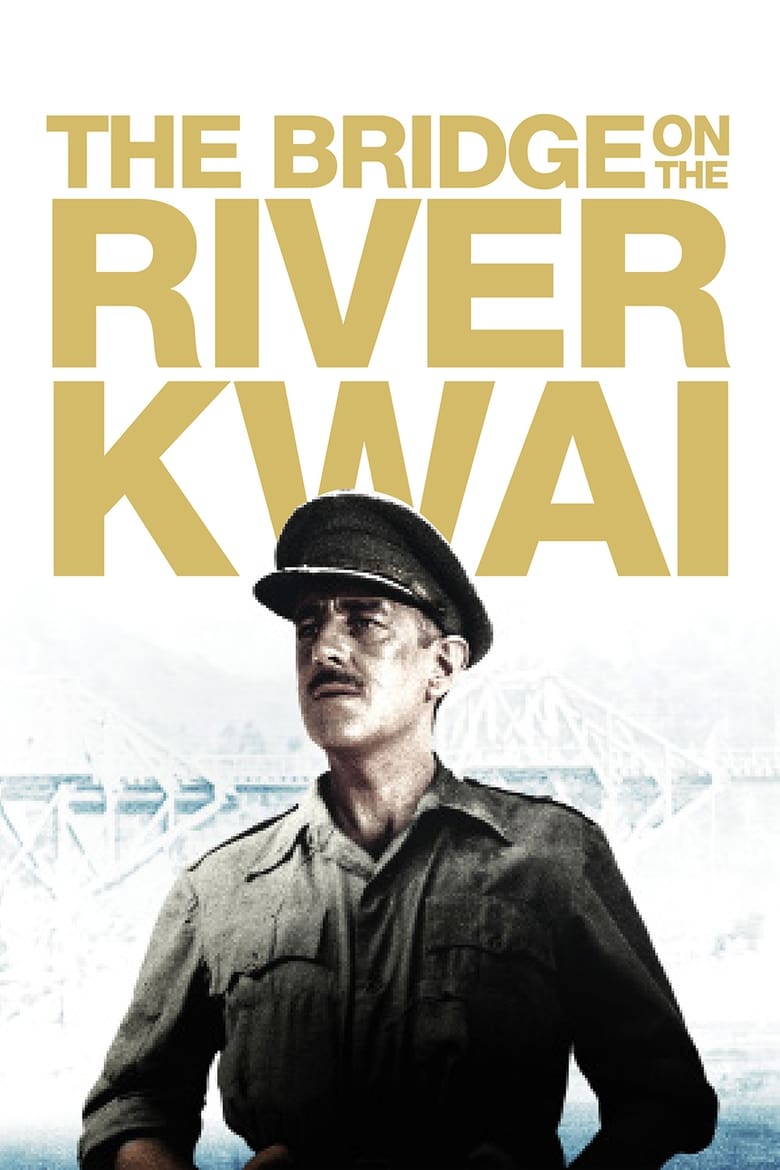
There's a moment near the end of The Bridge on the River Kwai where everything you've been watching for nearly three hours crystallises into a single, devastating question: what exactly have we just witnessed? A story of survival? Of heroism? Or of a man so consumed by duty and pride that he loses all grip on what any of it actually means? That question is still rattling around my head, and I think that's exactly the point.
This is part of my A-Z World Movie Tour, with the United Kingdom's entry, and it's a formidable one. David Lean directs with a confidence that makes the jungle feel both gorgeous and suffocating. The lush cinematography gives you beauty and dread in equal measure, and Lean's patience with the camera, his willingness to let a scene breathe, gives the whole thing a weight that lesser directors would've squandered chasing action beats. And then there's that train sequence. That agonisingly long fuse. I was practically gripping the arm of my chair. It might be one of the most nerve-wracking stretches of film I've ever sat through.
But the real reason this film endures is Alec Guinness as Colonel Nicholson. I'll be upfront: this was my first time seeing him in anything outside of Star Wars, and I was completely floored. Every clipped line delivery, every tiny gesture of controlled outrage, every flicker of something darker creeping in behind those proper, soldierly eyes. He's not just playing one man's stubbornness. He's embodying an entire national character pushed all the way to its tragic, absurd extreme. Nicholson is brilliant, infuriating, and deeply sad, and Guinness never lets you fully hate him, which is the real achievement. You understand how a man becomes him. That's what makes it so uncomfortable.
Because the film's real subject isn't the bridge, or the Japanese camp, or even the war itself. It's obsession. It's the way pride and duty and the need to impose order on chaos can curdle, slowly, into something indistinguishable from madness. Nicholson insists on building the bridge properly, to the highest British standards, for the enemy, because the alternative is to admit that none of it means anything. Colonial arrogance dressed up as professionalism. It's sharp, pointed writing, and it lands harder now than it probably did in 1957.
I do have to be honest about the film's one real weakness, which is the section that pulls focus away from the work camp and follows the commando mission through the jungle. It's not bad, exactly, but it takes a good while to rebuild the momentum that the scenes with Guinness generate so effortlessly. At nearly three hours, that dip in pace is noticeable. I wouldn't cut it, because the film needs that strand to pay off its finale, but there are stretches where it drags.
Still, even in its slower moments there's too much to admire to dwell on it. The writing is layered, the moral complexity is genuine, and the craft throughout is extraordinary. It reminded me a little, in spirit if not in subject, of Lessons of Darkness (1992), another film that finds something almost hypnotic in the relationship between human ambition and destruction, though Lean's take is far more intimate and character-driven. Interestingly, it also came out the same year as The Curse of Frankenstein (1957), and while the two films couldn't be more different in tone and scale, both are quietly asking questions about what happens when a man's obsession overrides his humanity.
Four stars. A film about how pride can build a bridge, and then blow it sky high. Madness. Madness.
Rating: ★★★★ | Year: 1957 | Watched: 2025-09-16
Where to watch
Watch in the UK
Stream: Netflix · Netflix Standard with Ads
Rent: Apple TV Store · Rakuten TV · Amazon Video · Google Play Movies
Buy: Apple TV Store · Rakuten TV · Amazon Video · Google Play Movies
Physical: Amazon UK · Zavvi
Watch in the US
Stream: Sony Pictures Core Amazon Channel
Rent: Amazon Video · Apple TV Store · Google Play Movies · YouTube
Buy: Amazon Video · Apple TV Store · Google Play Movies · YouTube
Physical: Amazon US
Affiliate disclosure: Movies With Macca may earn a small commission on purchases or subscriptions started via these links. It costs you nothing extra.
Related on Movies With Macca
More from United Kingdom: Lessons of Darkness (1992) · Shinjuku Boys (1995) · The Curse of Frankenstein (1957) · Blue (1993)
More from the 1950s: Invasion of the Body Snatchers (1956) · Alice in Wonderland (1951) · Letter from Siberia (1957) · Invaders from Mars (1953)
More drama: Viy (1967) · Wonder (2017) · A Better Tomorrow (1986) · Beautiful Boy (2018)
More history: Apocalypto (2006) · Rio 2096: A Story of Love and Fury (2013) · Harakiri (1962) · Night and Fog (1956)