The Adventures of Prince Achmed (1926)
★★★ — The Adventures of Prince Achmed (1926)

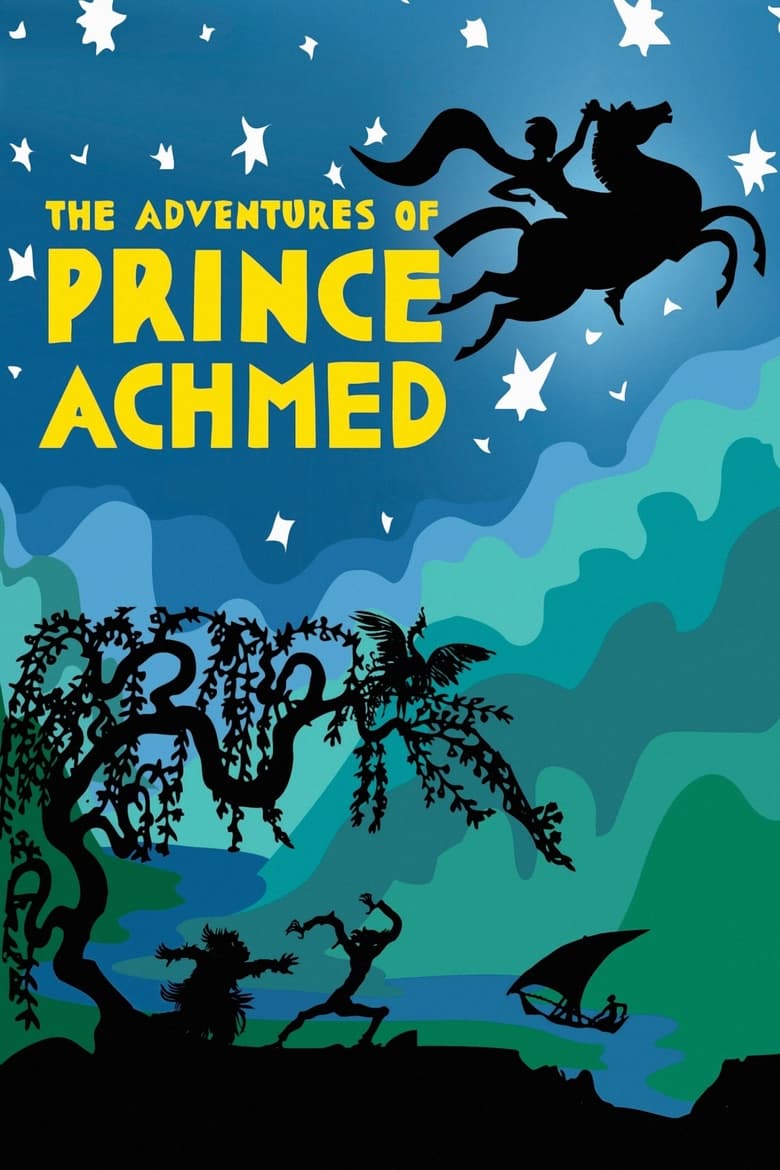
There's a moment watching The Adventures of Prince Achmed where you simply stop thinking about when it was made. A silhouette figure moves across a shimmering, layered background, and the grace of it is so complete, so genuinely beautiful, that the year 1926 becomes almost irrelevant. Then you snap back and remember what you're actually looking at, and the astonishment doubles.
That it exists at all is the first miracle. Lotte Reiniger spent the better part of three years crafting this film by hand, cutting intricate figures from paper and card, animating them frame by frame using stop-motion techniques, and building up layered backgrounds to create genuine depth on screen. This was years before Disney made multiplane camera work famous. Reiniger was doing it quietly, painstakingly, in her own way. The oldest surviving animated feature film wasn't made by a major studio with armies of artists. It was made largely by one extraordinary woman with scissors, glass, and an iron will.
The story draws from One Thousand and One Nights, following Prince Achmed through flying horses, sorcerers, enchanted islands and romantic quests. It's episodic and mythic in structure, much more fable than conventional narrative, and that's exactly right for the material. You're not meant to be following a tight three-act plot. You're meant to be lulled into something closer to a dream, a flowing sequence of images and incident that washes over you the way a story told aloud by firelight would.
What makes it work is the animation itself. Reiniger's silhouette figures convey genuine emotion through posture and movement alone. There are no faces, no dialogue cards to speak of, nothing but the tilt of a shoulder or the sweep of an arm, and yet you feel longing, fear, mischief, and wonder coming through the screen clearly. The delicacy of the cutting is staggering when you think about it. Fabrics seem to flow. Creatures seem to breathe. The whole thing has a fluid, handmade quality that feels both ancient and utterly alive.
It isn't flawless. The pacing meanders in places, and there are stretches where the episodic structure starts to feel a little too loose, one magical setpiece dissolving into another without quite enough connective tissue. The treatment of some characters, particularly women, reflects the assumptions of its era in ways that are hard to ignore. These things are real, and worth naming. But they don't undo what Reiniger achieved here.
I was reminded, watching this, of Josep, another animated film that takes a less-travelled formal path and finds something genuinely moving in that commitment. Both films understand that animation as a medium isn't just for spectacle; it can carry weight, atmosphere, and poetry in ways live action sometimes can't reach. Prince Achmed understood that nearly a hundred years ago.
Modern restorations pair the film with newly commissioned scores, and that musical accompaniment matters enormously. Seen with the right music, this is a genuinely haunting experience. Seen in silence, it would still be remarkable, but the score helps lock you into its rhythm and keeps the spell intact through the slower passages.
Three and a half stars.
I'll admit that rating comes with a slight guilty conscience. There's part of me that wants to give it five on principle, purely for what it represents and what it demanded of its creator. But honest reviewing means accounting for the meandering and the bumps alongside the wonder, and the wonder here is considerable. The Adventures of Prince Achmed is the kind of film you feel genuinely fortunate to have seen. Poetry in motion, made frame by frame by someone who simply refused to believe it couldn't be done.
Rating: ★★★ | Year: 1926 | Watched: 2026-03-10
Where to watch
Watch in the UK
Stream: Cultpix
Rent: Apple TV Store
Buy: Apple TV Store
Physical: Amazon UK · Zavvi
Watch in the US
Stream: Criterion Channel · Cultpix
Physical: Amazon US
Affiliate disclosure: Movies With Macca may earn a small commission on purchases or subscriptions started via these links. It costs you nothing extra.
Related on Movies With Macca
More from Germany: Lessons of Darkness (1992) · Cemetery Man (1994) · The Grand Budapest Hotel (2014) · Resident Evil: Retribution (2012)
More from the 1920s: The Eagle (1925) · The General (1926) · The Docks of New York (1928) · A Throw of Dice (1929)
More animation: Fantastic Planet (1973) · Alice in Wonderland (1951) · Mononoke the Movie: The Phantom in the Rain (2024) · Mononoke the Movie: Chapter II - The Ashes of Rage (2025)
More adventure: Alice in Wonderland (1951) · The Eagle (1925) · Louisiana Story (1948) · The General (1926)