Stolen Seas (2013)
★★½ — Stolen Seas (2013)

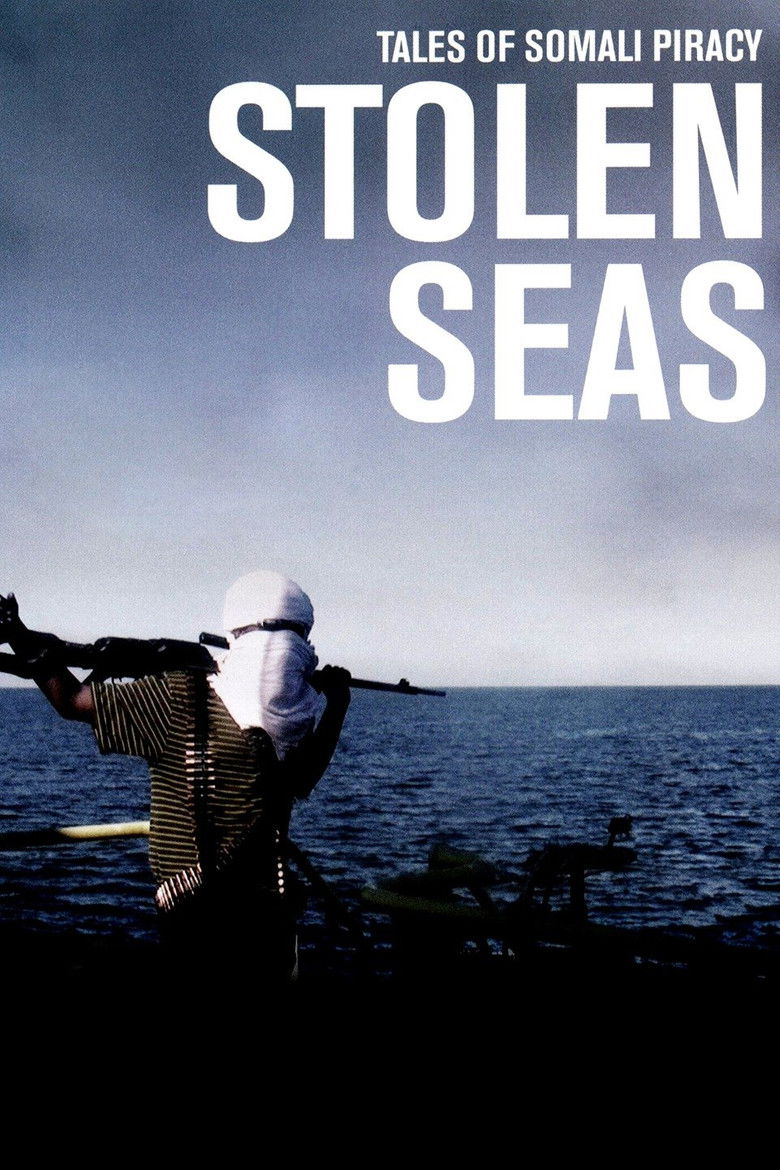
There's a moment in Stolen Seas where you hear the radio. A voice on one end, shaking. A voice on the other, shouting demands across a wall of static, distance, and misunderstanding. No music. No narration. Just the raw, horrible reality of people in a life-or-death negotiation playing out in real time. It stopped me cold. And honestly, if the whole documentary had sustained that kind of gut-punch immediacy, this would be a very different review.
This is a documentary about Somali piracy, specifically the 2010 hijacking of a Danish cargo ship, and it earns real credit for the access it manages to get. Archival footage, actual hostage negotiation audio, interviews with sailors who lived through the ordeal, and conversations with Somali men who were themselves involved in piracy. That combination is genuinely rare. Most coverage of the Somali piracy crisis treated it as a headline, a danger on a map, something happening far away to other people. Stolen Seas at least tries to make it feel human on all sides.
And that's where it gets genuinely interesting, and genuinely uncomfortable. The film isn't interested in letting you write these men off as monsters. It lays out the context: fishing grounds devastated, livelihoods stripped away, a country without a functioning government, young men with no options looking at the ocean and seeing the only economy left. You don't walk away sympathising with the hijackings. But you do walk away seeing people rather than caricatures, which is more than most news coverage ever managed. That moral complexity is real, and it matters.
It also reminded me, in a strange way, of Lost Boy in Juba, another documentary that puts a human face on a part of the world that Western audiences tend to encounter only through crisis coverage. Both films are doing important work in that sense, even when the filmmaking doesn't quite match the weight of the subject.
Because here's the thing: Stolen Seas has genuine strengths and genuine problems, and I'm not going to pretend otherwise. The pacing sags in the middle stretch in a way that's hard to ignore. The multi-format approach, mixing that real audio with talking-head interviews and documentary footage, is effective early on, but it starts to feel repetitive as the film goes on. There are scenes that linger well past the point where they're telling you anything new, and after a while the relentless grimness starts to work against the film rather than for it. It's exhausting in a way that doesn't feel earned, because the emotional range is so narrow. Grim in, grim out, not much air in between.
Good documentaries find ways to vary the rhythm, to give you breathing room so the heavy moments land harder. This one keeps the pressure on so constantly that it eventually starts to numb you rather than move you. And because it offers very little in the way of resolution or even a clear argument about what should be done, you're left sitting in the discomfort without quite knowing what to do with it.
Worth watching, yes. The access alone makes it worth your time, and the ethical questions it raises are ones that deserve serious attention. But I came away feeling like a stronger hand in the editing room could have made this genuinely gripping rather than just important. As it stands, it's a documentary I respect more than I enjoyed, and there's a version of it that could have been something special.
Two and a half stars.
Rating: ★★½ | Year: 2013 | Watched: 2025-09-05
Where to watch
Watch in the UK
Stream: Amazon Prime Video · Amazon Prime Video with Ads
Rent: Amazon Video
Buy: Amazon Video
Physical: Amazon UK · Zavvi
Watch in the US
Stream: FlixFling · DocuramaFilms Amazon Channel
Rent: Amazon Video · Fandango At Home · FlixFling
Buy: Amazon Video · Fandango At Home
Physical: Amazon US
Affiliate disclosure: Movies With Macca may earn a small commission on purchases or subscriptions started via these links. It costs you nothing extra.
Related on Movies With Macca
More from Canada: History of the World in Three Minutes Flat (1980) · Resident Evil: Retribution (2012) · Resident Evil: The Final Chapter (2016) · Resident Evil: Afterlife (2010)
More from the 2010s: Wonder (2017) · Beautiful Boy (2018) · The Witch (2015) · What We Do in the Shadows (2014)
More documentary: Letter from Siberia (1957) · Lessons of Darkness (1992) · Style Wars (1983) · Here and Elsewhere (1976)