Onibaba (1964)
★★★ — Onibaba (1964)

Let me put the central moral of Onibaba plainly: let your dead son's wife go off and do whatever she likes. It sounds crass when you say it out loud, but honestly, that's the beating heart of this film, and the older woman's refusal to accept it is what sends the whole thing spiralling into darkness. I didn't know quite what I was walking into, and I think that's probably the best way to approach it.
This is a strange one. It sits somewhere between two very different films that have been stitched together, and for the most part that works, even if the seams show occasionally. On one side you've got a raw, almost brutal survival story about two women, a mother and her daughter-in-law, scraping by in feudal Japan while the men are off at war. They're killing soldiers who wander into the tall grass marshlands and selling their armour for food. It's grim, unglamorous stuff, and the film doesn't flinch from how desperate that existence is. On the other side, you've got a genuinely unsettling possession story built around a demon mask. Those two halves don't always feel like they belong to the same film, but there's something about the collision of them that keeps you off balance in a way that I think is entirely intentional.
The writing is sharper than you might expect. The dynamic between the two women, and then the arrival of a man from the village who takes a shine to the younger one, is handled with real economy. You understand exactly what everyone wants and why they're in conflict, and the script never feels the need to over-explain it. The acting, I'll be honest, tips into the kind of broad, theatrical style that comes with a lot of older Japanese horror. I've noticed it before in films like The Ghost of Yotsuya (1959), and it can take a bit of adjustment if you're not used to it. It's hammy and camp at times, but once you settle into its rhythm it starts to feel appropriate, even expressive, rather than jarring.
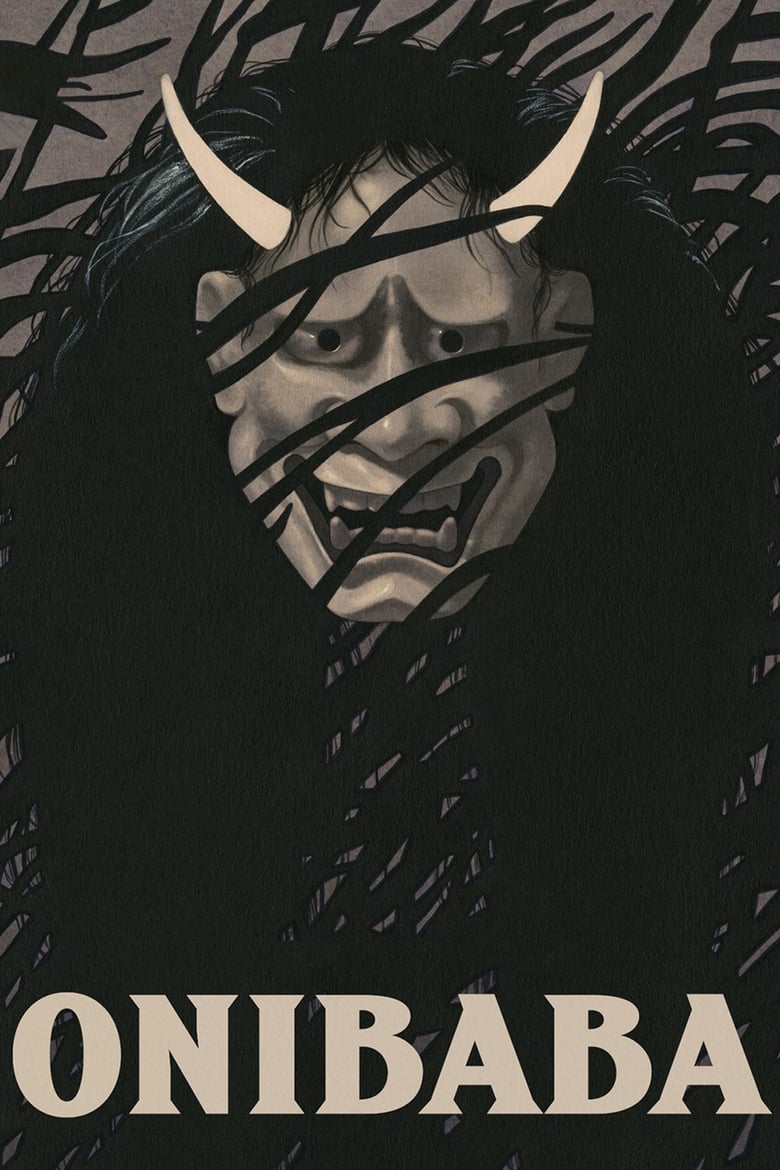
Where the film really earns its reputation is in the imagery. The tall grass swaying in the dark, the masked figure running through it, the sheer blackness of the night sequences. There are moments here that genuinely got under my skin, and I don't say that lightly. The mask itself is a brilliant piece of work, and the way it's used in the final act is properly unsettling. It shifts the whole film's register, and suddenly what felt like a folk drama about wartime survival has teeth.
My reservations are real though. It doesn't entirely hold together as a single cohesive piece, and there are stretches in the middle where the pacing drags. I also think the film is more interesting to think about afterwards than it is to sit through in places. The symbolism around the mask, desire, punishment and jealousy is rich enough that I was still turning it over hours later, which counts for something.
Three stars. I wouldn't push this on a mate who doesn't already have some appetite for older or more obscure horror. But if you've got a taste for that corner of cinema, particularly Japanese horror from this era, there's real craft here and images that will stick. It's not perfect, it's not always comfortable, and that's probably exactly what it intends to be.
Rating: ★★★ | Year: 1964 | Watched: 2025-04-16
Where to watch
Watch in the UK
Stream: Amazon Prime Video · BFI Player · BFI Player Amazon Channel · BFI Player Apple TV Channel
Rent: Amazon Video
Buy: Amazon Video
Physical: Amazon UK · Zavvi
Watch in the US
Stream: HBO Max Amazon Channel · HBO Max
Rent: Amazon Video · Apple TV Store · Google Play Movies · YouTube
Buy: Amazon Video · Apple TV Store · Google Play Movies · YouTube
Physical: Amazon US
Affiliate disclosure: Movies With Macca may earn a small commission on purchases or subscriptions started via these links. It costs you nothing extra.
Related on Movies With Macca
More from Japan: Mononoke the Movie: The Phantom in the Rain (2024) · Mononoke the Movie: Chapter II - The Ashes of Rage (2025) · Blue (1993) · The Ghost of Yotsuya (1959)
More from the 1960s: Viy (1967) · Persona (1966) · Carnival of Souls (1962) · Daisies (1966)
More horror: Invasion of the Body Snatchers (1956) · Viy (1967) · Nightmare City (1980) · Angst (1983)