Mad Love (1935)
★★½ — Mad Love (1935)

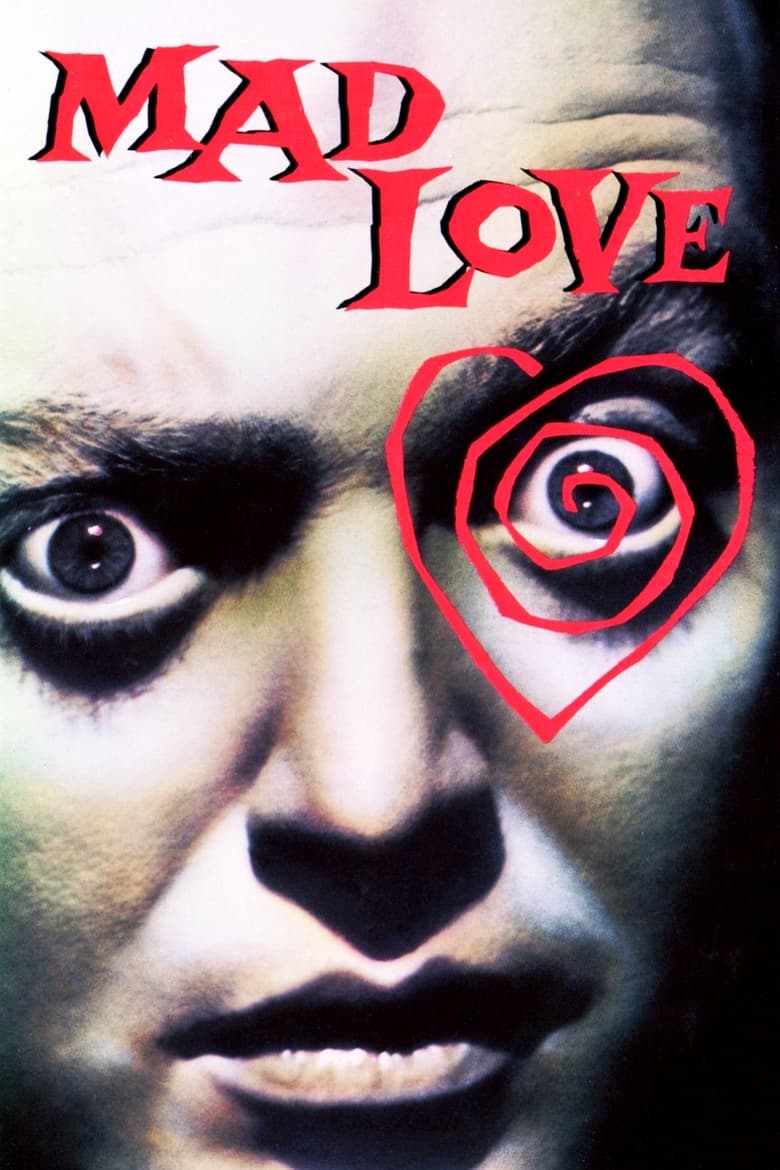
Peter Lorre is doing something extraordinary here. Watch him in any scene of Mad Love and you'll see an actor operating on a completely different frequency to everyone else on screen: eyes wide, voice soft, every movement calibrated to suggest a mind that's quietly, methodically coming apart at the seams. As Dr. Gogol, a brilliant surgeon whose fixation on an actress he can never possess tips him over the edge, Lorre is genuinely unsettling in a way that few performers of the era managed. He doesn't chew the scenery. He savours it. And that restraint makes him far more frightening than any amount of theatrical raving would.
It's Lorre's American film debut, and you can see why Hollywood came calling after his work in Europe. If you've seen him in M (1931), Fritz Lang's devastating portrait of a child murderer, you'll know exactly what this man is capable of. Mad Love gives him a more overtly gothic canvas to work with, and he takes full advantage. The waxwork theatre that opens the film is a genuinely inspired setting, all gloom and mannequins and wrong angles, and Gogol drifting through it like a ghost in his own obsession is one of the more memorable images the film has to offer.
The Expressionist-influenced photography does a lot of heavy lifting alongside Lorre. Shadow-drenched rooms, skewed compositions, a visual language borrowed from the German silent tradition that gives the whole thing a disorienting, feverish quality when it's working at its best. In those moments, Mad Love feels like it could be something special. A taut, claustrophobic psychological horror with ideas to spare.
But then the plot kicks in properly, and the air goes out of it a bit. The central conceit, a concert pianist who loses his hands in an accident and receives a transplant from an executed knife-thrower, is genuinely interesting on paper. There's real potential for dread in the idea that your own hands might carry the impulses of another man, that the boundary between self and other could be surgically dissolved. The film knows this is a good idea. It just doesn't seem entirely sure what to do with it. The story unfolds with a theatrical sluggishness that feels less like slow-burn tension and more like a stage production that forgot to find its urgency. Exposition piles up. A romantic subplot eats screen time without earning it. The momentum drains away.
For a horror film, it's also notably bloodless, which isn't necessarily a problem. Suggestion over shock is a perfectly respectable approach, and plenty of films from this period pull it off brilliantly. I think The Invisible Man (1933) is a good example of a film that uses restraint shrewdly without ever feeling inert. Mad Love is more of a mixed bag. The restraint reads, at times, less like a considered artistic choice and more like a film hedging its bets, unwilling to fully commit to either the psychological complexity the material demands or the visceral thrills a more straightforward horror might deliver. You're left waiting for a payoff that keeps not quite arriving.
None of which is Lorre's fault. Every time the film threatens to lose you entirely, he pulls you back. A whispered line here, a particular stillness there. There's a sequence in the later stages where Gogol's scheme reaches its most deranged pitch, and Lorre plays it with such precise, controlled intensity that you almost forget the creakiness of everything surrounding him. Almost.
Mad Love lands at two and a half stars for me. It's a film I'm glad exists, and I'd recommend it to anyone with an appetite for early sound horror or a particular interest in Lorre's career. Horror completists will find enough atmosphere and enough of that distinctive pre-Code strangeness to make it worthwhile. But as a complete piece of work, it doesn't cohere the way you want it to. It's a fascinating footnote rather than a forgotten classic, memorable for one performance rather than the sum of its parts.
Rating: ★★½ | Year: 1935 | Watched: 2026-04-03
Where to watch
Watch in the US
Rent: Amazon Video · Apple TV Store · Fandango At Home
Buy: Amazon Video · Apple TV Store · Fandango At Home
Physical: Amazon US
Affiliate disclosure: Movies With Macca may earn a small commission on purchases or subscriptions started via these links. It costs you nothing extra.
Related on Movies With Macca
More from Karl Freund: The Mummy (1932)
More with Peter Lorre: M (1931) · The Man Who Knew Too Much (1934)
More from the 1930s: Earth (1930) · Monkey Business (1931) · Sabotage (1936) · People on Sunday (1930)
More horror: Invasion of the Body Snatchers (1956) · Viy (1967) · Nightmare City (1980) · Angst (1983)
More romance: The Eagle (1925) · The Last Picture Show (1971) · The General (1926) · The Docks of New York (1928)