Goodnight, Mister Tom (1998)
★★★ — Goodnight, Mister Tom (1998)

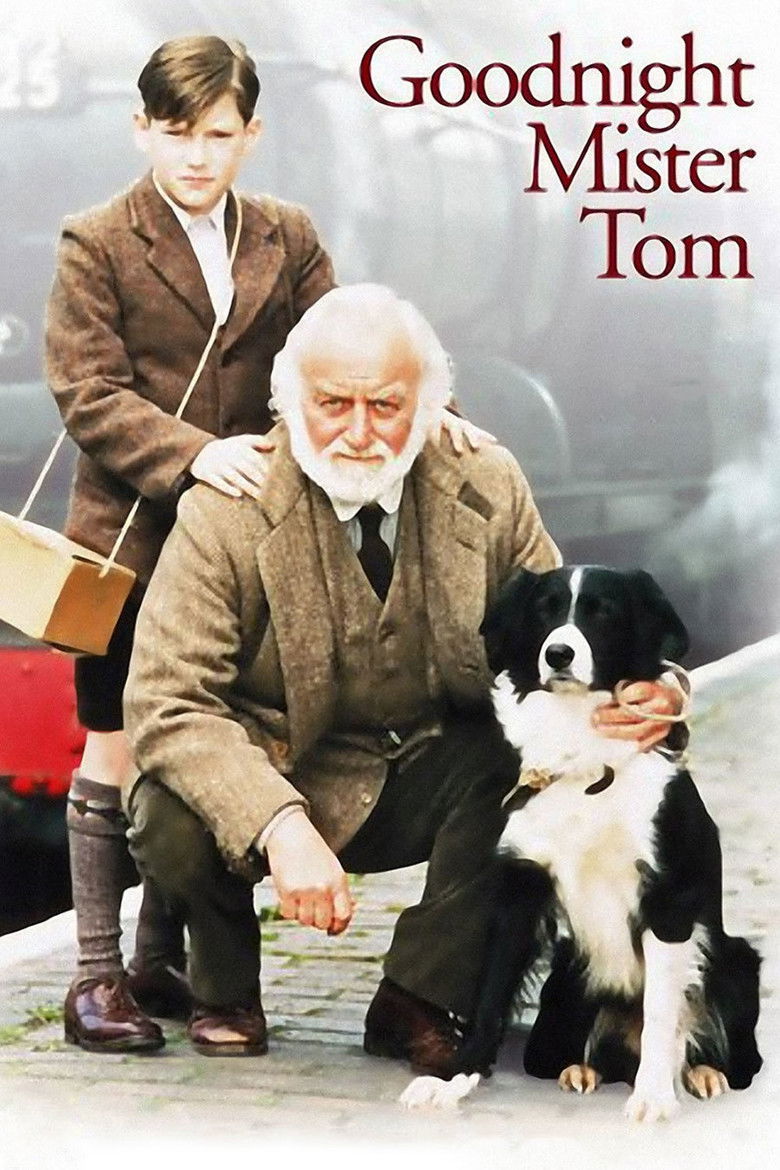
There's a moment in Goodnight, Mister Tom where you realise the film isn't really about the war at all. The bombs are distant. The front is somewhere else entirely. What this story is about is a frightened child learning, slowly and painfully, that not every adult in his life is going to hurt him. And John Thaw, playing the gruff, grief-hollowed Tom Oakley with such quiet, lived-in grace, makes that journey feel completely earned.
This is a 1998 BBC television film based on Michelle Magorian's much-loved novel, and it wears that origin proudly. Young William Beech arrives in a peaceful English village as a wartime evacuee, timid and flinching, carrying wounds that have nothing to do with Hitler's bombs. Tom takes him in with minimal enthusiasm, and what follows is exactly what you'd expect, and I mean that as a compliment. It's a story of two damaged people quietly mending each other. No tricks, no subversion. Just honesty.
I'll be straight with you: as a piece of filmmaking, this is fairly basic stuff. The structure is televisual through and through, the beats arrive exactly when you're expecting them, and the finale absolutely knows which heartstrings it's pulling and yanks on all of them in sequence. There's nothing here that would surprise a seasoned viewer. But I think criticising it for that is a bit like criticising a warm bowl of soup for not being a three-course meal. It was made with a specific purpose, and it fulfils that purpose beautifully.
It's no mystery why this became a fixture of school curriculums throughout the nineties. It's emotionally legible without being condescending. It opens a window onto the home front in a way that feels personal rather than historical, the loneliness of those left behind, the trauma of children uprooted from everything familiar, the way war reshapes ordinary lives in ways that never make the newsreels. The pastoral setting, all rolling greenery and village quiet, works as a genuine counterpoint to the violence implied just beyond the frame. You feel the distance from London, and you understand why, for some children, evacuation might have been the first time they ever felt safe.
The performances carry it. Thaw is the anchor, naturally, and he does something difficult with the role: he keeps Tom reserved and prickly for long enough that his eventual warmth lands with real weight. The young actor playing William brings a sincerity that never tips into sentimentality, which is a harder balance to strike than it looks. There's real chemistry between them, the kind that makes you invest in a relationship you know is going to be tested before the end credits roll.
It reminded me, in its gentle attention to human suffering and resilience, of Mustang, another film about children navigating a world that hasn't made enough room for them, though the two couldn't be more different in tone and setting. What they share is that quality of watching people try to protect something soft and vulnerable in circumstances that reward hardness.
Is Goodnight, Mister Tom a great film? No, I don't think so. It doesn't push at anything, doesn't take risks, doesn't leave you with ambiguity to chew on after the credits roll. What it does is tell an honest, humane story with care and without cynicism. In a crowded landscape of prestige war drama, there's something almost radical about that modesty. It wasn't made to dazzle anyone. It was made to teach empathy, and it manages that without once feeling like a lesson.
Three stars. Unpretentious, warm, and genuinely moving in its simplicity. Not everything needs to be a revelation.
Rating: ★★★ | Year: 1998 | Watched: 2026-02-27
Where to watch
Watch in the UK
Stream: ITVX Premium
Buy: Amazon Video
Physical: Amazon UK · Zavvi
Affiliate disclosure: Movies With Macca may earn a small commission on purchases or subscriptions started via these links. It costs you nothing extra.
Related on Movies With Macca
More from United Kingdom: Lessons of Darkness (1992) · Shinjuku Boys (1995) · The Curse of Frankenstein (1957) · Blue (1993)
More from the 1990s: Lessons of Darkness (1992) · Shinjuku Boys (1995) · Blue (1993) · Cemetery Man (1994)
More drama: Viy (1967) · Wonder (2017) · A Better Tomorrow (1986) · Beautiful Boy (2018)
More history: Apocalypto (2006) · Rio 2096: A Story of Love and Fury (2013) · Harakiri (1962) · Night and Fog (1956)