Gone in 60 Seconds (1974)
★★★½ — Gone in 60 Seconds (1974)

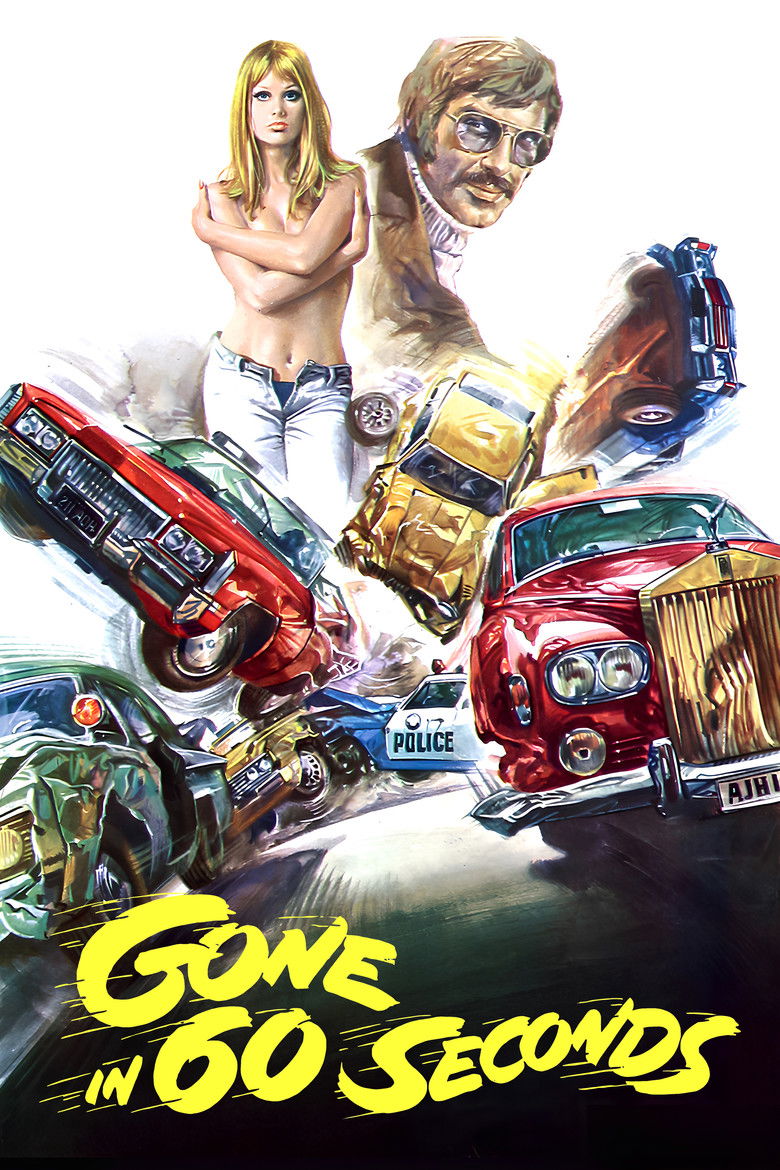
There's a moment somewhere in the back half of Gone in 60 Seconds where you stop thinking about plot, character, dialogue, any of it, and you just surrender. A car clips a kerb, goes airborne, and the camera catches it raw and real, and you realise you're watching something genuinely mad. Not mad in a calculated, Hollywood-engineered way. Mad in the way of a person who simply refused to accept that what he was attempting was impossible.
H.B. "Toby" Halicki built this film the same way a mechanic builds a hot rod: with his own hands, his own money, and a stubbornness that borders on the supernatural. He directed it, starred in it, financed it, and performed the stunts himself. There was no script to speak of, just a loose plan and a singular obsession: steal more than forty cars, wreck a great many of them, and capture every second of it on camera without flinching. The fact that it works, that it genuinely, thrillingly works, is one of cinema's more unlikely miracles.
The plot, to be generous, is a skeleton. A mild-mannered insurance investigator moonlights as a master car thief. Every cop in Southern California wants him. That's about it. The acting is stiff, the dialogue lands with all the grace of a bumper meeting a brick wall, and none of that matters even slightly. Because the only real star here is Eleanor, a modified 1973 Mustang, and she gets the only proper credit she deserves.
The centrepiece, the reason people are still talking about this film fifty years on, is a car chase that runs for roughly forty minutes and still holds the record as the longest in film history. Forty minutes. No CGI safety nets, no digital clean-up, no stunt doubles swooping in to protect the talent. Just cars flipping, rolling, smashing, and exploding on the streets of Southern California while Halicki throws the whole thing at the screen and dares you to look away. The sound design alone is worth your time. Screeching tyres and crunching metal arranged into something that genuinely sounds like a symphony, if the orchestra was entirely made up of V8 engines. You feel every dent.
It's rough, no question. Rough in ways that a studio picture simply couldn't be, because a studio would have smoothed every edge off it and replaced the soul with a polish. I think about something like Mad Max: Fury Road, which is a masterwork of practical chaos but with tens of millions behind it and decades of craft refinement. Gone in 60 Seconds has none of that infrastructure. What it has instead is the terrifying energy of someone who genuinely doesn't know when to stop, and who put every penny and every bruise into getting the shot. There's an honesty to it that slicker films can't manufacture.
And that's exactly where its charm lives. This is a passion project in the truest sense, made by someone who cared far more about the roar of an engine than any box office projection. You can feel that in every frame, the rough edits, the functional performances, the sheer audacity of attempting stunts that would make a modern insurance department weep. Halicki wasn't trying to impress critics. He was trying to make the car film he wanted to see exist in the world, and he bent reality to do it.
If you love cars, or if you love the idea of one person betting everything on their own vision and somehow pulling it off, there's something here that gets right under your skin. It's not a perfect film by any conventional measure. But it's an honest one, and an extraordinary one, and Eleanor is still one of the great screen presences in action cinema. Four stars, and not a single one of them given for the acting.
Rating: ★★★½ | Year: 1974 | Watched: 2025-08-16
Where to watch
Watch in the UK
Rent: Amazon Video
Buy: Amazon Video
Physical: Amazon UK · Zavvi
Watch in the US
Rent: Amazon Video · Fandango At Home
Buy: Amazon Video · Fandango At Home
Physical: Amazon US
Affiliate disclosure: Movies With Macca may earn a small commission on purchases or subscriptions started via these links. It costs you nothing extra.
Related on Movies With Macca
More from the 1970s: Fantastic Planet (1973) · Here and Elsewhere (1976) · Italianamerican (1974) · Punishment Park (1971)
More action: A Better Tomorrow (1986) · The General (1926) · Hand of Death (1976) · Daredevil (2003)
More crime: A Better Tomorrow (1986) · Angst (1983) · Stolen Face (1952) · Cairo Station (1958)