
Frankenstein (1931)
★★★ — Frankenstein (1931)

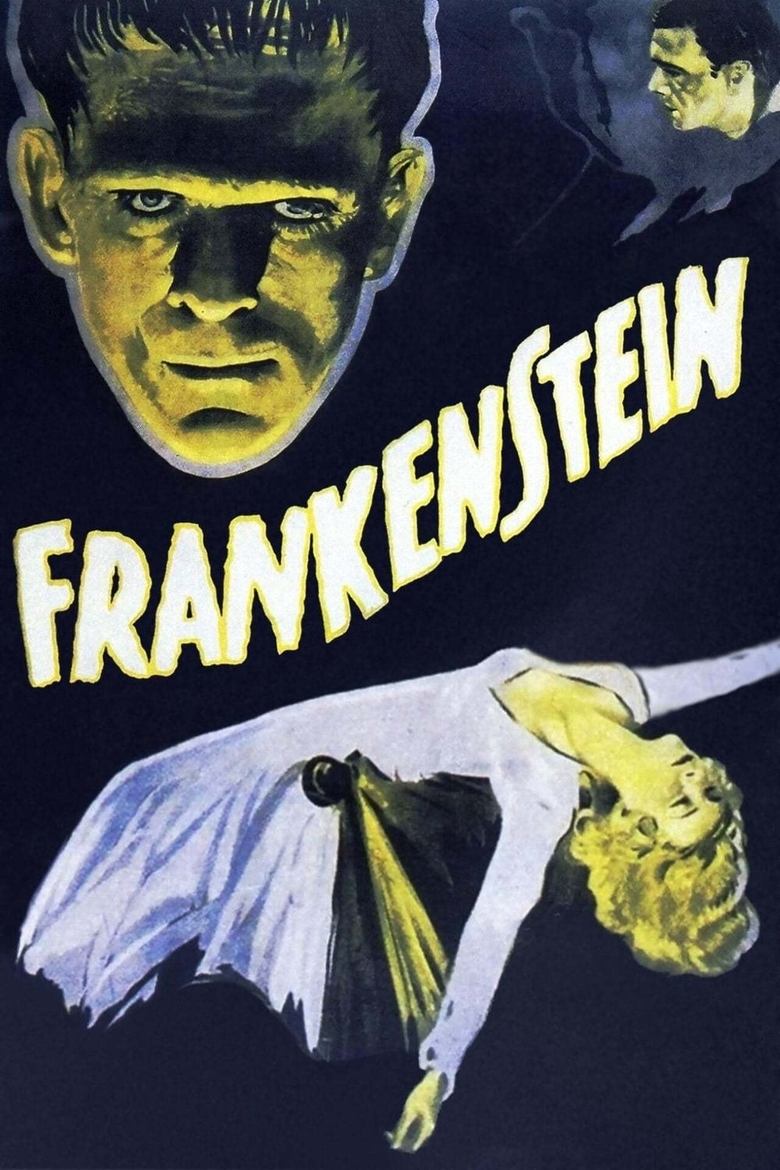
Boris Karloff's Monster reaches out his hands toward a shaft of light filtering through the roof of an old windmill, and for a moment you forget you're watching a horror film. You're watching something sadder than that. That image, more than the lightning, more than the lab equipment, more than Colin Clive screaming "It's alive!" into the storm, is what's stayed with me since I first saw this film. A creature made from dead parts, desperate for warmth, confused by a world that recoils from him. That's not horror. That's tragedy.
James Whale's Frankenstein is nearly a hundred years old and it shows, let's not pretend otherwise. The dialogue creaks. The supporting performances tip into melodrama more than once. The moral framework is about as subtle as a thunderclap. But none of that stops it from working in the ways that matter most, because Karloff does something under all that makeup that most actors couldn't manage with their full face on show. He makes you feel for the Monster. The confusion in those eyes, the flinching, the reaching out and the pulling back, it's achingly human. His creature has a tragic dignity that the film's shrieking villagers and ranting scientists simply can't match.
Whale's direction is more expressive than you might expect from early sound cinema. He'd learned lessons from the German Expressionists and it shows in the way he uses shadow and composition to make every set feel both mythic and oppressive. The lab sequences crackle with atmosphere, all strange angles and cluttered darkness. For a film running barely over 70 minutes, it moves with genuine purpose and doesn't waste much.
Colin Clive's Henry Frankenstein is a trickier case. He's manic, over-the-top, and borders on camp in several scenes. But there's a desperation underneath all the hysteria that grounds him just enough. The "playing God" theme, stripped back considerably from Mary Shelley's novel, lands because of that desperation. He doesn't want to understand what he's made. He just wants to prove he could make it. The empathy was never there to begin with, which is quietly the whole point.
Some scenes haven't aged gracefully, and I won't pretend they have. There's a moment involving the Monster and a young girl near a lake that the film handles in a way that feels clumsy and evasive by modern standards, cutting away where it probably shouldn't. The technical limitations are part of the charm in most places, but occasionally they're just limitations. And the moral tidiness of the ending, evil punished, order restored, feels like it belongs to a lesser story than the one Karloff has been telling throughout.
Still, what lingers is the pathos. This film genuinely stirs something, even now. I've been on a bit of a run with early Hollywood horror and Universal-era genre pictures, and if you're drawn to that world, I'd also point you toward The Invisible Man, another Whale film that pairs brilliantly with this one, and The Old Dark House, which sits right in between the two and doesn't get nearly enough credit. Whale was doing something genuinely distinctive in this period, mixing dread with a dark wit that nobody else was quite managing.
Frankenstein isn't the scariest film you'll ever see. It probably wasn't even the scariest film playing in 1931. But it carries real emotional weight beneath all the gothic machinery, and Karloff's performance is the reason. He finds the humanity in something built from pieces of the dead, and that's no small thing. Foundational doesn't have to mean dusty.
Three stars.
Rating: ★★★ | Year: 1931 | Watched: 2026-02-25
Where to watch
Watch in the UK
Rent: Apple TV Store · Amazon Video · Google Play Movies · Sky Store
Buy: Apple TV Store · Amazon Video · Google Play Movies · Sky Store
Physical: Amazon UK · Zavvi
Watch in the US
Stream: Peacock Premium · Peacock Premium Plus
Rent: Amazon Video · Apple TV Store · Google Play Movies · YouTube
Buy: Amazon Video · Apple TV Store · Google Play Movies · YouTube
Physical: Amazon US
Affiliate disclosure: Movies With Macca may earn a small commission on purchases or subscriptions started via these links. It costs you nothing extra.
Related on Movies With Macca
More from James Whale: The Old Dark House (1932)
More with Colin Clive: Mad Love (1935)
More from the 1930s: Earth (1930) · Monkey Business (1931) · Sabotage (1936) · People on Sunday (1930)
More drama: Viy (1967) · Wonder (2017) · A Better Tomorrow (1986) · Beautiful Boy (2018)
More horror: Invasion of the Body Snatchers (1956) · Viy (1967) · Nightmare City (1980) · Angst (1983)



