
El Alamein: The Line of Fire (2002)
★★★ — El Alamein: The Line of Fire (2002)

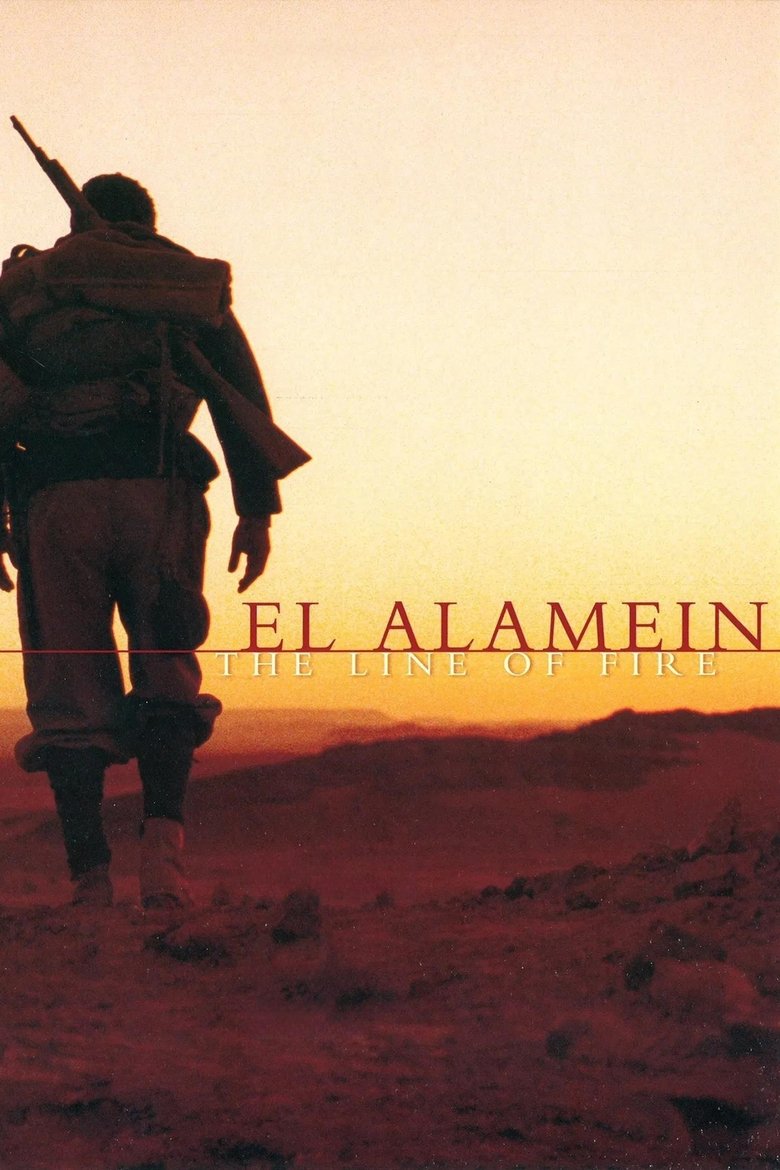
There's a particular kind of war film that doesn't announce itself with thunderclaps and grandeur, that earns your respect through quiet accumulation rather than spectacle. El Alamein: The Line of Fire is that kind of film, and it caught me off guard in the best way possible.
I came to this one as part of my A-Z World Movie Tour, Morocco being the destination this time around, and honestly I wasn't sure what to expect. Italian war films don't tend to dominate the conversation the way their American or British counterparts do, and the North African campaign of World War II is, frankly, underserved on screen full stop. What I found was something genuinely moving: a film built on restraint, dignity, and an aching sense of human weariness that lingers long after the credits roll.
The setup is relatively straightforward. An Italian platoon finds itself stranded behind enemy lines, handed a mission that nobody with any sense would volunteer for, somewhere out in the vast, merciless Sahara. That premise could easily collapse into either gung-ho heroics or po-faced misery tourism. This film refuses both exits. Instead it settles into the day-to-day texture of men who are frightened, exhausted, and holding each other together with dark humour and small kindnesses. These aren't symbols or archetypes. They're just soldiers caught in something far bigger than themselves, and the film never lets you forget it.
The performances are uniformly strong, and crucially, uniformly understated. There's no melodrama here, no single man bellowing at the sky while violins swell. The acting is grounded in a way that's increasingly rare in the genre, and the ensemble work gives the film a genuine sense of camaraderie built under duress. When these men laugh, it feels earned. When they break, it feels honest.
Visually, the film is quietly stunning. The Sahara is captured with a haunting, almost austere beauty: endless dunes baking under an indifferent sun, silence pressing in from all directions, broken only by distant artillery or the low murmur of conversation in the dark. And I was genuinely relieved that the camera holds still. No frantic shakycam, no editing designed to simulate chaos by inducing motion sickness. The camera observes. It watches with patience and a certain respectful distance, and that stillness allows tension to build in ways that action-sequence pyrotechnics simply can't match.
The score deserves a mention too. It's sweeping without being overbearing, with a distinctly Mediterranean melancholy running through it that keeps pulling you back to the human tragedy at the centre of the story. These are men fighting a war not of their choosing, in a conflict most of them probably didn't fully understand, for an outcome that history has already recorded. The music seems to know that.
Now, I'll be honest: war films aren't always my preference. I find a lot of them either exhausting in their violence or frustrating in their sentimentality. This one sidesteps both pitfalls. It's not trying to be Saving Private Ryan or Apocalypse Now. It's working on a smaller, more intimate scale, and it's absolutely right to do so. The narrative doesn't reinvent anything, and I won't pretend it does. But it honours the genre by approaching its material with sincerity, and that counts for a great deal.
What stays with me is that sense of weariness I mentioned at the top. Not despair exactly, but a bone-deep tiredness that the film wears openly and without apology. War, it insists, is something you endure. And the men who endure it deserve to be looked at properly, steadily, without flinching away. This film does exactly that.
Three and a half stars. A solemn, well-crafted piece of work, and one of the more pleasant surprises my World Movie Tour has thrown up so far.
Rating: ★★★ | Year: 2002 | Watched: 2025-07-25
Where to watch
Watch in the UK
Stream: Amazon Prime Video · Amazon Prime Video with Ads
Rent: Amazon Video
Buy: Apple TV Store · Amazon Video
Physical: Amazon UK · Zavvi
Affiliate disclosure: Movies With Macca may earn a small commission on purchases or subscriptions started via these links. It costs you nothing extra.
Related on Movies With Macca
More from Italy: Nightmare City (1980) · Cemetery Man (1994) · One Way or Another (1975) · Chicken for Linda! (2023)
More from the 2000s: Kirikou and the Wild Beasts (2005) · Anchorman: The Legend of Ron Burgundy (2004) · Daredevil (2003) · Apocalypto (2006)
More action: A Better Tomorrow (1986) · The General (1926) · Hand of Death (1976) · Daredevil (2003)
More drama: Viy (1967) · Wonder (2017) · A Better Tomorrow (1986) · Beautiful Boy (2018)



