Dou kyu sei – Classmates (2016)
★★★½ — Dou kyu sei – Classmates (2016)

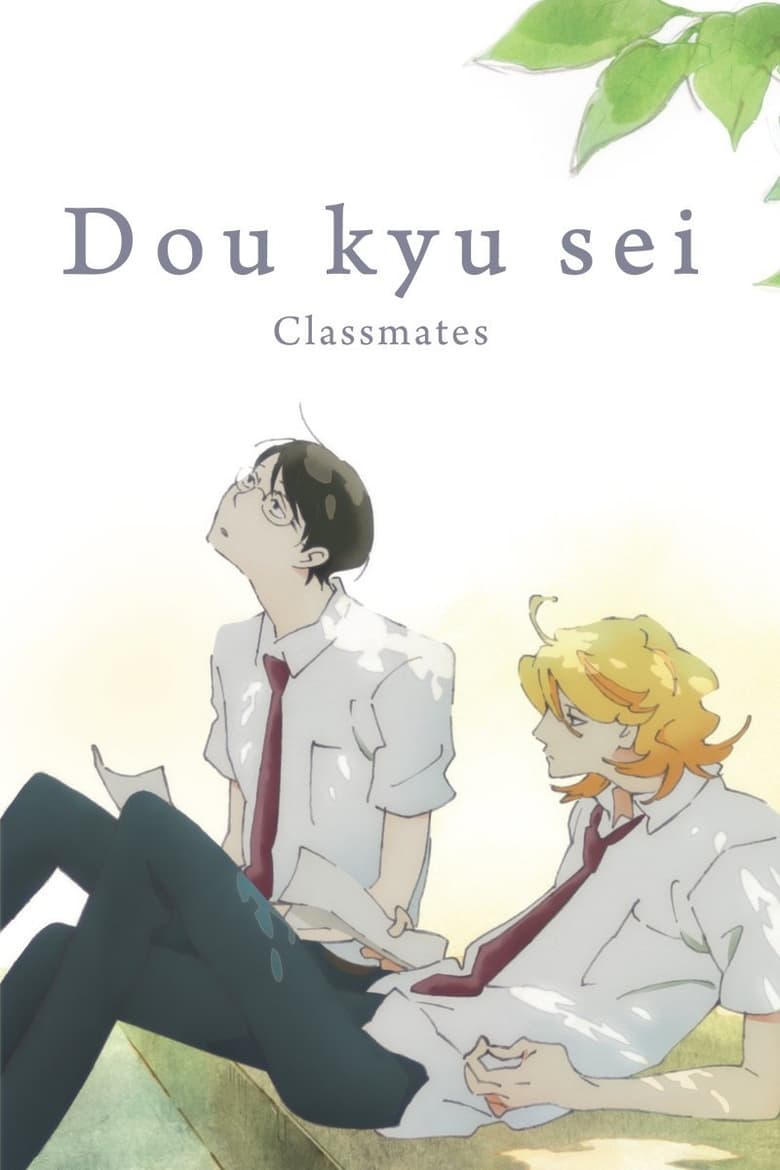
Sometimes a film doesn't need to knock you sideways to stay with you. Dou kyu sei – Classmates is exactly that kind of film: quiet, careful, and genuinely lovely in a way that sneaks up on you. At just 67 minutes, it does something a lot of longer films struggle to pull off. It makes you feel the weight of a moment through almost nothing at all. A glance held a beat too long. A pause before someone speaks. The particular tension of two people in a room who both know something is shifting between them but neither quite knows what to do about it.
Set in a Japanese boarding school, the film follows two boys whose friendship deepens gradually through shared study sessions and late-night conversations. The story it's telling isn't new, and it knows that. It doesn't try to dazzle you with plot mechanics or manufacture crisis for the sake of drama. What it's interested in is the texture of those in-between moments: the hesitation before a touch, the way silence can say more than a whole page of dialogue. That restraint is genuinely impressive, and it's what separates this from a lot of coming-of-age stories that overplay their hand.
The animation style suits the material perfectly. The backgrounds have this soft, almost watercolour quality to them, and the character designs are expressive without being exaggerated. You can read an entire emotional shift in a slight change of posture, a downward glance, the way someone turns their face away. It's the kind of visual storytelling that trusts its audience, and I respect that enormously. The pacing is slow and deliberate, but it earns that slowness. Nothing feels padded. Every quiet scene is doing work.
If I'm being honest about where it falls short, it's the soundtrack. Pleasant enough, but forgettable. There are moments in this film that are crying out for something that really lands emotionally, a piece of music that could push a tender scene into something genuinely transcendent, and the score just doesn't get there. It never actively hurts the film, but there's a version of Classmates where the music matches the grace of everything else on screen, and this isn't quite it.
The two leads have a chemistry that feels completely natural. There's nothing melodramatic about how their relationship develops, nothing that feels manufactured for effect. They're just two believable, instantly likeable kids figuring something out together, and that authenticity is what carries the film. I kept thinking of Call Me by Your Name, another film that understands how to let unspoken feeling do the heavy lifting, though Classmates is gentler and quieter in its approach, less sun-soaked longing and more the soft ache of something just beginning.
It's not a groundbreaking piece of work. It doesn't reinvent anything or stake out bold new territory. But it's honest, and in a genre that can easily tip into sentimentality or contrivance, honesty is worth a lot. The film has a real empathy for its characters and the particular vulnerability of being young and uncertain and feeling things you don't quite have the language for yet. That comes through in every scene.
At 67 minutes, my only genuine complaint is that I wanted more of it. Not because it leaves anything unresolved in a frustrating way, but because the company is good. Spending time with these characters feels like something worth doing, and when the credits roll, you feel the absence of them.
Good, not great. A small, quiet story told with real grace. And sometimes, that's more than enough.
Three and a half stars.
Rating: ★★★½ | Year: 2016 | Watched: 2026-02-27
Where to watch
Watch in the US
Rent: Amazon Video
Buy: Amazon Video
Physical: Amazon US
Affiliate disclosure: Movies With Macca may earn a small commission on purchases or subscriptions started via these links. It costs you nothing extra.
Related on Movies With Macca
More from Japan: Mononoke the Movie: The Phantom in the Rain (2024) · Mononoke the Movie: Chapter II - The Ashes of Rage (2025) · Blue (1993) · The Ghost of Yotsuya (1959)
More from the 2010s: Wonder (2017) · Beautiful Boy (2018) · The Witch (2015) · What We Do in the Shadows (2014)
More romance: The Eagle (1925) · The Last Picture Show (1971) · The General (1926) · The Docks of New York (1928)
More animation: Fantastic Planet (1973) · Alice in Wonderland (1951) · Mononoke the Movie: The Phantom in the Rain (2024) · Mononoke the Movie: Chapter II - The Ashes of Rage (2025)