Disintegration Loop 1.1 (2001)
Disintegration Loop 1.1 (2001)

I've sat with this one for a while before trying to write about it, because I'm genuinely not sure "writing about it" is the right response. Disintegration Loop 1.1 is not a film in any conventional sense, and rating it felt wrong enough that I've left the stars blank. Some things sit outside that kind of accounting.
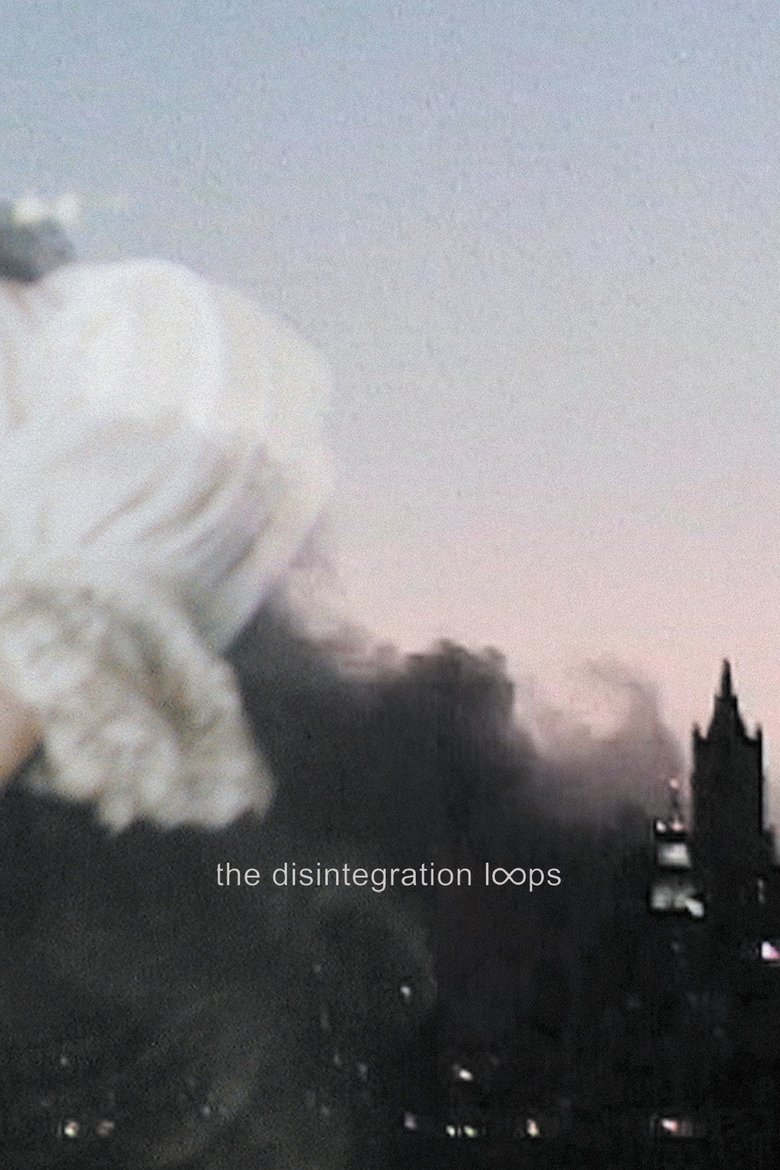
What William Basinski has made here is, on the surface, almost absurdly simple: a single, unbroken shot of the Lower Manhattan skyline on the evening of September 11, 2001. Smoke and dust hanging in the air. The slow, indifferent fade of amber light into darkness. No cuts, no commentary, no interviews, no movement to speak of. Sixty-three minutes of a city exhaling.
And underneath it, the music. The story of how the score came to exist is almost as extraordinary as the piece itself. Basinski had spent that morning attempting to digitise old magnetic tape loops, recordings from decades earlier, only to discover that the tape was physically disintegrating with each pass through the machine. The sound was dissolving in real time, fraying at the edges, losing fragments of itself irretrievably. He had no idea, when he pressed record, what the day would bring. By the time he took the footage to the roof to film the skyline that evening, the two things found each other with a kind of terrible logic.
The result is grief made audible. That looping orchestral fragment, crumbling as it plays, mirrors something it's very hard to name directly. The erosion of certainty, maybe. The way memory of trauma doesn't stay fixed but keeps replaying, slightly different each time, losing fidelity, gaining weight. What was once whole becomes fragmented, and yet somehow, in that fragmentation, it becomes more honest. More true to what loss actually feels like, as opposed to how we're usually asked to perform it.
There's no narrative here, and yet it tells one of the most profound stories I've encountered on a screen. Not the story of violence, not the spectacle we were shown on the news for weeks afterwards, but the story of aftermath. Of silence where noise used to be. Of a skyline with something missing. Of absence, which is one of the hardest things any art form can actually hold.
I kept thinking, watching it, of Werner Herzog's Lessons of Darkness, another piece that takes catastrophe and finds something almost liturgical in the wreckage, something that refuses easy meaning while being absolutely saturated with it. Both works understand that sometimes the camera's job is simply to witness, and to keep witnessing, without flinching or explaining.
The restraint here is everything. There's a version of this material that becomes manipulative, that tells you exactly how to feel and when to feel it. Basinski does the opposite. He places you in front of the skyline and he lets the decaying music do its quiet work, and he trusts you to bring whatever you bring to it. That trust feels rare and generous.
Sixty-three minutes. No rating. Just the smoke, the light going out, and a piece of tape losing itself one loop at a time. Simple, devastating, and complete. It doesn't document history so much as it becomes a piece of it, preserved in dust and dying sound.
Rating: Not rated | Year: 2001 | Watched: 2026-03-08
Related on Movies With Macca
More from the 2000s: Kirikou and the Wild Beasts (2005) · Anchorman: The Legend of Ron Burgundy (2004) · Daredevil (2003) · Apocalypto (2006)
More documentary: Letter from Siberia (1957) · Lessons of Darkness (1992) · Style Wars (1983) · Here and Elsewhere (1976)
More music: Style Wars (1983) · 8 Mile (2002) · Chicken for Linda! (2023) · Tender Mercies (1983)