Crossfire (1947)
★★★ — Crossfire (1947)

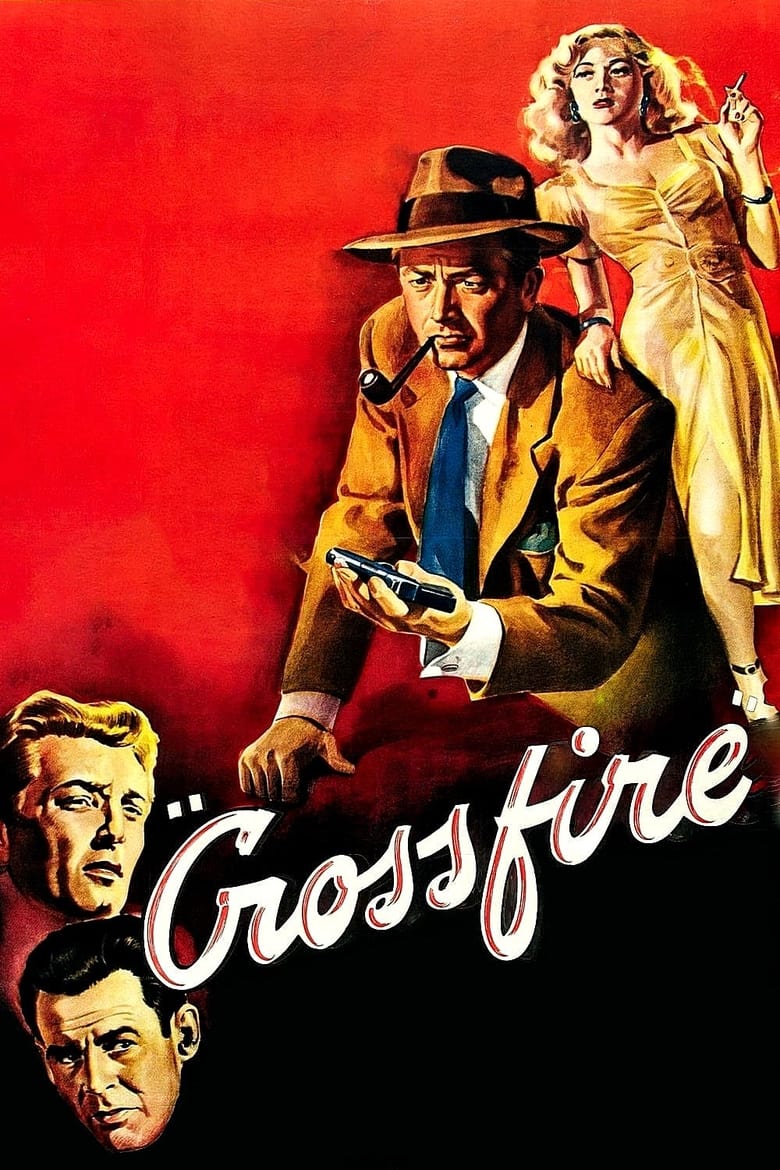
There's a moment in Crossfire where the threat isn't a raised fist or a drawn weapon. It's a smile. Robert Ryan's Sergeant Montgomery smiles at you, and something in your gut tightens, because you know exactly what's underneath it. That single quality, that simmering, almost courteous menace, is what makes his performance the beating heart of this film. Without him, Crossfire would be a decent post-war thriller. With him, it's something you don't quite shake off.
The setup is blunt and efficient: a man has been murdered, a group of soldiers on leave are in the frame, and a detective has to piece together what happened and why. What sets it apart from the standard noir procedural is the why. The victim was Jewish. The killer's motive is pure, corrosive hatred. For 1947, that is a genuinely bold thing to put at the centre of a mainstream Hollywood picture, and the film deserves real credit for not flinching away from naming the ugliness for what it is.
The script crackles. The dialogue feels lived-in and sharp, the kind of exchanges that sound like real people talking rather than screenwriters showing off. And the noir atmosphere is handled with real confidence. Shadow-heavy interiors, foggy streets, interrogation scenes that tighten the air in the room. It's handsome, moody filmmaking that knows its genre and works within it well.
Robert Young plays the investigating detective with a quiet, steady authority, a nice counterweight to Ryan's coiled nastiness. And Gloria Grahame, in what I'd call a breakout role, brings a fragile, knowing energy to her scenes that suggests a whole life happening just offscreen. She's only in a handful of scenes, but she makes every one of them count.
The trouble is that the film, for all its moral courage, doesn't always trust itself. The pacing loosens noticeably in the middle section, and the plot has a habit of telegraphing where it's going well before it arrives. There are expositional speeches that spell out the film's themes in capital letters when the story was already doing the work perfectly well without them. It's the kind of thing that feels less like bold filmmaking and more like a studio nervous about whether the audience is keeping up. Crossfire wants to unsettle, but its resolution tidies things away with a neatness that softens its own edge. It pulls its best punch just when you want it to land hardest.
I kept thinking about The Ox-Bow Incident while watching this. That film from a few years earlier looks prejudice and mob psychology in the face with a much harder stare, and doesn't offer the same kind of comfort at the end. Crossfire is in that same tradition of socially conscious American cinema, and it's a worthy entry. It just blinks first.
None of which is to dismiss it. What it gets right, it gets genuinely right. Ryan in particular is extraordinary, making Montgomery repulsive and, in a cold, uncomfortable way, understandable. That's far harder to pull off than simply playing a villain as a monster. The film is asking you to recognise where hatred like his comes from, and Ryan makes sure you do, without letting you off the hook by making it easy to dismiss him.
Three stars. A good film with a real message and a performance worth seeking out, even if it delivers that message with one hand tied behind its back. Worth your time, especially if you've any interest in the period or in how Hollywood was beginning, cautiously and not always successfully, to reckon with the darker corners of American life. Just go in knowing it's a film that reaches for greatness and lands somewhere comfortably short of it.
Rating: ★★★ | Year: 1947 | Watched: 2025-12-01
Where to watch
Watch in the UK
Buy: Apple TV Store · Amazon Video
Physical: Amazon UK · Zavvi
Watch in the US
Rent: Amazon Video · Apple TV Store · Google Play Movies · YouTube
Buy: Amazon Video · Apple TV Store · Google Play Movies · YouTube
Physical: Amazon US
Affiliate disclosure: Movies With Macca may earn a small commission on purchases or subscriptions started via these links. It costs you nothing extra.
Related on Movies With Macca
More from the 1940s: Louisiana Story (1948) · The Ox-Bow Incident (1943) · Men Without Wings (1946) · The Bank Dick (1940)
More crime: A Better Tomorrow (1986) · Angst (1983) · Stolen Face (1952) · Cairo Station (1958)
More mystery: Mononoke the Movie: The Phantom in the Rain (2024) · Mononoke the Movie: Chapter II - The Ashes of Rage (2025) · Carnival of Souls (1962) · One Way or Another (1975)