Coriolanus (2011)
★★ — Coriolanus (2011)

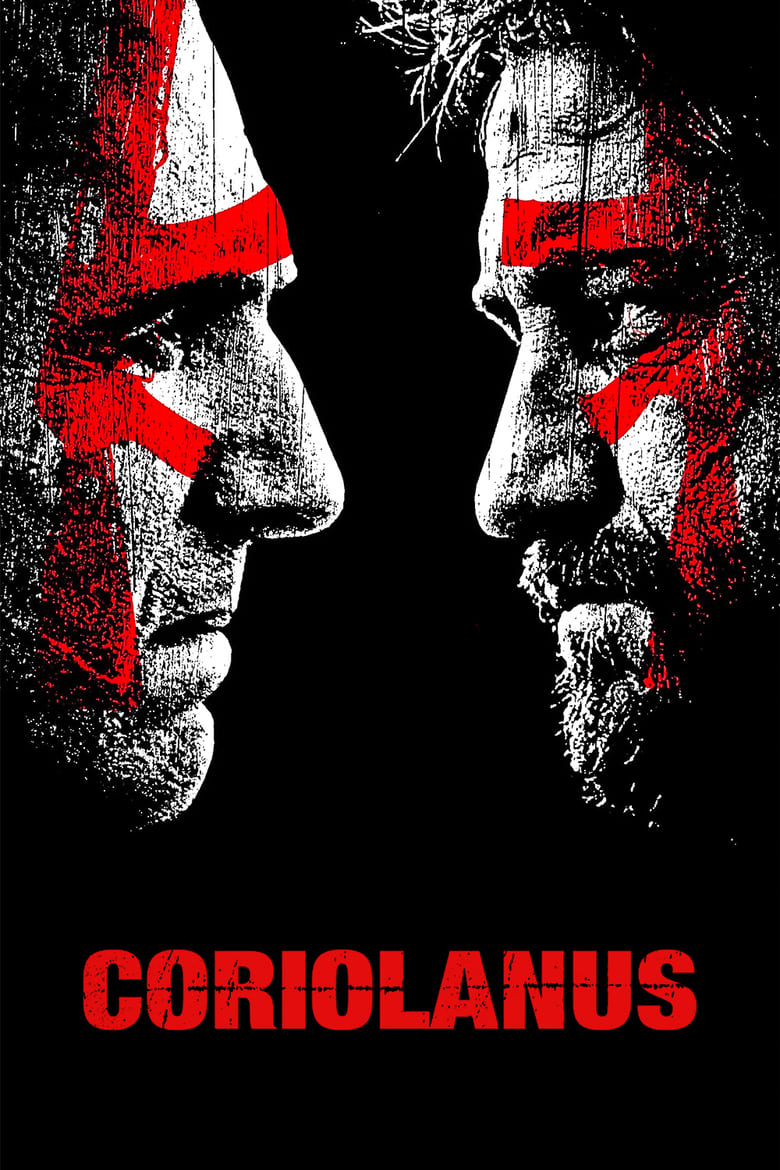
There's a version of this film that really works. Shakespeare's Coriolanus transplanted into a world of rolling news tickers, handheld cameras, and urban guerrilla warfare. The verse cutting through all that modern noise with its original force intact. Ralph Fiennes in the director's chair and the lead role simultaneously, swapping a Roman toga for military fatigues. On paper, it's genuinely exciting. In practice, it's a film that feels like it should be compelling without ever quite getting there.
Fiennes' decision to keep the Early Modern English is one I respect. There's something genuinely striking about hearing Shakespeare's language delivered in front of a televised political rally or a bombed-out street corner. It doesn't feel as jarring as you might expect, and if anything it lends the whole thing a strange, displaced gravitas. The concept isn't the problem. The execution is.
The tone is relentlessly, exhaustingly grim. Now, I know Coriolanus isn't exactly a barrel of laughs as a play, but there's a difference between tragedy and grind. This film grinds. Every scene seems pitched at exactly the same emotional register: dark, heavy, humourless. Without any variation in that pressure, scenes that should land with real weight just sort of... accumulate. You feel the film's length before you feel its tragedy.
Part of that is a problem baked into the source material, and I'll be honest about it. Coriolanus is not an easy character to spend two hours with. Unlike Hamlet or Julius Caesar, there's very little internal conflict to hold onto. He's arrogant, contemptuous, emotionally rigid, and he stays that way. Fiennes the actor captures all of that convincingly, physically imposing and icily scornful throughout. But the film doesn't interrogate that rigidity, it simply displays it. His downfall never feels truly tragic because the character never feels truly human. It feels inevitable, like watching a man walk into a wall he built himself, brick by brick, and refuse to step aside.
Vanessa Redgrave does get one moment that cuts through all of this. Her late monologue is raw and genuinely powerful, the kind of performance that reminds you what this play can do in the right hands. But one scene can't carry a film that's been keeping you at arm's length for most of its runtime.
Then there's the shakycam. I understand the instinct, evoking a war documentary aesthetic for the battle sequences and the scenes of political unrest. But it's disorienting without ever being immersive. Key moments lose their shape and their impact. You end up confused when you should be gripped. It's a stylistic choice that adds to the fatigue rather than cutting through it.
The comparison that kept nagging at me was Baz Luhrmann's Romeo + Juliet. Say what you like about that film, it commits. It finds a genuine fusion between the language and its modern setting, and it crackles with energy. Fiennes' film has flashes of that kind of insight, moments where the modernisation genuinely illuminates something in the text, but they're too infrequent and too isolated to define the whole experience.
Look, I don't want to be entirely dismissive. This is clearly a passion project made with serious intentions, and there's craft here even when the craft doesn't quite come off. Fiennes the director has ideas. Fiennes the actor is committed. The ambition is real. But ambition and achievement are different things, and Coriolanus falls into the gap between them more often than it bridges it.
Two stars. Noble, occasionally interesting, and finally underwhelming.
Rating: ★★ | Year: 2011 | Watched: 2025-07-25
Where to watch
Watch in the UK
Rent: Apple TV Store · Rakuten TV · Amazon Video · Google Play Movies
Buy: Apple TV Store · Rakuten TV · Amazon Video · Google Play Movies
Physical: Amazon UK · Zavvi
Watch in the US
Stream: Philo · Darkroom · Lionsgate+ Amazon Channel · Starz Apple TV channel
Rent: Amazon Video · Google Play Movies · YouTube · Fandango At Home
Buy: Amazon Video · Fandango At Home
Physical: Amazon US
Affiliate disclosure: Movies With Macca may earn a small commission on purchases or subscriptions started via these links. It costs you nothing extra.
Related on Movies With Macca
More with Ralph Fiennes: The Grand Budapest Hotel (2014) · Wallace & Gromit: The Curse of the Were-Rabbit (2005) · 28 Years Later: The Bone Temple (2026) · The Prince of Egypt (1998)
More from Italy: Nightmare City (1980) · Cemetery Man (1994) · One Way or Another (1975) · Chicken for Linda! (2023)
More from the 2010s: Wonder (2017) · Beautiful Boy (2018) · The Witch (2015) · What We Do in the Shadows (2014)
More drama: Viy (1967) · Wonder (2017) · A Better Tomorrow (1986) · Beautiful Boy (2018)
More thriller: Invasion of the Body Snatchers (1956) · Angst (1983) · The Long Walk (2025) · Punishment Park (1971)