
Cinema Paradiso (1988)
★★★★★ — Cinema Paradiso (1988)

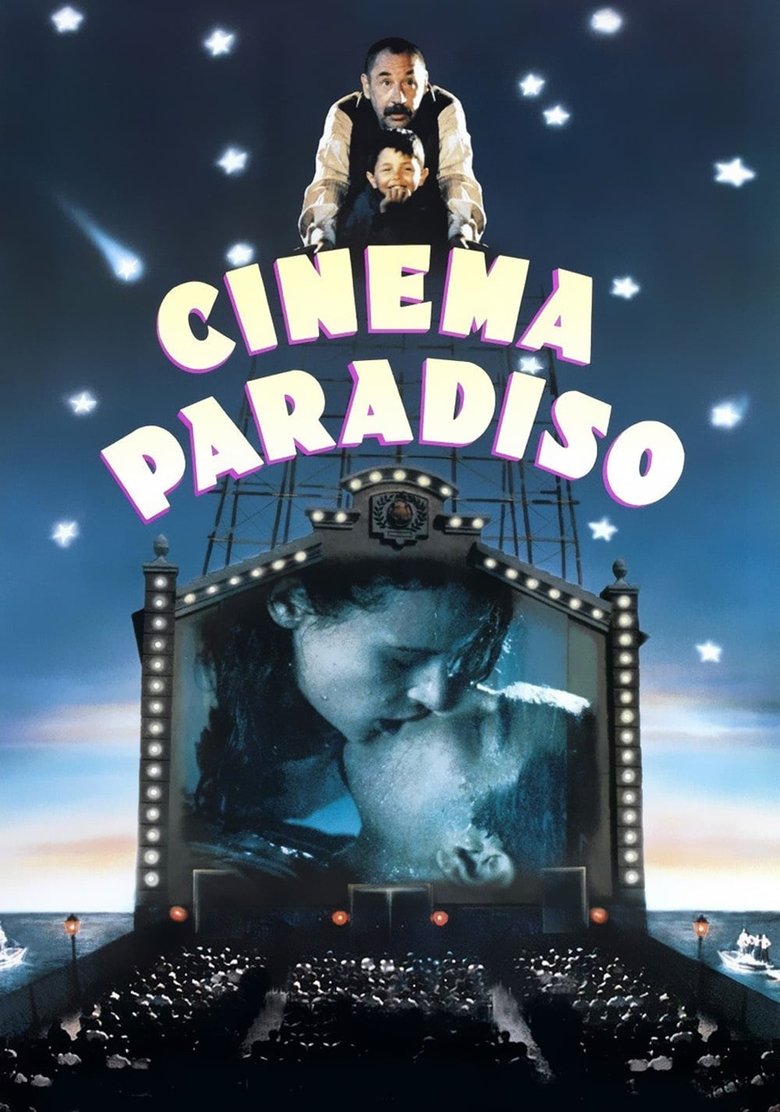
My dream job is to own a cinema. Always has been. There's something about the idea of being the keeper of that space, the person who holds the door open to other worlds, that gets me every time. So maybe I was always going to fall hard for Cinema Paradiso. But I don't think that's the whole story. This film would reach into anyone's chest and squeeze, whether they've spent their life in darkened theatres or barely set foot in one.
This is my Italy stop on the A-Z World Cinema Tour, and I'll say this plainly: nothing else on this journey has hit me quite like this. I've watched a lot of films for this challenge. Some brilliant, some baffling, some so genuinely strange I wondered if I'd accidentally tuned into a surveillance feed. But Cinema Paradiso goes straight to the soul. And it does it with such apparent ease that you almost don't notice how precisely it's been constructed.
The film follows Salvatore, a successful filmmaker looking back on his childhood in post-war Sicily, where the local cinema, the Cinema Paradiso, was his sanctuary, his school and, in a very real sense, his church. It was made nearly a hundred years after the first films flickered into existence, and yet it captures something essential about why people ever bothered going to watch images on a wall in the first place. We go to feel something together. That's it. That's the whole thing.
Ennio Morricone's score does things to you before you've consciously registered what you're watching. It swells like a memory surfacing, like something you'd forgotten you'd lost. There are moments in this film where the music alone would make you well up, and then the image on screen finishes the job completely. It's devastating in the best possible way.
And the symbolism is extraordinary, but it never announces itself. The reels of film as life's moments preserved and then let go. The kisses, cut out by the priest and saved by the projectionist, returning at the very end in one of the most quietly overwhelming sequences I've ever seen. Alfredo warning Salvatore about how places can hold you back while they stand surrounded by anchors. It's all there, rich and layered, but it never feels like homework. It feels like living.
Philippe Noiret as Alfredo is the kind of mentor figure you spend your whole life hoping you'll find. Gruff, funny, occasionally infuriating, but utterly devoted. He knows exactly when to hold on and when to let go, and that tension between love and release is what the whole film is built on. When I was growing up, my version of Alfredo was the owner of a videogame shop in my tiny town. Not quite the same as a Sicilian projectionist, but he had that same quality of making you feel seen, of pointing you somewhere bigger than where you stood. Cinema Paradiso understands that kind of relationship completely.
What makes it a five-star film, a perfect film, is that it doesn't just celebrate the experience of watching movies. It recreates it. Sitting with this film, you feel what those townspeople feel gathering in the pews of that little cinema. The laughter, the tears, the collective intake of breath. If you've ever loved Yi Yi, which left me similarly wrung out and grateful, you'll understand that particular feeling of a film expanding the space inside you rather than simply filling your time.
There is no moment in Cinema Paradiso that rings false. No scene that outstays its welcome, no emotion that feels manufactured. It earns every single feeling it produces, and it produces quite a few. I came away from it reminded why I care so much about this medium, why a little box in a darkened room can matter so much to so many people across so much time.
Five stars. Straight to the soul. No notes.
Rating: ★★★★★ | Year: 1988 | Watched: 2025-07-05
Where to watch
Watch in the UK
Stream: ARROW
Rent: Apple TV Store · Rakuten TV · Amazon Video · Curzon Home Cinema
Buy: Apple TV Store · Rakuten TV · Amazon Video · Google Play Movies
Physical: Amazon UK · Zavvi
Watch in the US
Stream: MGM+ Amazon Channel · Philo · MGM Plus Roku Premium Channel · MGM Plus
Rent: Amazon Video · Apple TV Store · Google Play Movies · YouTube
Buy: Amazon Video · Apple TV Store · Google Play Movies · YouTube
Physical: Amazon US
Affiliate disclosure: Movies With Macca may earn a small commission on purchases or subscriptions started via these links. It costs you nothing extra.
Related on Movies With Macca
More with Philippe Noiret: Murphy's War (1971)
More from Italy: Nightmare City (1980) · Cemetery Man (1994) · One Way or Another (1975) · Chicken for Linda! (2023)
More from the 1980s: Nightmare City (1980) · A Better Tomorrow (1986) · Style Wars (1983) · Garlic Is as Good as Ten Mothers (1980)
More drama: Viy (1967) · Wonder (2017) · A Better Tomorrow (1986) · Beautiful Boy (2018)
More romance: The Eagle (1925) · The Last Picture Show (1971) · The General (1926) · The Docks of New York (1928)



