West Side Story (1961)
★★★ — West Side Story (1961)

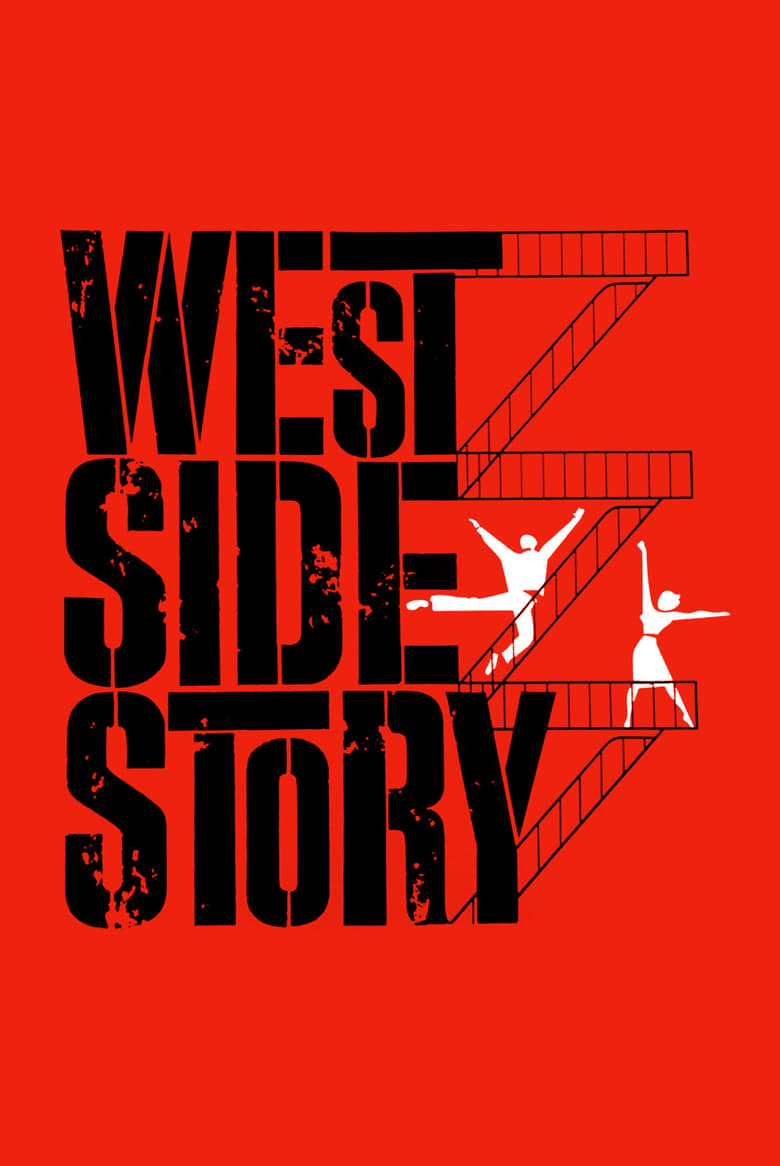
Imagine this is just how people get around. You need to nip to the corner shop for milk, so you step outside, click your fingers, and break into an elaborately choreographed strut down the street, your mates fanning out behind you in perfect formation. That image stuck with me through most of West Side Story, and honestly, it made the whole thing a lot more enjoyable.
Look, I'm not going to pretend musicals are my natural habitat. They're not. Sitting down for nearly two and a half hours of heightened emotion, operatic romance and gang warfare expressed through song and dance is not exactly my idea of a quiet Tuesday night. But this film demands you meet it on its own terms, and when you do, there's no denying what Robert Wise and Jerome Robbins pulled off here.
The choreography is the thing. Every step, every leap, every pointed finger and snapped finger is precision fused with genuine feeling. It's not just impressive technically, it actually carries dramatic weight. The dancing means something. The way movement is used to express conflict, tension, longing, it's unlike almost anything else I've seen. Numbers like "Cool" and "America" feel genuinely revolutionary, the kind of sequences where you stop fidgeting and just watch, mouth slightly open.
The Technicolor cinematography is gorgeous too, turning New York into something heightened and vivid, almost mythological. You feel the heat of the streets, the colour and noise of it all. And the location shooting gives the whole thing a grounded energy that stops it floating off entirely into abstraction. The city itself is doing real work in this film.
I also couldn't help thinking, watching those gang sequences, that Michael Jackson must have had this running on a loop somewhere. The parallels with "Beat It" are right there: the gang tension, the dance as a substitute for violence, the plea for somebody to just stop the madness. I had a feeling about it, and it turns out I was right to. That kind of cultural legacy is genuinely satisfying to trace back to its source. It also made me think of the way action choreography carries similar emotional charge in films like The Raid 2 (2014), where physical movement tells you everything about character and conflict without a word being spoken. Different worlds, but the same fundamental idea.
So why only three stars? Because being honest with you, it does overstay its welcome. The story, a Romeo and Juliet riff transplanted to rival street gangs in 1950s New York, doesn't really develop much beyond its opening act. It's emotionally intense throughout, but thematically it's treading the same ground from about the halfway point onwards. And while some of the musical numbers are extraordinary, others blur into each other. A few I'd have happily cut. At two hours and thirty-odd minutes, you feel the length.
There's also a dated quality to certain elements that's impossible to ignore. That's not a dealbreaker, plenty of classics carry the marks of their era, but it adds a layer of distance that stops the emotional gut-punch from landing quite as hard as it clearly wants to.
Ten Academy Awards. A place in the canon that nobody seriously disputes. A genuine, documented influence on some of the most iconic pop moments of the following decades. All of that is real, and all of it is earned. This is a film built with extraordinary craft and real ambition, and those "America" sequences alone are worth the price of admission.
Three stars. A landmark, without question. Just one that tests your patience a little on the way to proving its greatness.
Rating: ★★★ | Year: 1961 | Watched: 2025-11-10
Where to watch
Watch in the UK
Stream: MGM Plus Amazon Channel
Rent: Apple TV Store · Rakuten TV · Amazon Video · Google Play Movies
Buy: Apple TV Store · Rakuten TV · Amazon Video · Google Play Movies
Physical: Amazon UK · Zavvi
Watch in the US
Stream: YouTube TV
Rent: Amazon Video · Apple TV Store · Google Play Movies · YouTube
Buy: Amazon Video · Apple TV Store · Google Play Movies · YouTube
Physical: Amazon US
Affiliate disclosure: Movies With Macca may earn a small commission on purchases or subscriptions started via these links. It costs you nothing extra.
Related on Movies With Macca
More from the 1960s: Viy (1967) · Persona (1966) · Carnival of Souls (1962) · Daisies (1966)
More crime: A Better Tomorrow (1986) · Angst (1983) · Stolen Face (1952) · Cairo Station (1958)
More drama: Viy (1967) · Wonder (2017) · A Better Tomorrow (1986) · Beautiful Boy (2018)