Tongues Untied (1989)
★★★ — Tongues Untied (1989)

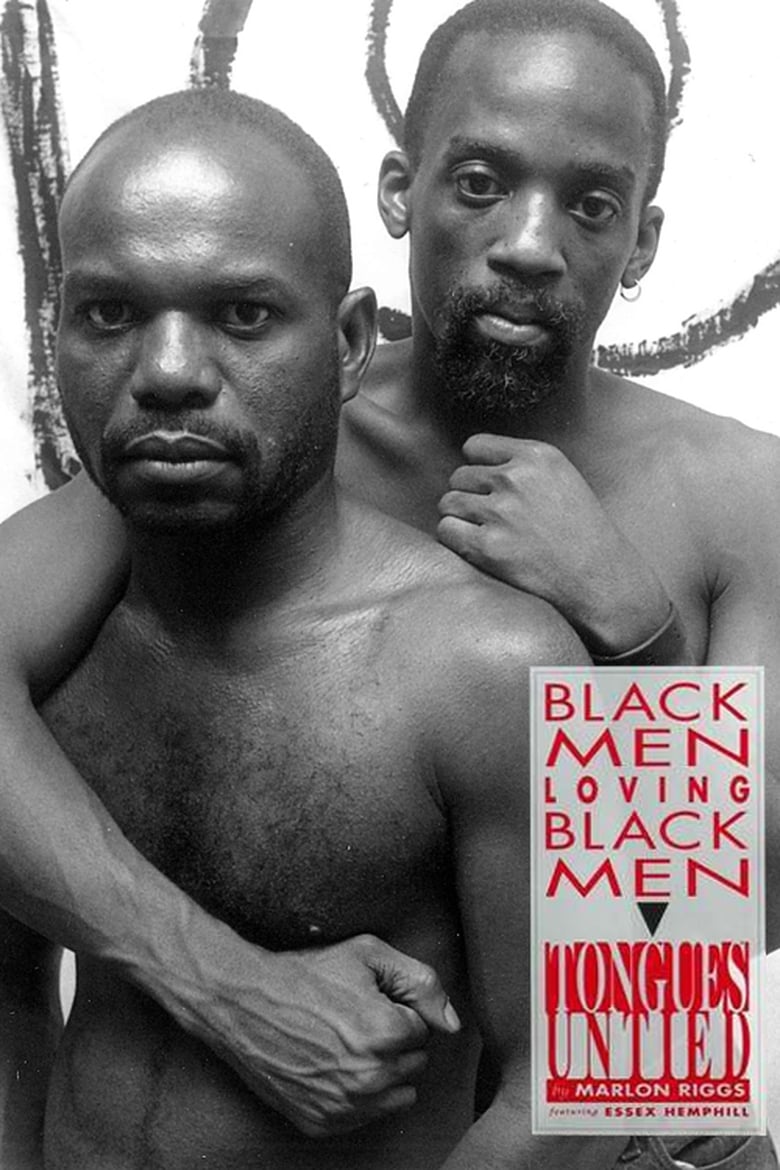
I'll be honest with you: poetry is not usually my thing. Put a collection in front of me and I'll find an excuse to put it down inside five minutes. So when I sat down with Marlon Riggs's Tongues Untied, knowing it was part documentary, part spoken word performance, I went in with my guard up. I didn't expect to be moved. I was wrong to feel that way.
What Riggs has made here is something genuinely hard to categorise, and I mean that as a compliment. It's not a straightforward talking-heads documentary about the Black LGBTQ experience in America, though it absolutely is that too. It's also performance, chant, rhythm, confession. The voices layer over each other, the images shift, and before you've really clocked what's happening, you're in the middle of something that feels less like a film you're watching and more like something being said directly to you. That's not easy to pull off, and Riggs pulls it off.
The heart of it, for me, is something almost unbearably simple. These are men talking about being persecuted, abused, hated and dismissed, and the reason for all of it comes down to things they were born with. The colour of their skin. Who they love. You get one life. One. And the idea that so much of it can be made smaller, more frightened, more hidden, purely because of other people's cruelty and ignorance, broke my heart a little. It still does, thinking about it now.
The film doesn't let you sit comfortably with that sadness, though. There's anger in it, and rightly so. There's also warmth, community, humour. At one point I found myself genuinely delighted to learn that there's an entire language of finger snaps with distinct meanings depending on how you do it. I had no idea. It sounds like a small thing, but it stuck with me, because it's one of those moments where a film reminds you that culture and identity aren't just about pain and survival. They're also about joy, style, belonging. That felt important.
If I'm being straight with you, some of the more abstract poetic sequences pushed against my patience. There were moments where I felt slightly outside the work, watching rather than feeling. That's probably on me more than it is on the film, and I suspect someone who's more at home with poetry as a form would get more from those passages than I did. But even then, I was never bored, and I was never unmoved for long.
It's the kind of documentary that reminded me why the form can do things that fiction sometimes can't. The rawness here isn't performed. These are real voices, real experiences, and Riggs shapes them into something that carries real weight. I thought about it after, which is usually the test I apply. Does it stay with you when the credits are done? This one does.
It also made me think about other films I've seen that use unconventional documentary forms to get at something true. I reviewed Style Wars a while back, which is a very different film about a very different community, but there's a similar quality to it: a sense of people carving out identity and expression in a world that often doesn't want them to. Worth pairing the two if you've got an afternoon.
Three and a half stars. Go in open-minded, even if poetry isn't your thing either. Especially if poetry isn't your thing.
Rating: ★★★ | Year: 1989 | Watched: 2026-03-07
Where to watch
Watch in the US
Stream: OVID
Physical: Amazon US
Affiliate disclosure: Movies With Macca may earn a small commission on purchases or subscriptions started via these links. It costs you nothing extra.
Related on Movies With Macca
More from the 1980s: Nightmare City (1980) · A Better Tomorrow (1986) · Style Wars (1983) · Garlic Is as Good as Ten Mothers (1980)
More documentary: Letter from Siberia (1957) · Lessons of Darkness (1992) · Style Wars (1983) · Here and Elsewhere (1976)