The Music Box (1932)
★★★½ — The Music Box (1932)

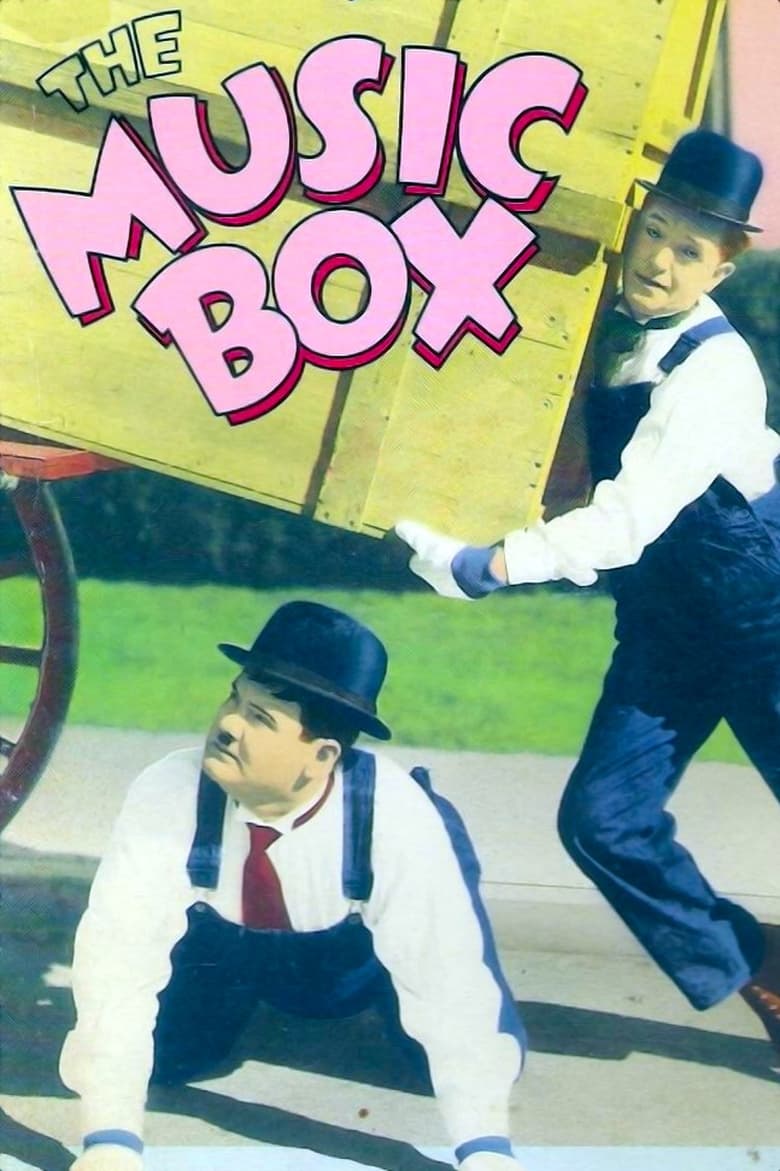
There's a flight of stairs in The Music Box that I'm convinced was designed by the devil himself. Long, steep, relentless, and entirely unavoidable if you happen to be two hapless removal men with a piano to deliver. That's the whole setup. That's all you need. And somehow, from that one gloriously simple premise, Stan Laurel and Oliver Hardy wring about twenty minutes of comedy that I genuinely couldn't stop grinning at.
This was my first proper dive into Stan and Ollie's world, and I'll be honest, I wasn't sure what to expect. Silent-era and early sound comedy can feel like a museum visit sometimes: you appreciate it intellectually but don't actually laugh. The Music Box is not like that. It got me. Properly got me. There's a moment fairly early on where the piano slides back down the stairs for what feels like the fourth time, and the look Hardy shoots Laurel, that mixture of exhausted fury and wounded dignity, is funnier than most punchlines I've seen in comedies made this century.
What makes it work so brilliantly is the escalation. The gags don't just repeat, they compound. Each new disaster grows out of the last one in a way that feels completely logical and completely absurd at the same time. You're laughing not only at what's happening, but at the horrible dawning realisation of what's about to happen next. The choreography of failure, if I can call it that, is flawless. Every stumble, every near-miss, every moment of brief triumph immediately undercut by catastrophe, it's all timed to perfection. You could study it frame by frame.
And the chemistry between them is something else entirely. Stan's wide-eyed, blinking innocence against Hardy's pompous, spluttering frustration, they're two people who probably shouldn't be within ten feet of each other, and yet they're completely inseparable. You can see their DNA running through so much of what came after. Del Boy and Rodney. Abbott and Costello. The comedy duo as a form owes an enormous debt to what these two were doing here. It's humbling to watch, really.
Now, is it predictable? Yes, absolutely. You know the piano's going to fall. You know they're going to blame each other. You know any moment of progress is going to be snatched away. But that's almost beside the point. The pleasure isn't in the surprise, it's in watching two masters work through an idea with absolute conviction and precision. Context matters here too. In 1932, this kind of physical comedy, executed with this level of craft, was genuinely fresh and side-splitting in a way that's hard to fully appreciate a century later. The fact that it still lands so well is the real achievement.
It won an Academy Award, and rightly so. Best Short Subject, if I'm not mistaken, and it's not hard to see why. There's a confidence to the whole thing that never tips into smugness. It knows exactly what it is and what it's doing, and it does it without an ounce of flab.
Since this was my entry point into Laurel and Hardy, I've been keen to see more, and I've since spent time with Sons of the Desert (1933) and Block-Heads (1938), both of which confirm that the pair had a comic instinct that simply didn't dim. But there's something about The Music Box that feels foundational, like the purest distillation of what made them great. Strip everything back to two men, one piano, and an impossible staircase, and you've got something that still works perfectly nearly a hundred years on.
Timeless, clever, and endlessly rewatchable. Not just a classic short film. The standard by which the whole genre should probably be measured.
Three and a half stars.
Rating: ★★★½ | Year: 1932 | Watched: 2025-09-21
Where to watch
Watch in the US
Buy: Apple TV Store · Google Play Movies · YouTube
Physical: Amazon US
Affiliate disclosure: Movies With Macca may earn a small commission on purchases or subscriptions started via these links. It costs you nothing extra.
Related on Movies With Macca
More with Oliver Hardy: Sons of the Desert (1933) · Block-Heads (1938)
More from the 1930s: Earth (1930) · Monkey Business (1931) · Sabotage (1936) · People on Sunday (1930)
More comedy: The Eagle (1925) · The General (1926) · Americana (2023) · The Naked Gun: From the Files of Police Squad! (1988)