The Godfather (1972)
★★★★★ — The Godfather (1972)

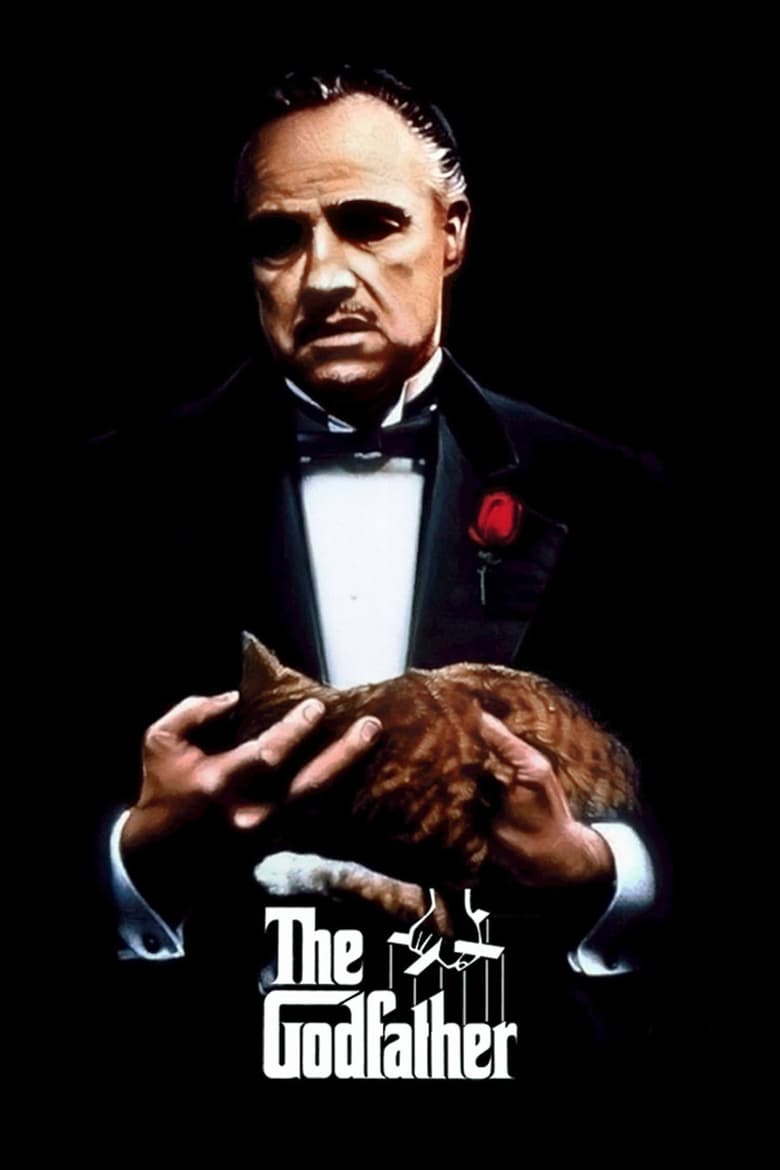
I am going to plant my flag straight away: The Godfather is better than Part II. I know that is the minority view, I know the counter-arguments by heart, and I still disagree with every one of them. The sequel is broader, sadder, more ambitious in shape, and I understand why people are seduced by its dual timelines and its air of tragic grandeur. But ambition is not the same as perfection. This one is tighter, more focused, and flawless in a way sequels almost never manage. Not a wasted frame, not a slack minute, not a single scene that does not need to be there.
What gets me every time is how much it plays like a tragedy in the oldest sense. Strip away the guns and the cannoli and this is Shakespeare, a story about a good man's slow corruption, told with the elegance of a world that has mistaken power for family and cannot tell the difference any more. Michael Corleone begins the film as the son who wanted no part of any of it, the war hero in the clean uniform who tells Kay, almost tenderly, that his family's business is not who he is. And he ends it as something colder than his father ever was. The horror of the film is that you watch it happen inch by inch, and you understand every single step. Nobody pushes Michael. He walks.
The turning points are perfectly placed. The restaurant murder, where he crosses a line he can never step back over, is shot with a terrible calm, the rattle of the elevated train swelling on the soundtrack as he sits with the gun. The baptism sequence near the end, the sacraments intercut with the slaughter of his enemies, is one of the greatest pieces of editing in cinema, Michael renouncing Satan while ordering men butchered across the city. And then the final shot, the door closing on Kay, shutting her and us out of the world he has disappeared into. It gives me chills every time.
Al Pacino, who I will happily fight anyone to call the greatest actor ever to do it, plays that descent with barely a raised voice. It is a performance built almost entirely out of stillness, a man vanishing behind his own eyes, and it might be the finest character arc in film history precisely because it is so quiet. His later career has range to spare, from the tender bluster of Scent of a Woman to the sleepless guilt of Insomnia, but this remains the summit. And then there is Brando, who does not so much act as occupy. The Don owns every second he is on screen and half the seconds he is not, a presence that hangs over the whole picture, whether he is negotiating with a rival, collapsing among his tomato plants, or simply cradling a cat.
Around them, everything is immaculate. Nino Rota's score aches with old-world melancholy, the cinematography is all shadow and warmth, faces half-swallowed by darkness, and the writing does not contain one false line. I have watched it many, many times, and it never loosens its grip, never reveals a seam, never gives me a reason to check how long is left. Coppola returned to this world twice more, and while Part II comes close and Part III rather less so, nothing in the saga ever bettered the original. Five stars, and one of the very few films I would call genuinely perfect.
Rating: ★★★★★ | Year: 1972 | Watched: 2025-04-04
Where to watch
Watch in the UK
Stream: Paramount Plus · Paramount+ Amazon Channel · Paramount Plus Premium · Paramount Plus Basic with Ads
Rent: JustWatch TV · Apple TV Store · Amazon Video · Google Play Movies
Buy: Apple TV Store · Amazon Video · Google Play Movies · Sky Store
Physical: Amazon UK · Zavvi
Watch in the US
Stream: MGM+ Amazon Channel · Paramount Plus Premium · Paramount Plus Essential · Philo
Rent: JustWatch TV · Amazon Video · Apple TV Store · Google Play Movies
Buy: Amazon Video · Apple TV Store · Google Play Movies · YouTube
Physical: Amazon US
Affiliate disclosure: Movies With Macca may earn a small commission on purchases or subscriptions started via these links. It costs you nothing extra.
Related on Movies With Macca
More from Francis Ford Coppola: The Godfather Part III (1990) · The Godfather Part II (1974)
More with Marlon Brando: One-Eyed Jacks (1961)
More from the 1970s: Fantastic Planet (1973) · Here and Elsewhere (1976) · Italianamerican (1974) · Punishment Park (1971)
More drama: Viy (1967) · Wonder (2017) · A Better Tomorrow (1986) · Beautiful Boy (2018)
More crime: A Better Tomorrow (1986) · Angst (1983) · Stolen Face (1952) · Cairo Station (1958)